
Free on-site gate assessment - hinges, posts, and your LiftMaster or Nice gate operator checked before anything is quoted
The assessment is free and the quote is the invoice.

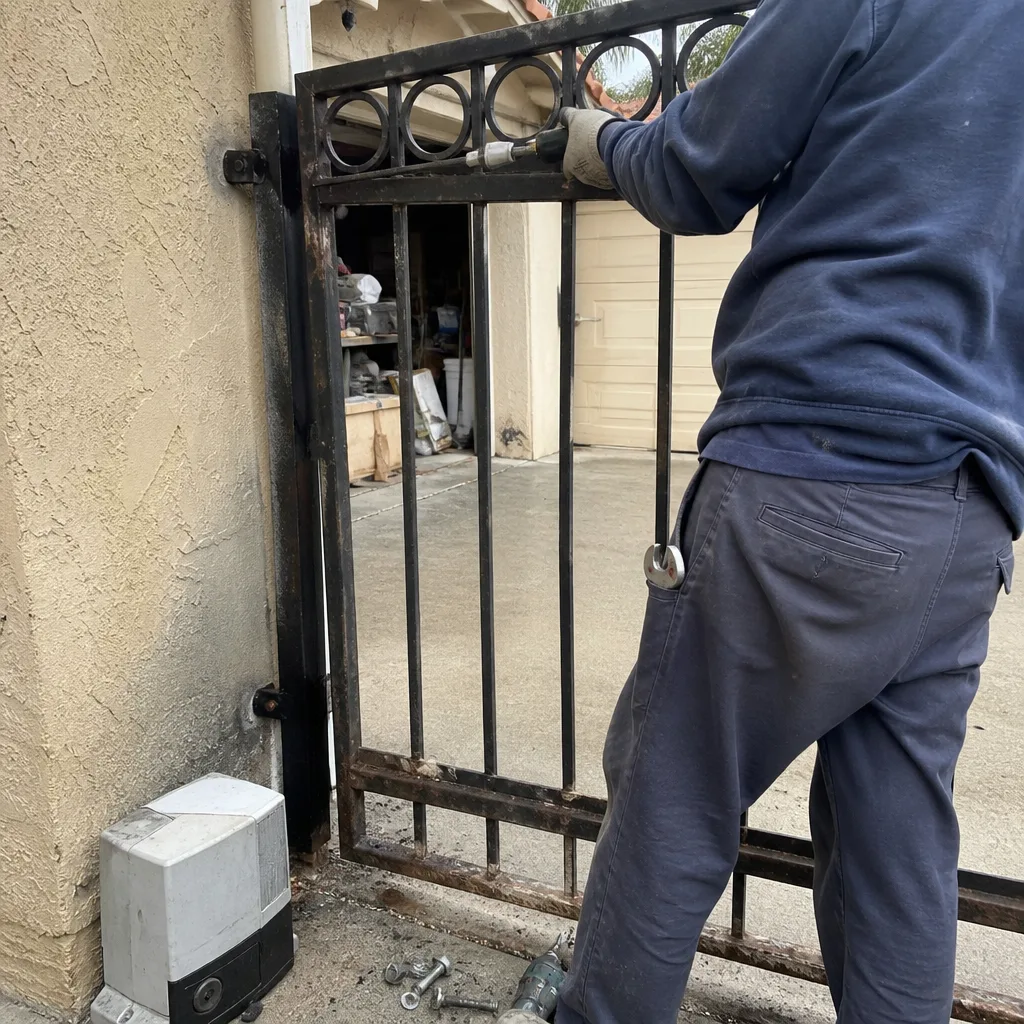 Before
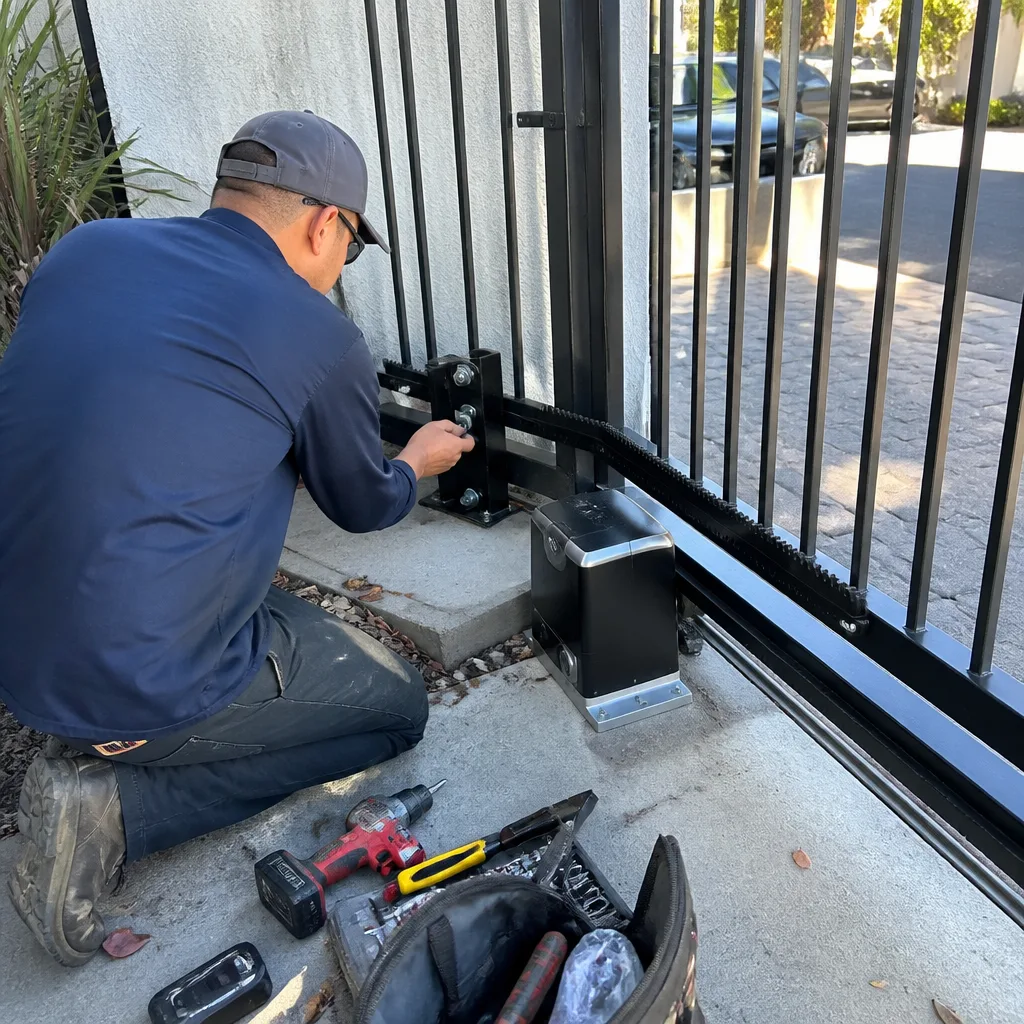 After
After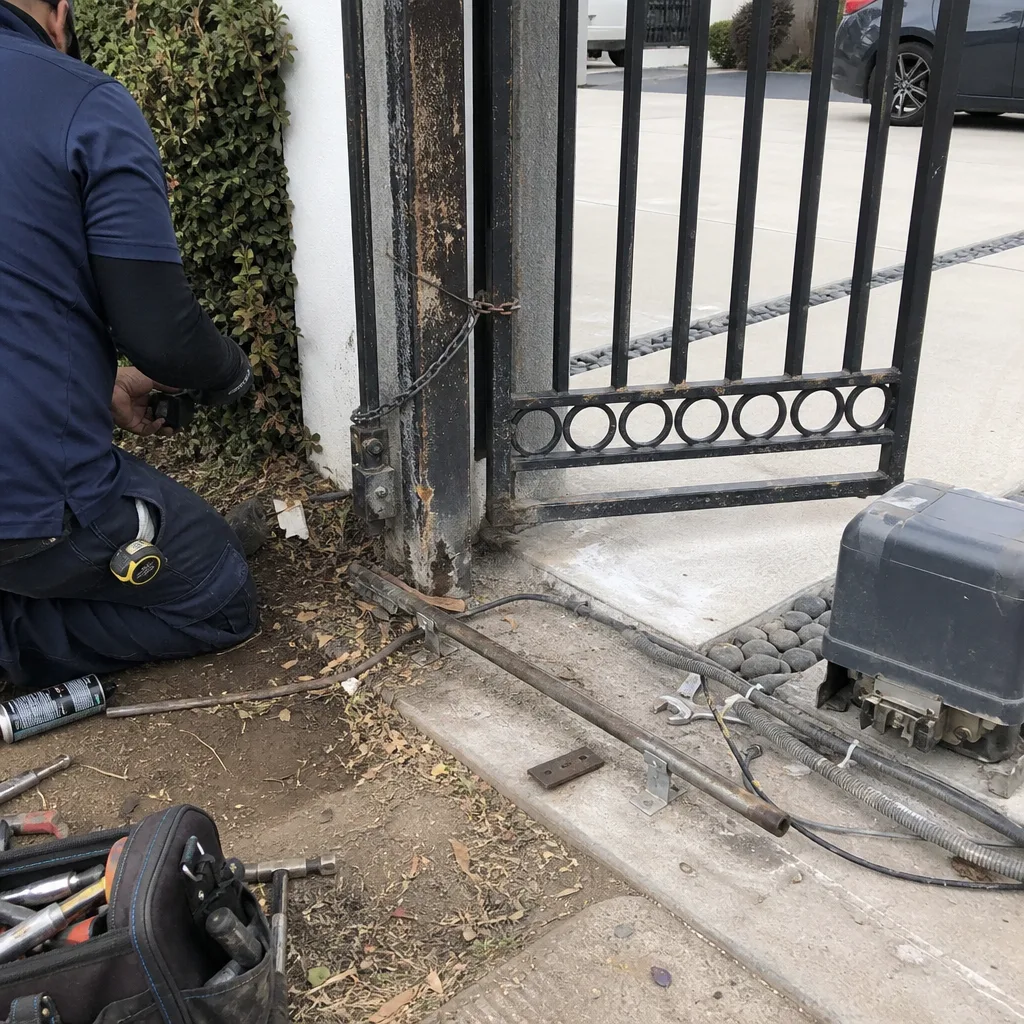 Before
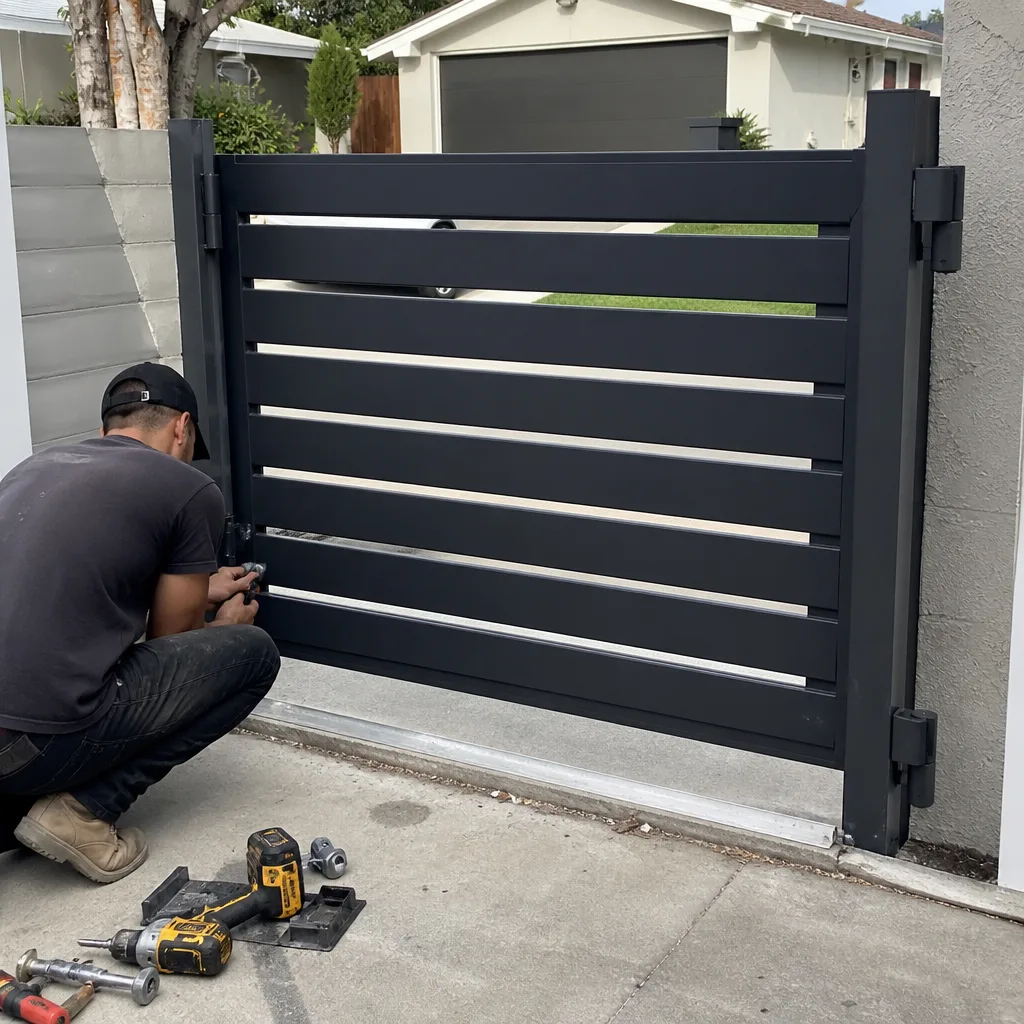 After
After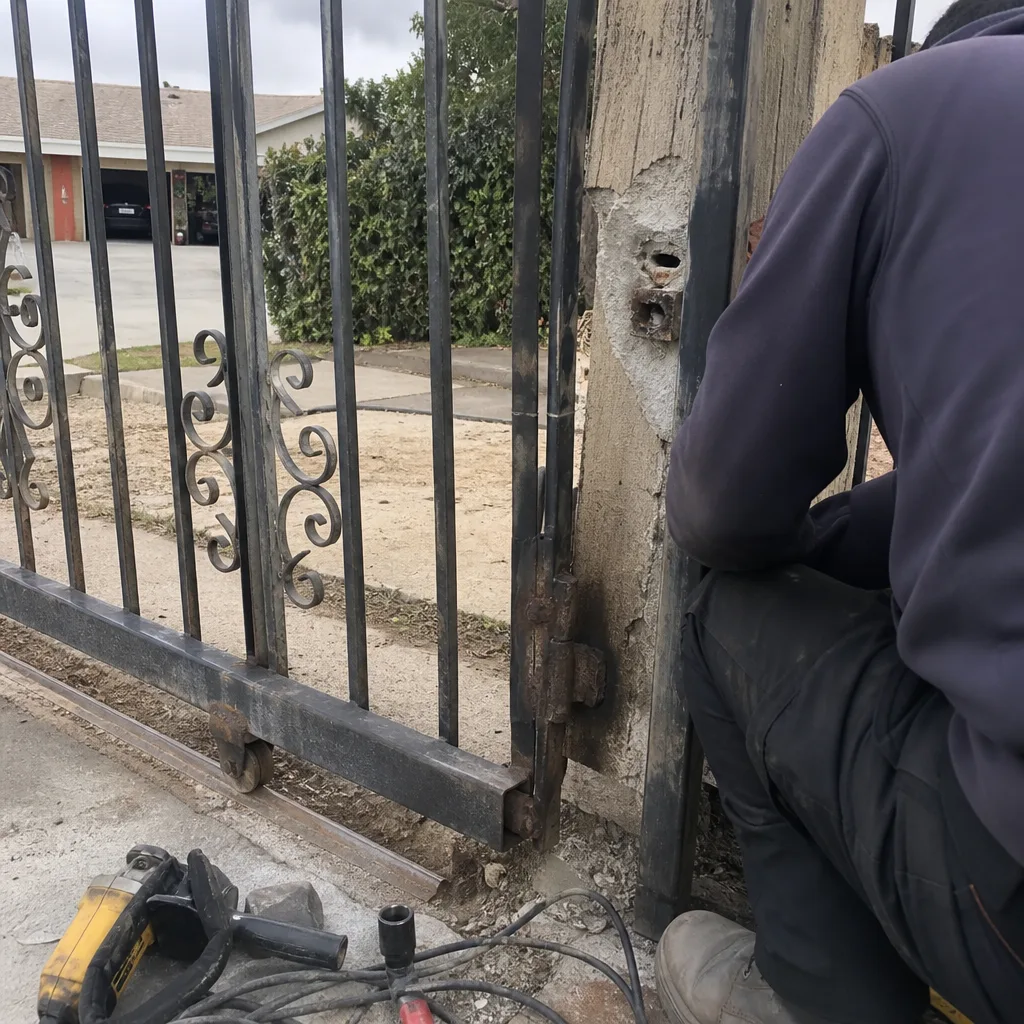 Before
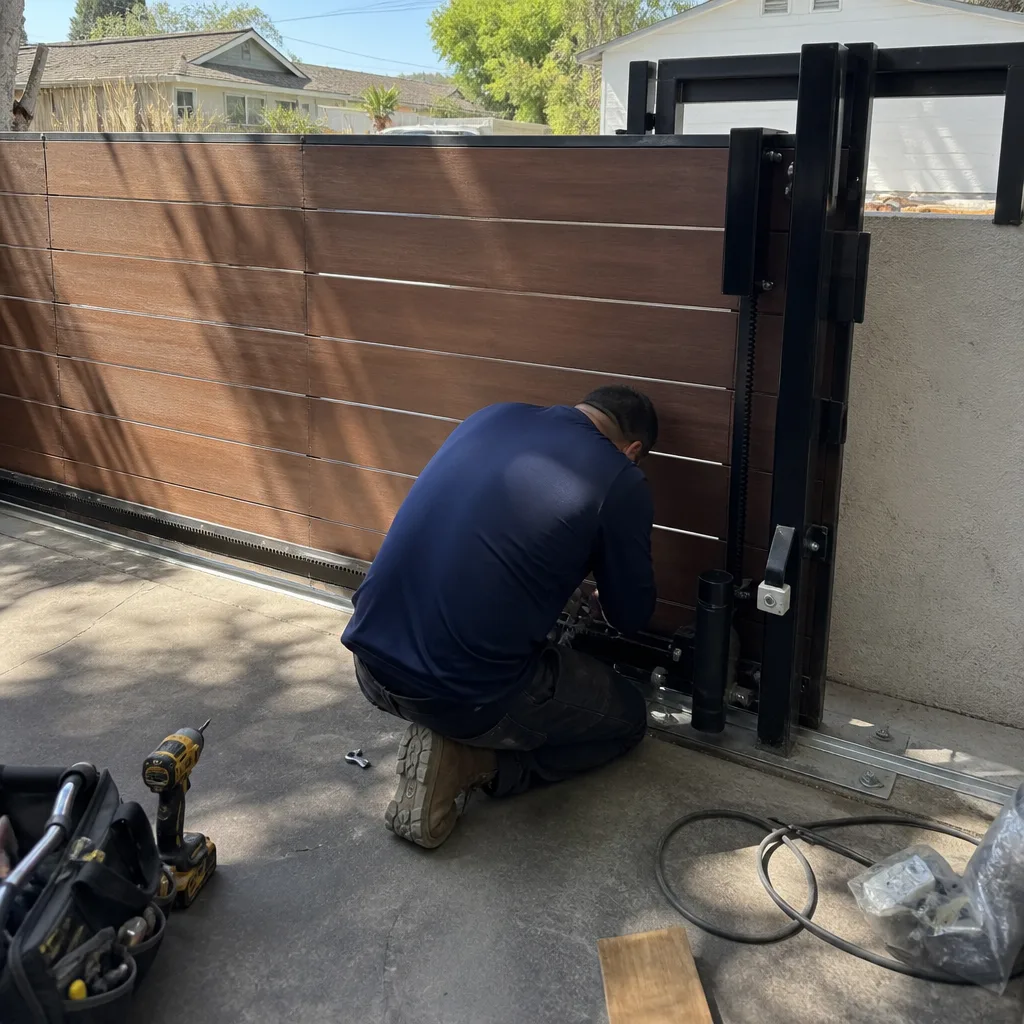 After
AfterLinear Gate Motor Replacement: The Los Angeles Owner’s Guide
A Linear gate motor replacement in Los Angeles typically runs $850 to $1,900 installed, depending on the model, whether the arm or mount brackets survived, and whether we’re swapping the operator only or the full drive assembly. We stock Linear-compatible operators and the common wear parts on our trucks, so most replacements happen same day. The way owners usually find us: the gate hums but doesn’t move, the motor runs but the gate creeps halfway, or the keypad works but the arm just sits there dead.
Linear operators are common across Los Angeles hillside properties and flatland driveways. Most failures we see aren’t the motor itself. They’re the limit switches, the control board, or a capacitor that gave up after years of summer heat cycles. The motor does fail eventually, and when it does, we replace it with a unit matched to the arm geometry and the gate weight, not just whatever box is on the shelf.
That’s the short answer. Below is what we check, what it costs, and what you’re paying for if you call us instead of ordering a part online and hoping.
Which Linear Models This Applies To
Linear has made swing-gate and slide-gate operators under a few series names that show up constantly in Los Angeles: the LRA swing series, the LSO and SL slide series, and newer LD and ACT line units. The most frequent service calls are older LRA residential arms and the medium-duty slide operators on condominium gates and small commercial lots.
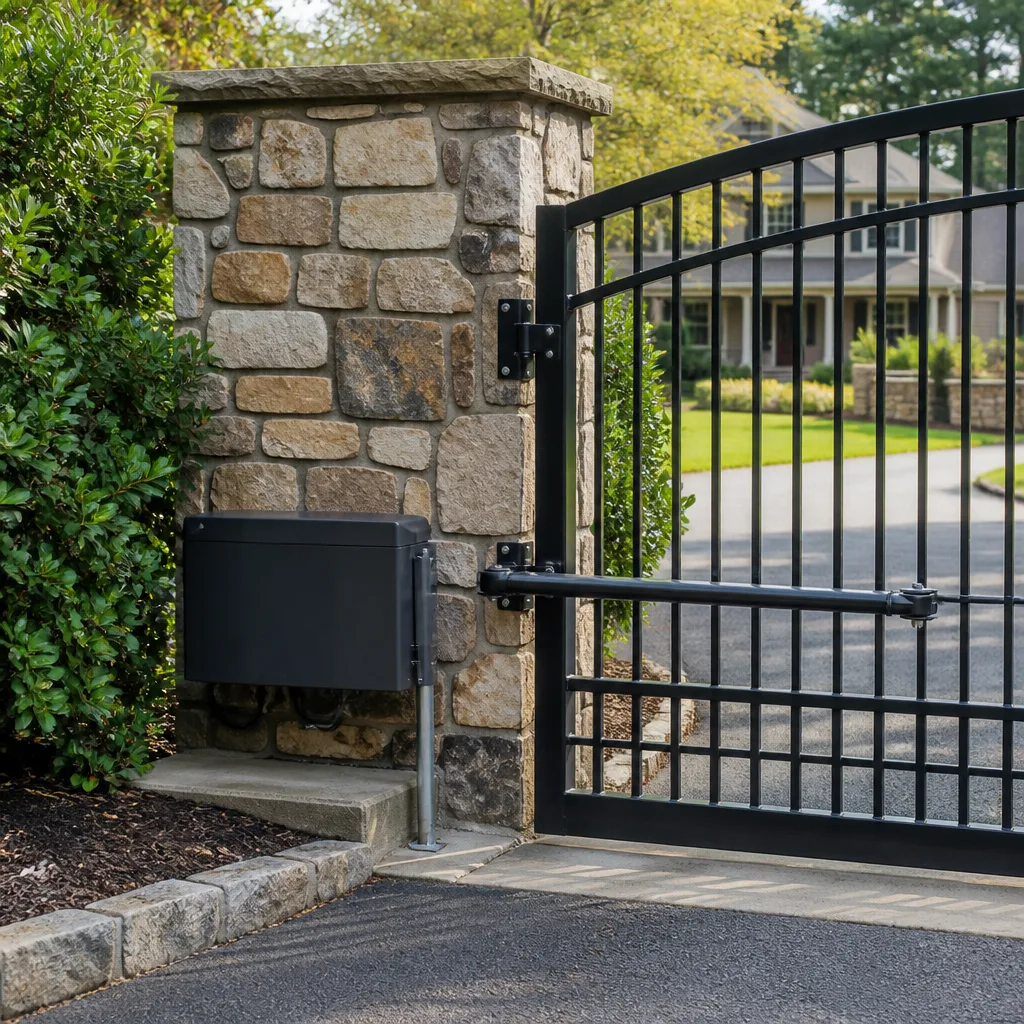
Here’s what matters for matching a replacement: the model tag tells you more than the arm style does. On a Linear unit, the model plate is on the operator housing, and it lists voltage (115V vs 24V), horsepower, and the duty rating. A 1/2-hp LRA will not drive what a 1-hp LRA drives, and Los Angeles gates tend to run heavy: steel frames, redwood facing, sometimes a welded security panel. If we replace a motor in an arm that’s undersized for the gate, it burns out again. We size the replacement to the gate leaf weight and length, not just the old motor tag.
On the OEM-versus-aftermarket question: Linear’s in-house brand replacement boards and motors are solid, and we use them when the swap is straightforward. But some older Linear generations are discontinued, and the aftermarket equivalents now available are, in our experience, often better-built than the originals were at end of run. We’ll show you the part options, the price difference, and what we’d put on our own gate. Where it matters, we photograph the old part’s tag and the new part’s tag so the record is exact.
Compatibility gotcha worth knowing: Linear changed the actuator mounting pattern between the LRA and the LRA/DC generation, and a new arm will not necessarily drop into the old bracket holes. This is the single biggest surprise for DIY buyers. We carry adapter plates and drill templates for the common transitions, and it’s a normal part of the job, not an extra headache.
Signs Your Linear Gate Motor Replacement Is Failing
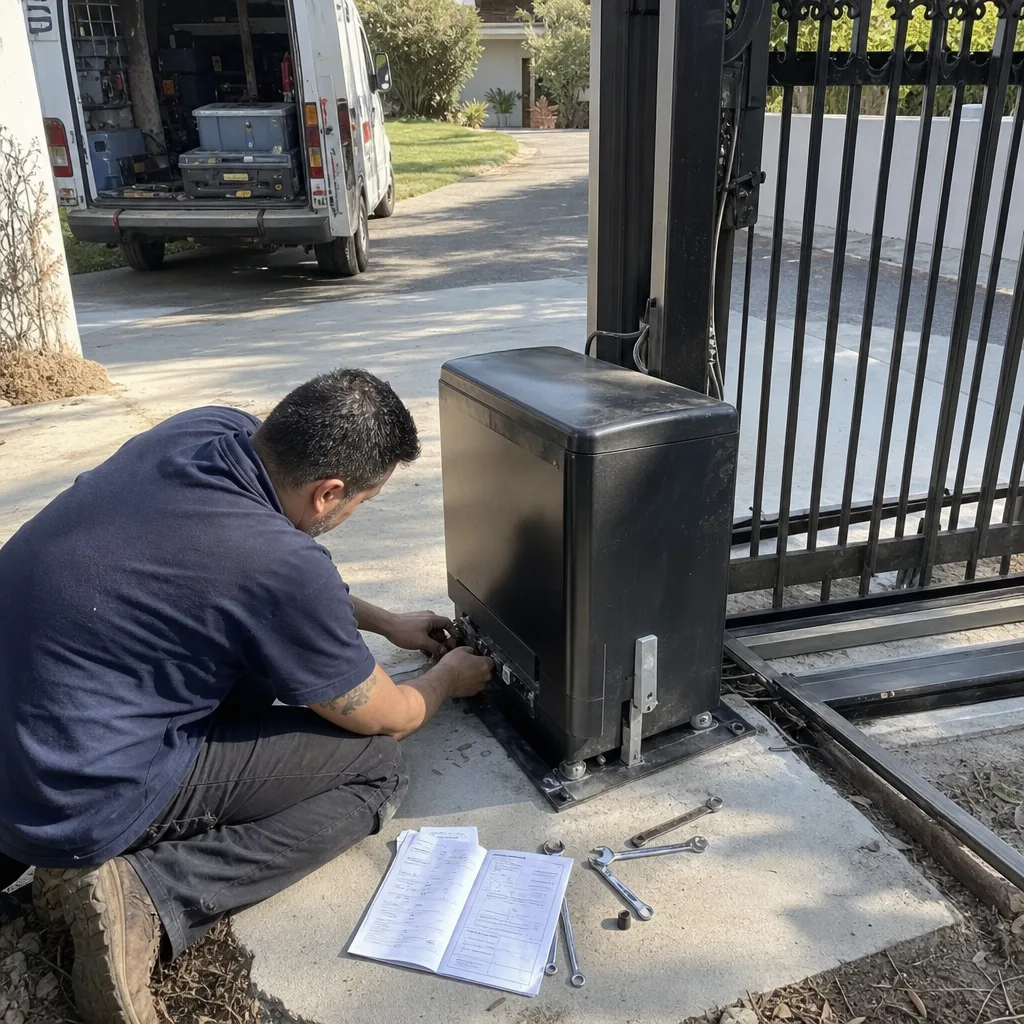
- Gate hums but doesn’t move. This is the classic Linear capacitor failure. The motor gets power, tries to start, and can’t build rotation. The fix is a capacitor, not a full motor, in about half of these calls, but if the capacitor has been failing for a season it can take windings with it. Either way, we test before we quote a replacement.
- Gate moves a few inches and reverses. On a Linear, that’s usually a limit switch out of position or an obstruction sensor reading false. The motor itself may be fine. We reset the limits, photograph the new position, and only replace the motor if load testing shows it can’t hold the run.
- Motor runs, arm clicks or slips. The gear train or the release mechanism inside the operator has stripped or disengaged. If the arm swings free while the motor spins, repair is sometimes possible, but on older Linear units the gear kit costs enough that a new operator makes more sense. We’ll show you both numbers in writing.
- Intermittent start, especially after rain. Los Angeles doesn’t get much rain, but when it does, older Linear housings take in moisture at the wire entry. A control board with corrosion will sometimes start fine for weeks, then fail when humidity changes. We find this often on coastal and canyon properties.
- Keypad and remote work, nothing at the motor. That’s the relay or the start capacitor doing nothing, or a wire pulled loose at the terminal strip. Sometimes it’s a ten-minute fix. Sometimes the board is dead. We diagnose at the component level before recommending replacement.
BeforeAfterReplacement Cost & What’s Included
Most residential Linear operator replacements in Los Angeles fall between $850 and $1,400 for equipment and labor. Larger slide-gate operators, or jobs that include new brackets, conduit work, or re-welding a damaged mount, run $1,500 to $1,900. You get the flat number in writing before the first tool comes off the truck, and that number does not change unless we find something structural that requires your sign-off to proceed.
What’s included in a replacement: the operator or motor matched to your gate’s weight and cycle count, removal of the failed unit, installation and calibration of limit switches and safety edges, and a photo record of the old part tag, the new part serial number, and the final limit positions. That’s Clause 4 of our Haven Standard: evidence on every job. The labor carries our 365-Day Done Right Promise, which is our way of saying that if it isn’t right, we make it right, no argument and no second invoice.
| Replacement Type | Typical Los Angeles Installed Price |
|---|---|
| Control board only (repair, not full replacement) | $280 - $520 |
| Capacitor or limit-switch repair | $180 - $340 |
| Residential swing operator, full replacement | $850 - $1,400 |
| Medium-duty slide operator, full replacement | $1,250 - $1,900 |
The spread depends on the model generation, the bracket condition, and whether the existing wiring can be reused. We show you the line-item breakdown before we start, not after.
DIY or Call Us?
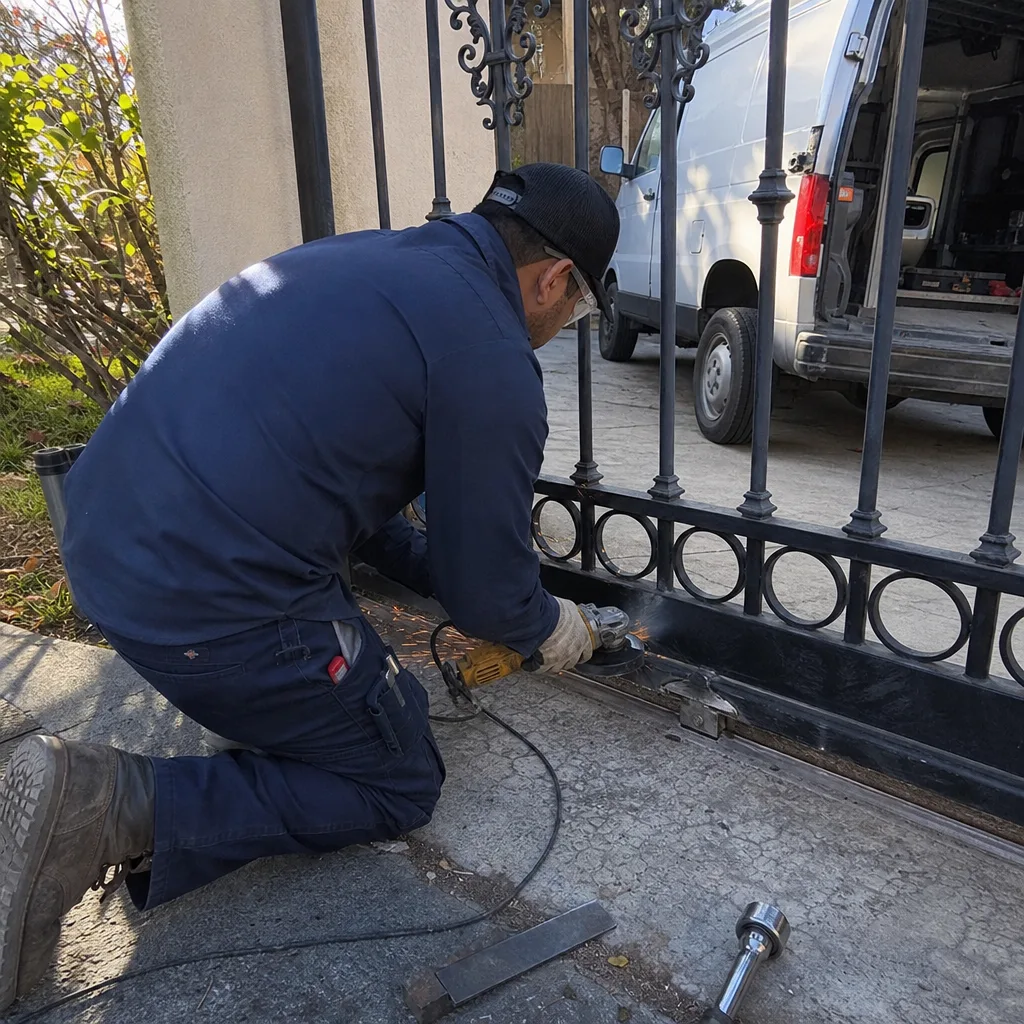
What you can safely do yourself: read us the model tag over the phone, check that the manual release lever is fully seated, and look for obvious wire pulls or a tripped GFCI. That’s five minutes and it’s genuinely useful.
What you should not do yourself: open a Linear operator that’s still wired to line voltage. A 115V residential unit has live terminals even with the gate in manual release. The capacitor stores charge after power is cut, enough to knock you back. We say this on every page because we’ve seen the aftermath of someone trying to “just test the motor.” A miswired replacement motor can also send the gate hard against its stop and bend the arm. This is not a fire alarm, but it is genuinely dangerous equipment when the housing is open. Call us at (213) 674-2473 and we’ll tell you honestly whether it’s a repair or a replacement before we send anyone out.
FAQs
A well-installed Linear operator in Los Angeles typically lasts 8 to 12 years, though inland heat and daily cycle counts above 40 operations a day shorten that to 6 to 8 years. The motor itself rarely dies first; the capacitor and control board go earlier. Coastal properties near Santa Monica and the Palisades have fewer heat failures but more corrosion at the wire entries. Call (213) 674-2473 if you want us to load-test the existing unit before it quits, because the quieter failure is the one that strands the gate open at 7 a.m.
Yes, often: capacitors, limit switches, gear kits, and control boards are all repairable or replaceable on most Linear models without swapping the entire operator. We repair first where the math makes sense, and we’ll show you the repair price next to the replacement price in writing. The exception is a motor with burned windings or a housing so corroded the board terminals are crumbling, at which point repair cost approaches replacement cost and we’ll tell you that plainly. Call (213) 674-2473 and we’ll walk through the likely failure based on what the gate is doing.
Most residential swing-operator replacements take 2 to 4 hours on site, including removal, bracket work, wiring, limit calibration, and the photo documentation. Slide operators run 3 to 5 hours because the rack and drive sprocket have to be aligned and shimmed. If we need to fabricate or weld a new mount bracket, that adds time but we’ll tell you before we start. For a written estimate, call (213) 674-2473; the estimate takes one visit and you keep it, even if you don’t hire us.
We stock the common Linear residential swing motors, control boards, and limit-switch kits on the truck, along with parts for LiftMaster, Mighty Mule, and Ghost Controls operators, because Los Angeles gates aren’t all one brand and the truck has to be useful on the first visit. For older or less common Linear models, we order the part and return to install once it arrives, usually within a few business days. We’ll tell you what’s on hand when you call (213) 674-2473, because that’s a reasonable thing to want to know before scheduling.
Call for a Written Price
If your Linear gate motor is making noise, moving halfway, or doing nothing at all, call Vance Gate Repair Los Angeles at (213) 674-2473. A person answers, any hour. We’ll ask what the gate is doing, what the tag says if you can read it, and whether the arm moves in manual release. Then we’ll give you a straight answer on whether someone needs to come look at it and what the likely range is. As Adrian Vance puts it: name what you found, name what it costs, name what you left behind. That’s the whole job, and we’ve been doing it that way across Los Angeles since 2014.
Written by Adrian Vance, Owner, Vance Gate Repair Los Angeles at Vance Gate Repair Los Angeles, serving Los Angeles and nearby areas.