
Free on-site gate assessment - hinges, posts, and your LiftMaster or Nice gate operator checked before anything is quoted
The assessment is free and the quote is the invoice.

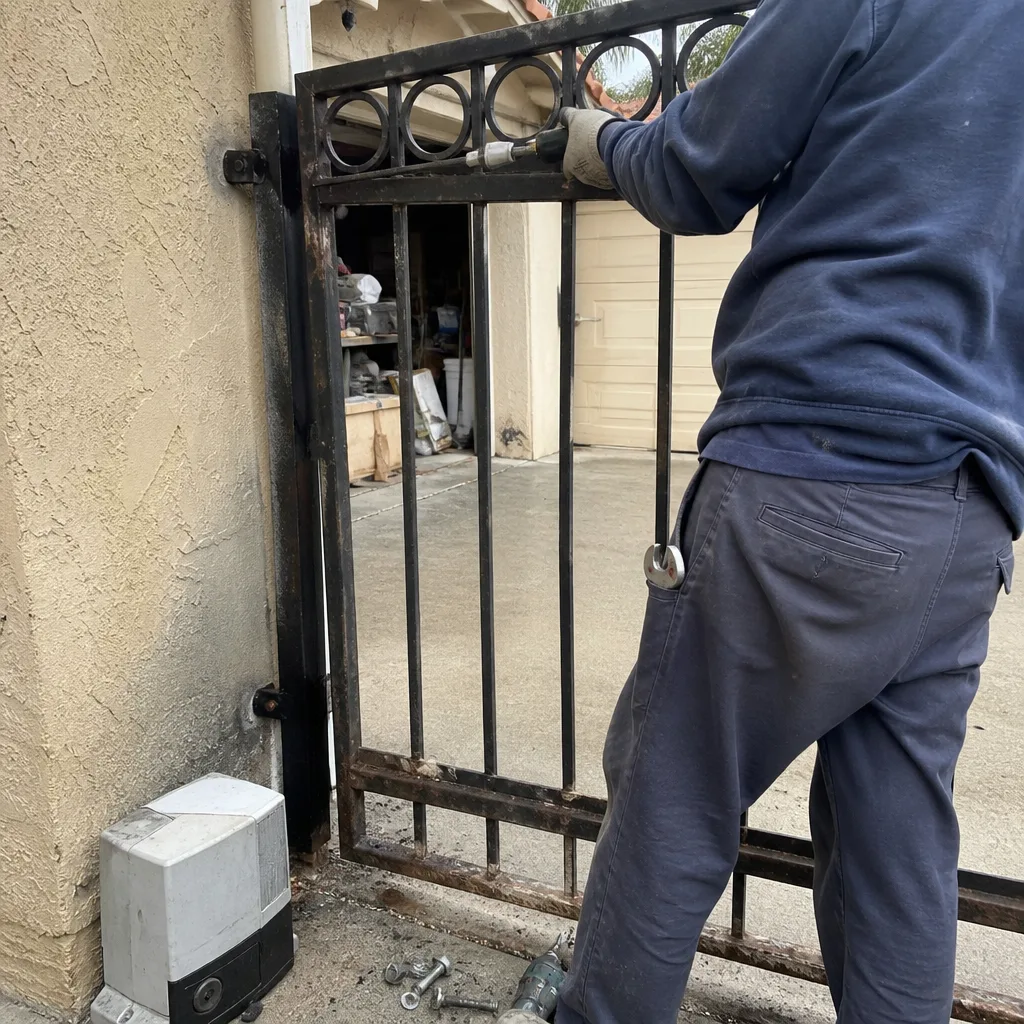 Before
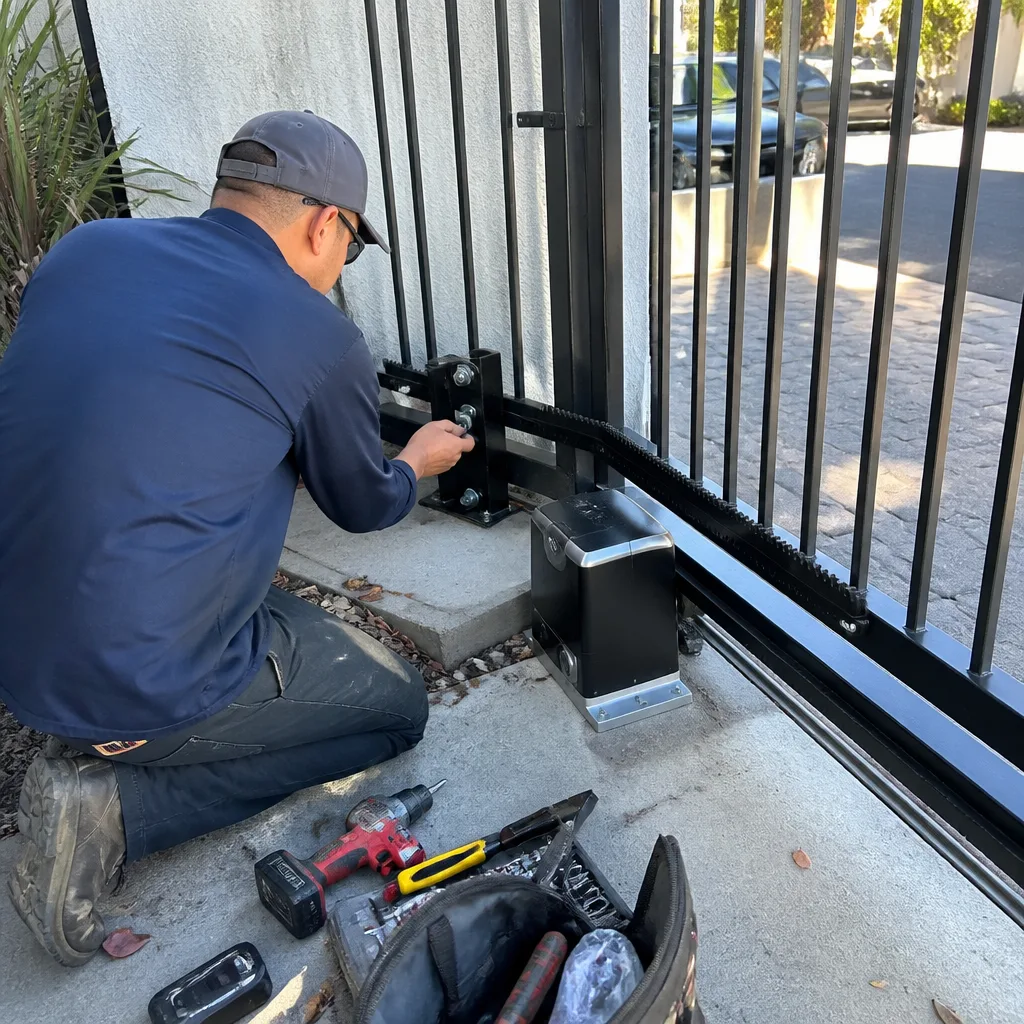 After
After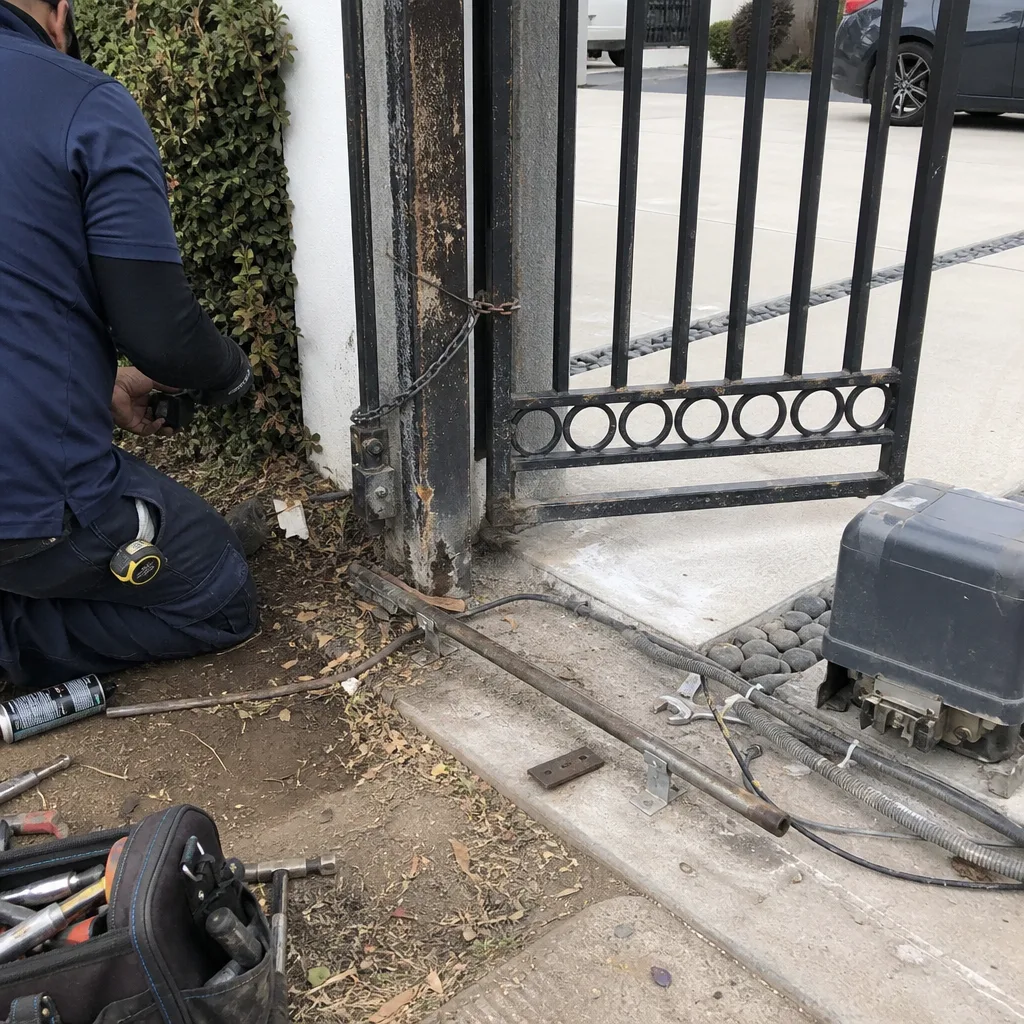 Before
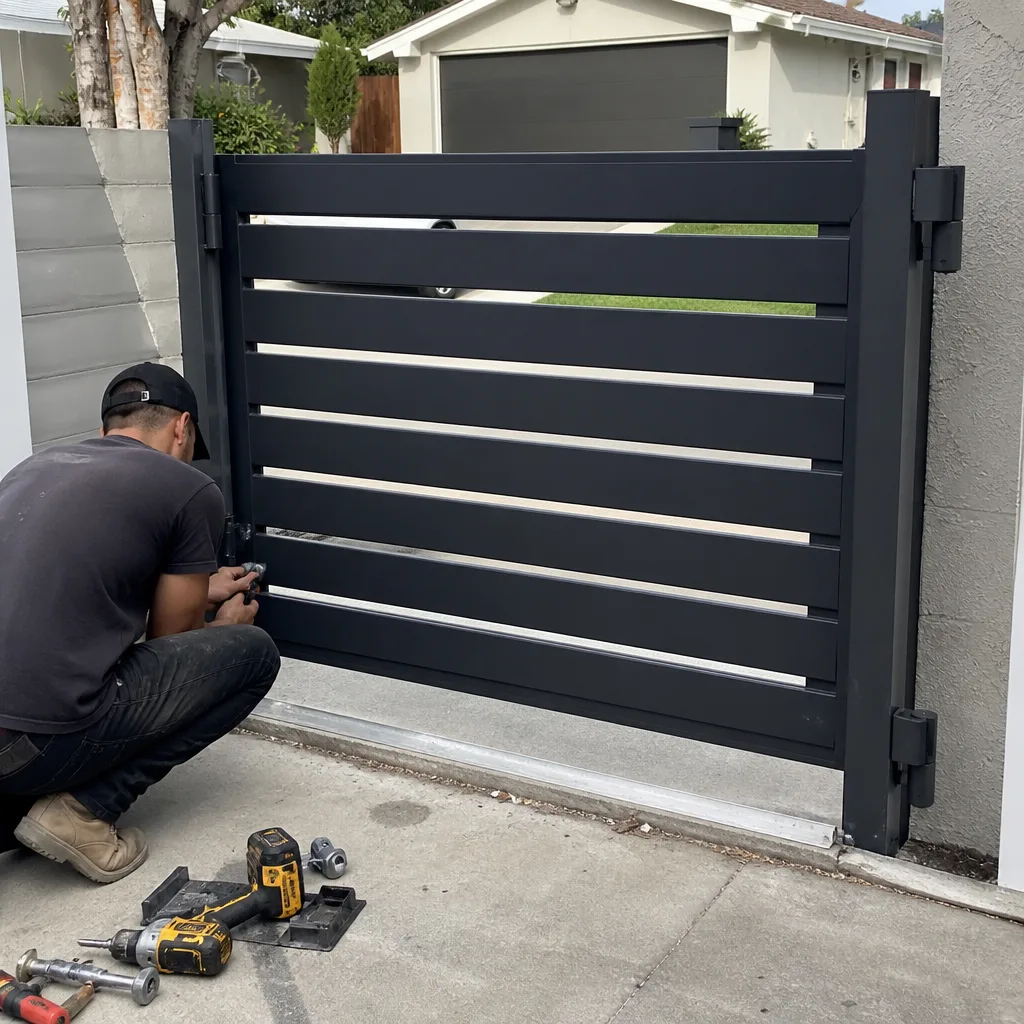 After
After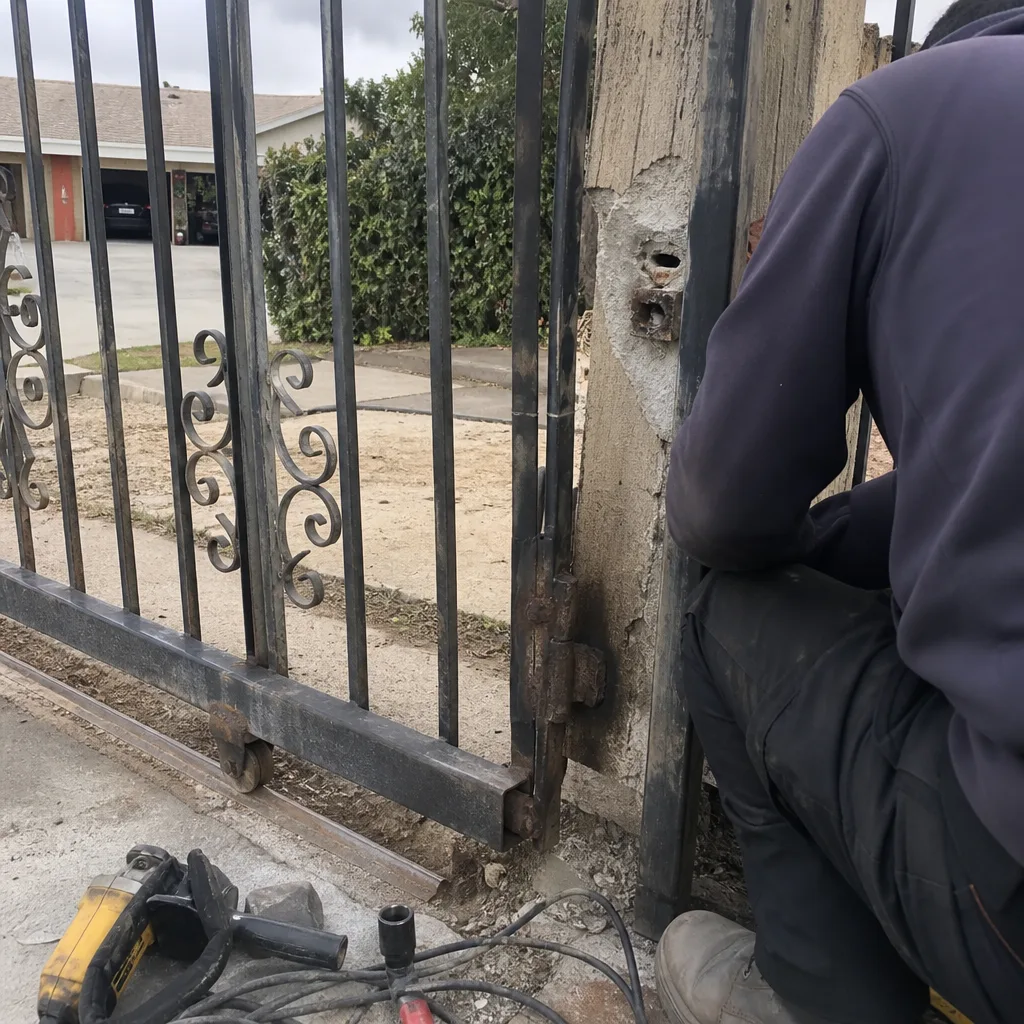 Before
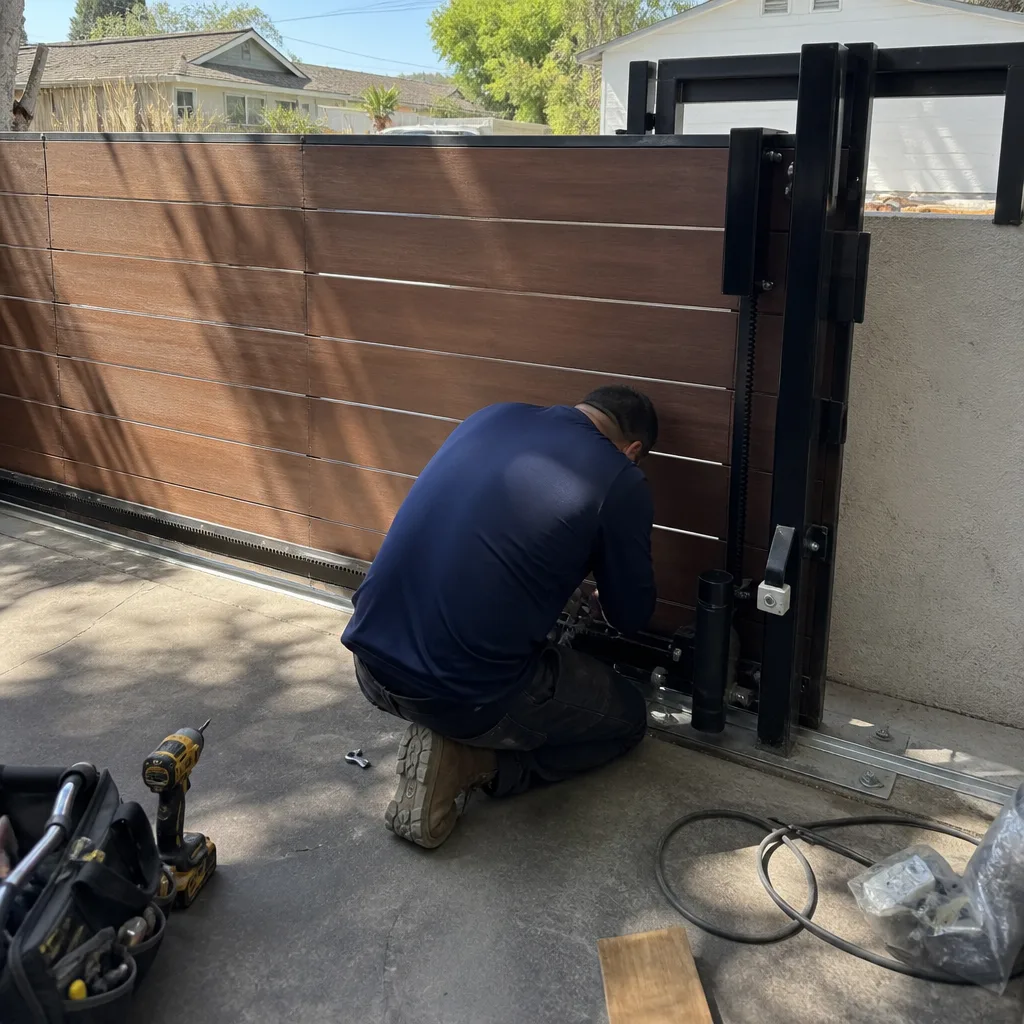 After
AfterLinear Access Control Installation: The Los Angeles Owner’s Guide
Linear access control installation in Los Angeles typically runs $650 to $1,900 installed, depending on whether we’re replacing a failed component or running an entirely new keypad, receiver, and strike circuit. Most jobs are completed same-visit because our trucks carry Linear-compatible boards, keypads, receivers, and power supplies. The way owners usually find us: the keypad lights up but the gate doesn’t move, or the remote stopped working after a power blink, or the property changed hands and nobody knows the master code.
We’re an independent Los Angeles gate and access control service provider. We are not affiliated with Linear or Nortek, but we stock and install their hardware because it’s the most common access control brand bolted to driveway gates across this city, from Hancock Park to Sherman Oaks to the Palisades.
Which Linear Models This Applies To
The Linear systems we see most across Los Angeles split into two eras. The older generation runs the AE-100, AE-500, and AE-1000 telephone entry systems, plus the MGR and MGT gate receivers paired with the classic two-wire keypads. The newer generation runs the AccessBase 2000, the LRA series receivers, and the EXA-2000 keypad line. If you have a beige metal box with a silver Linear badge, that’s almost always an AE series. If the keypad is a narrow, dark gray die-cast unit with backlit blue keys, that’s an EXA-2000 or AK-11.
Here’s the compatibility gotcha that bites owners: Linear changed the keypad wiring protocol around 2012. The older keypads used a simple contact-closure output, two wires, that any gate board accepted. The newer keypads can still do contact closure, but their default is a Wiegand data output that older gate boards will not read. If someone swapped in a new keypad without changing a jumper or a programming setting, the gate sits dead and the keypad looks fine. We fix that exact mismatch regularly, and it’s one of the first things we check.
On parts, we default to genuine Linear OEM boards and keypads when the system is integrated with anything else, an alarm panel, a community entry list, a call-forwarding setup. When it’s a standalone keypad on a single driveway gate, we’ll tell you if a quality aftermarket equivalent makes sense. The aftermarket keypads from vendors like Seco-Larm and LiftMaster’s universal line are solid, but we’ve seen enough flaky no-name clones with cheap membrane buttons to refuse them. A keypad that costs $40 wholesale and dies in eleven months is not a savings.
Signs Your Linear Access Control Installation Is Failing
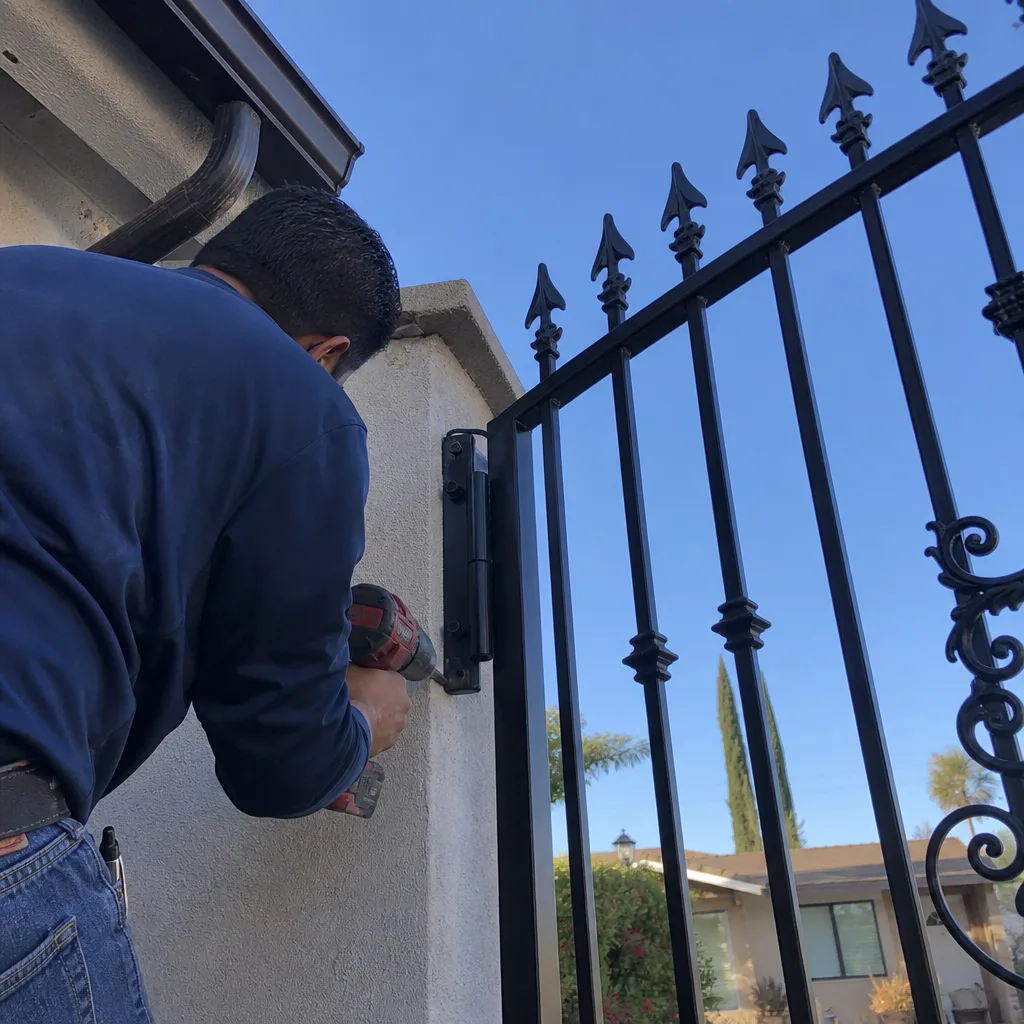
- Keypad accepts the code but the gate doesn’t budge. The keypad’s output relay or Wiegand line may be dead, or the gate board’s input terminal is reading the signal incorrectly. We test this with a meter at the terminal strip, not by guessing.
- Remotes work but the keypad doesn’t. This isolates the problem to the keypad or its wiring, not the gate operator. In Los Angeles, sun-baked keypads on west-facing gates fail faster than shaded ones; the membrane buttons get brittle and the casing warps.
- The system works, then stops after a power flicker or an outage. Linear boards from the AE era have a small backup battery for programming memory. When that battery dies, the board forgets its codes on every power cycle. The fix is a battery replacement and a full reprogram, which we photograph and document before we leave.
- The intercom rings but you can’t hear the visitor, or the visitor can’t hear you. On telephone entry systems, this is usually a failing audio board or a phone line issue, and it’s more common in older hillside installs where the phone wiring has been wet at some point.
- Random opening, or the gate opens for no reason. A failing receiver can pick up stray signals, or a stuck button on a keypad membrane can send phantom entries. We’ve caught both, and we document the fix with before-and-after photos of the board settings.
BeforeAfterReplacement Cost & What’s Included
Here’s the written price structure we work from for Linear access control installation in Los Angeles:
- Keypad only, replacement or new install: $350 to $650 installed. The spread depends on whether we’re reusing existing wiring or pulling a new run, and whether the keypad is an OEM AK-11/EXA-2000 or a quality aftermarket unit.
- Receiver or antenna replacement: $250 to $450 installed. Linear MGR receivers are straightforward; the labor is in tuning the antenna and confirming the range on your specific gate.
- Full access control install (keypad, receiver, wiring, strike or gate board integration): $1,100 to $1,900. This is the complete job: new keypad, new receiver, wire run, and integration with your existing gate operator board.
- Telephone entry system (AE-1000 or AccessBase) replacement: $1,400 to $2,400 depending on whether the phone line or cellular unit stays in place.
Every one of these prices is written down and handed to you before we touch a wire. That’s Clause 1 of The Haven Standard, and it’s not negotiable. The written quote includes parts, labor, programming, and the photo log we leave behind. Our work on Linear access control carries the 365-Day Done Right Promise: if it’s not right within a year, we come back and make it right at no charge.
DIY or Call Us?
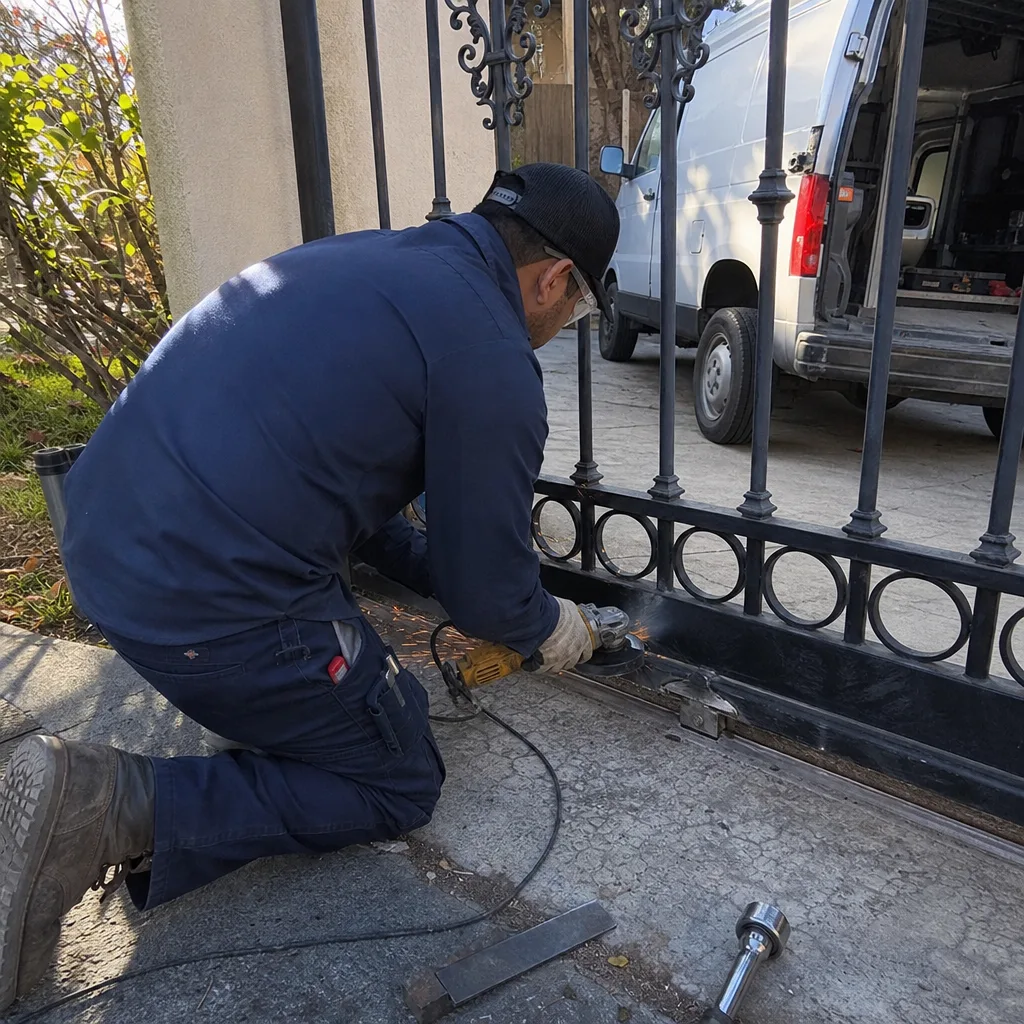
We won’t tell you every access control repair is dangerous, because some of it genuinely isn’t. Checking whether a keypad lights up, testing whether remotes still work, confirming power at the outlet, these are safe and useful. But the moment you’re opening the gate operator’s metal housing and touching terminals, or working on a keypad wired into an AC power supply, you’re dealing with line voltage and gate logic that can bite. Gates move with serious force. A gate that suddenly activates while your hand is inside the chassis is a real injury. Adrian Vance’s rule on this is simple: low-voltage diagnostics are a homeowner’s call; anything past the housing screws is ours.
If you’re not sure whether the problem is the keypad, the receiver, the wiring, or the gate board itself, call us at (213) 674-2473. We’ll diagnose it properly, with a meter and a written record, not a parts cannon.
FAQs
Five to nine years in our experience, with west-facing and full-sun installs trending toward the shorter end. The membrane keys and the plastic housing degrade faster in direct Los Angeles sun than the electronics do. A shaded keypad on a north-facing wall will often outlast the gate board it’s wired to. Call (213) 674-2473 if your keypad is past year five and acting up.
Sometimes, yes. If the issue is a corroded wiring terminal, a loose connection, or a programming error, we repair it. If the membrane buttons are worn through or the board shows water damage, replacement is the honest call and we’ll show you the board with the corrosion before we quote the new part.
Most keypad and receiver replacements take one to two hours on site, including programming and range testing. A full install with new wiring can take half a day depending on the distance from the house to the gate and what’s in the way. You’ll have a written scope and price before the first wire is pulled.
Yes. Our Los Angeles trucks carry Linear keypads, receivers, boards, power supplies, and programming cables, along with compatible parts for LiftMaster, Mighty Mule, Ghost Controls, and the other major gate brands we service. If we have to order a specific board variant, we’ll tell you before we leave and you’ll have the price in writing.
Written by Adrian Vance, Owner, Vance Gate Repair Los Angeles at Vance Gate Repair Los Angeles, serving Los Angeles and nearby areas.