
Free on-site gate assessment - hinges, posts, and your LiftMaster or Nice gate operator checked before anything is quoted
The assessment is free and the quote is the invoice.
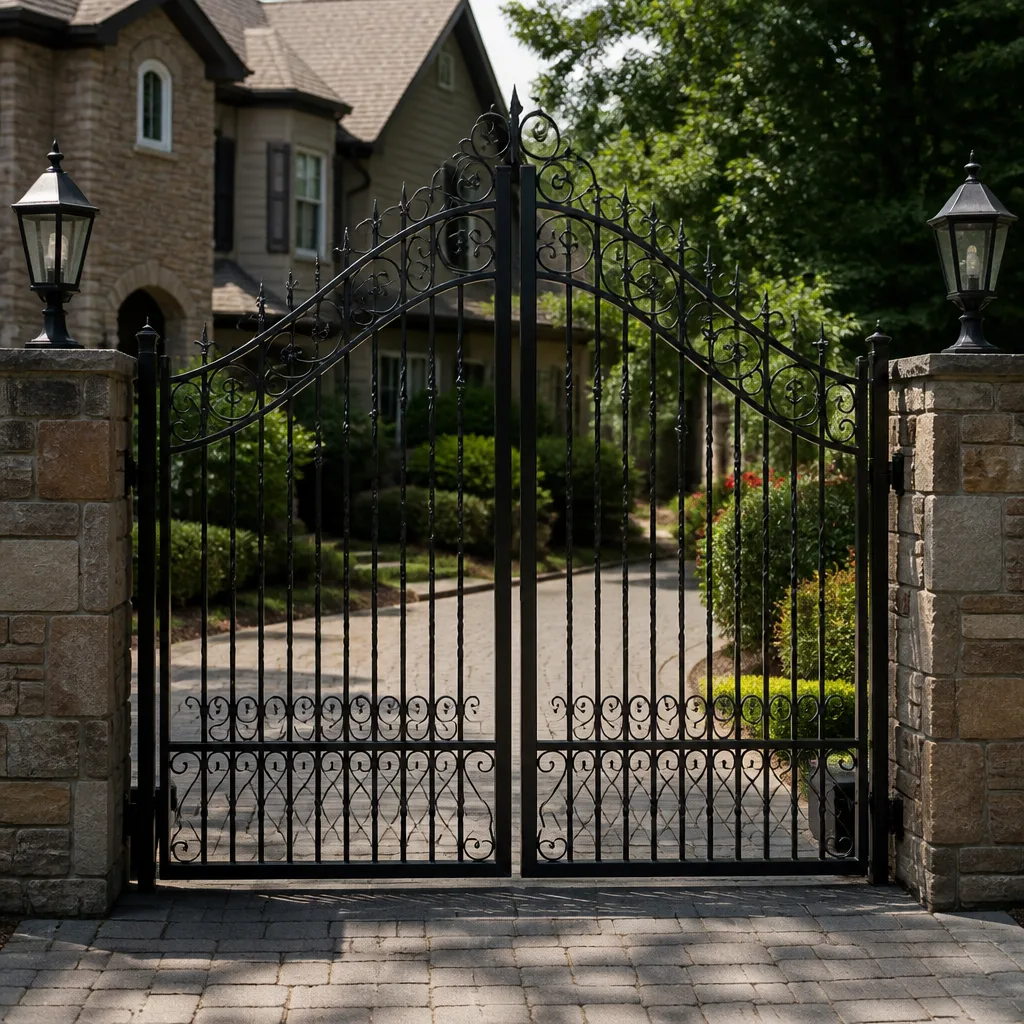
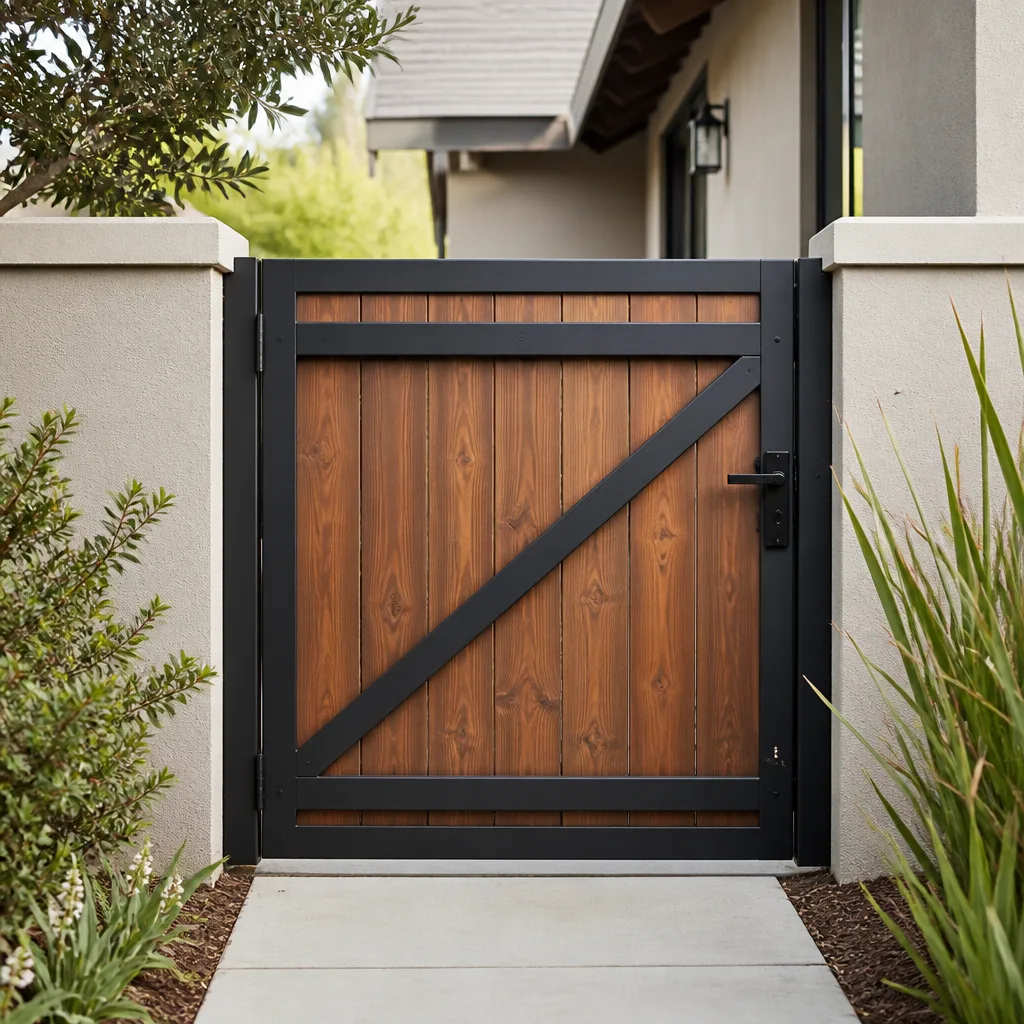
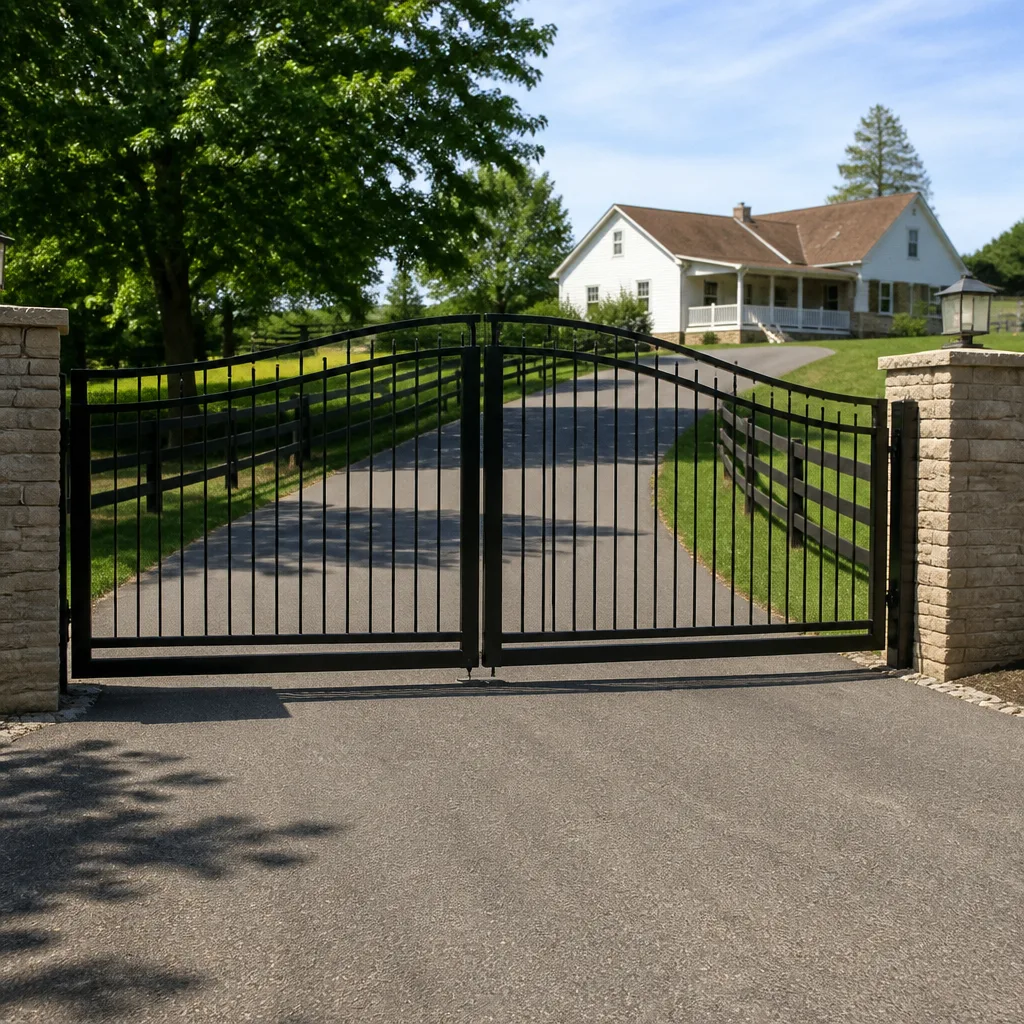
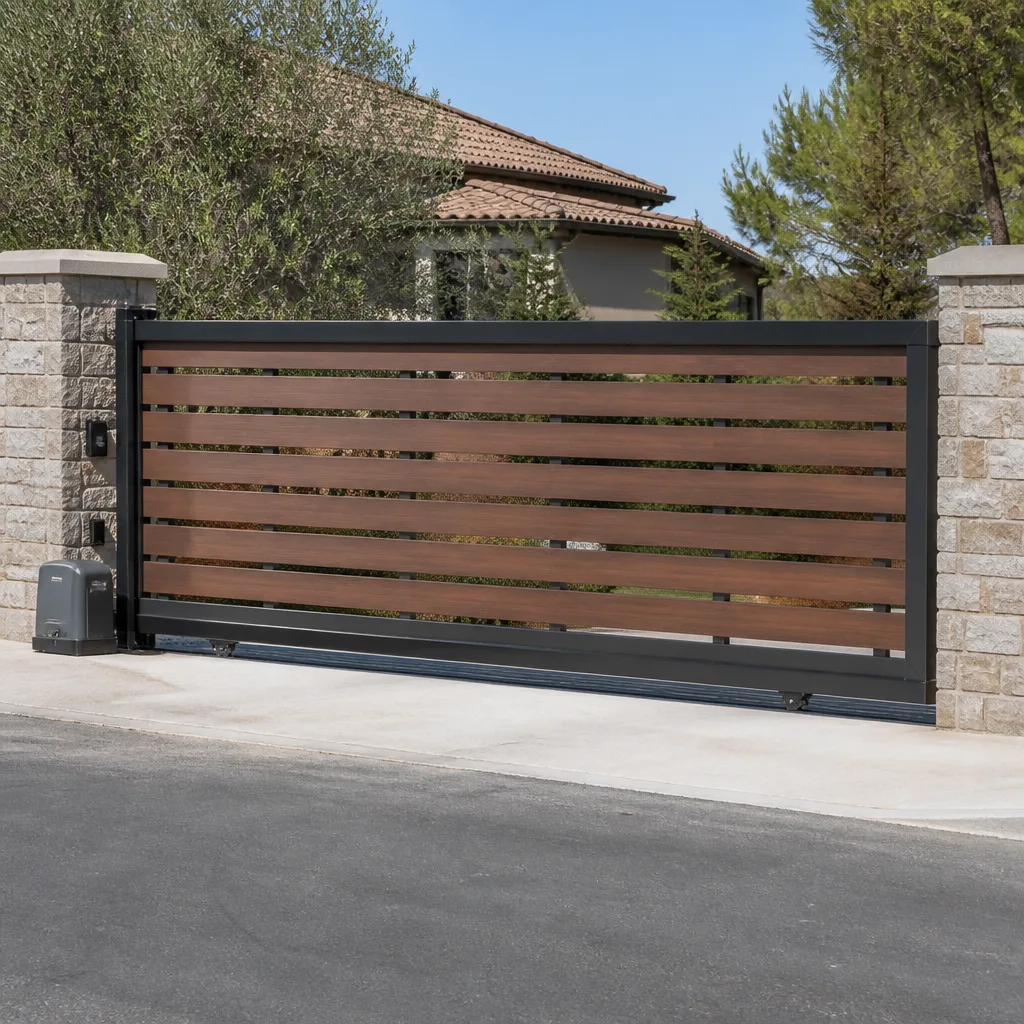
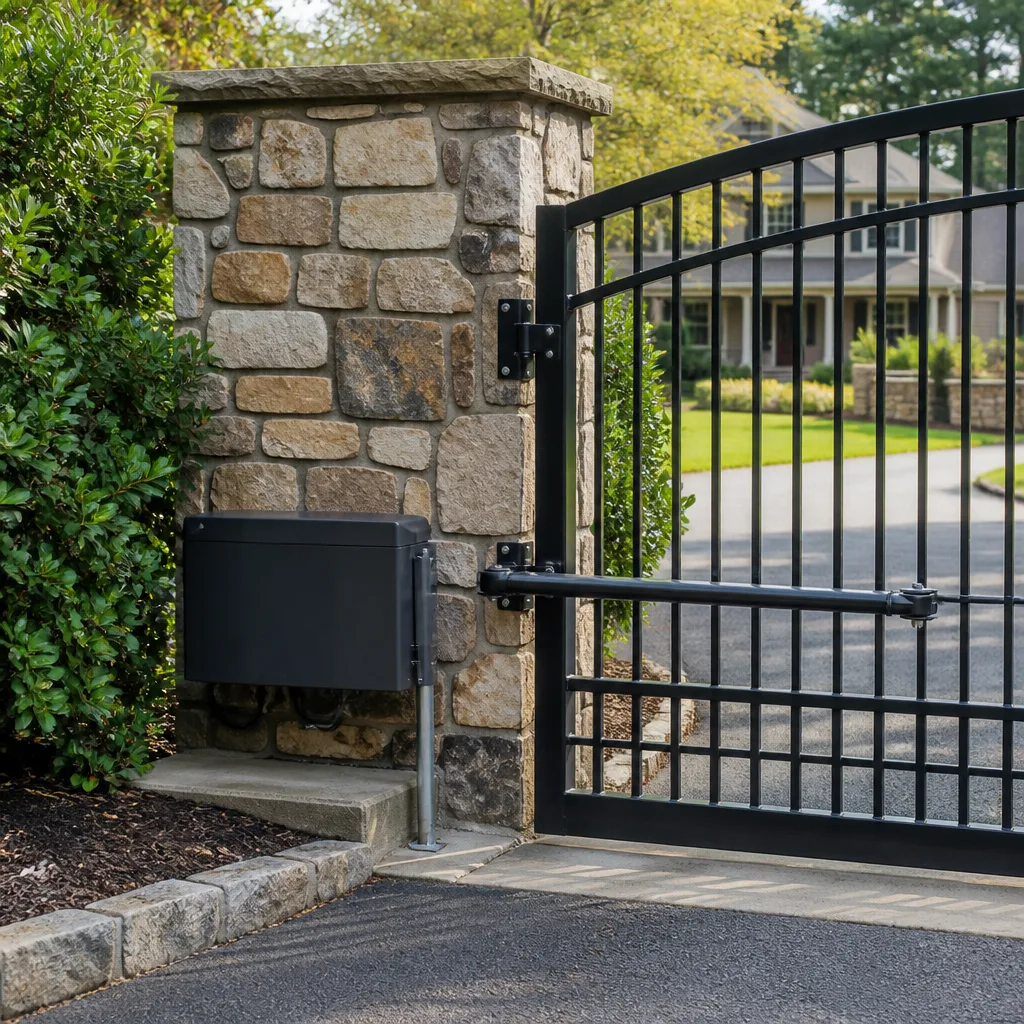
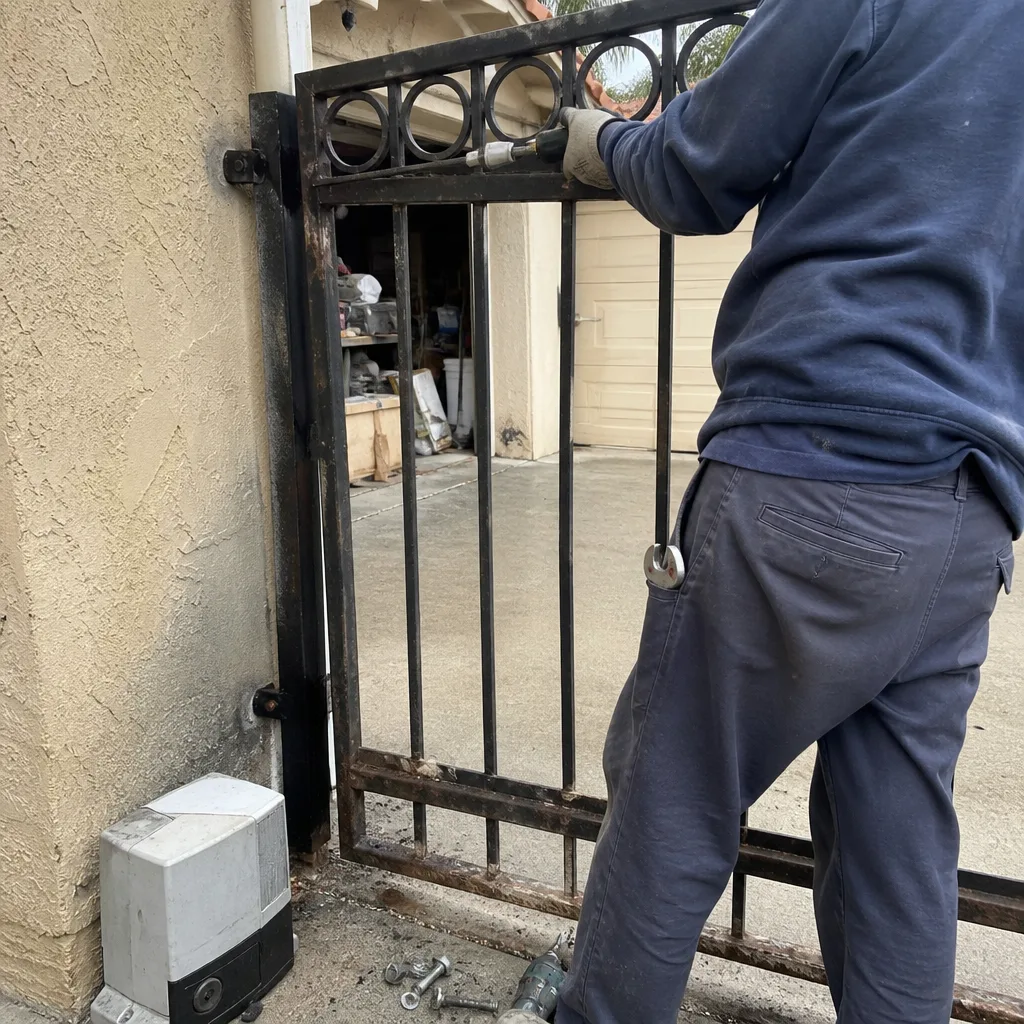 Before
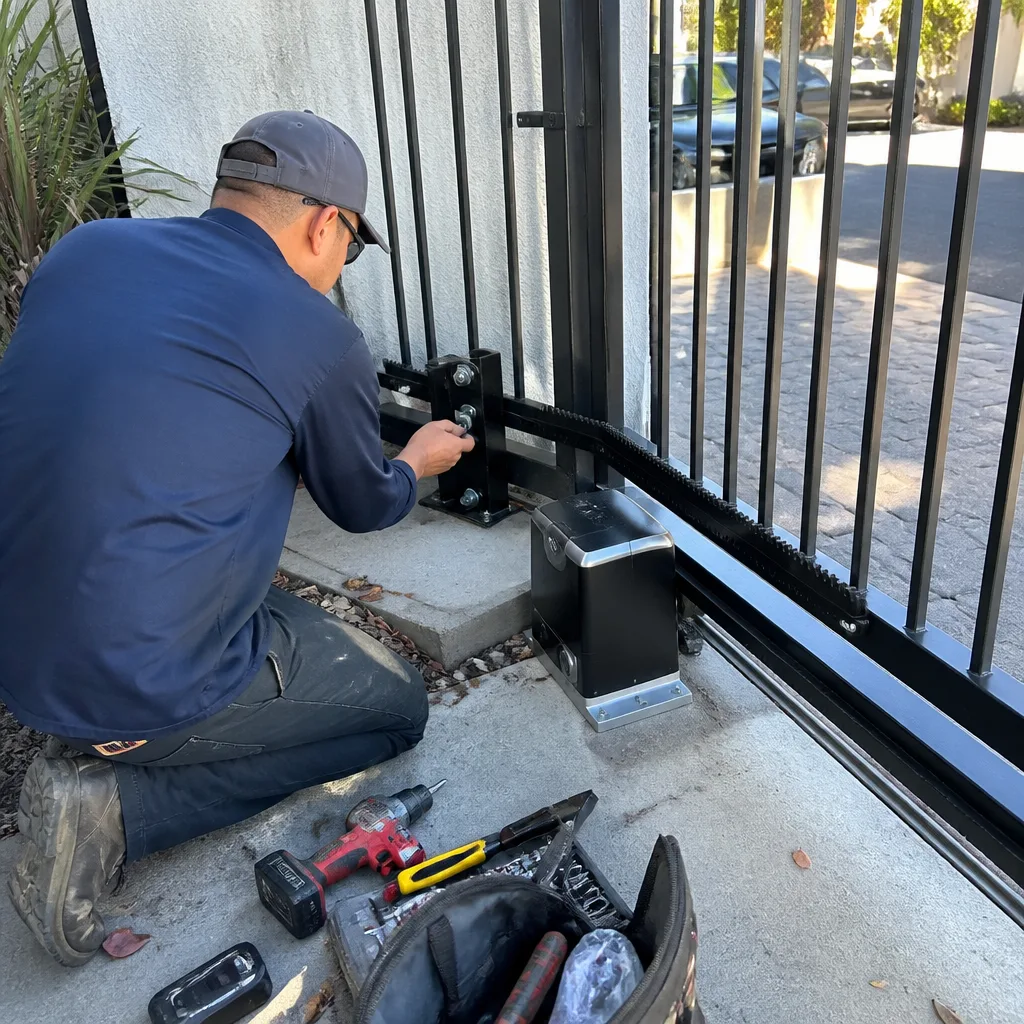 After
After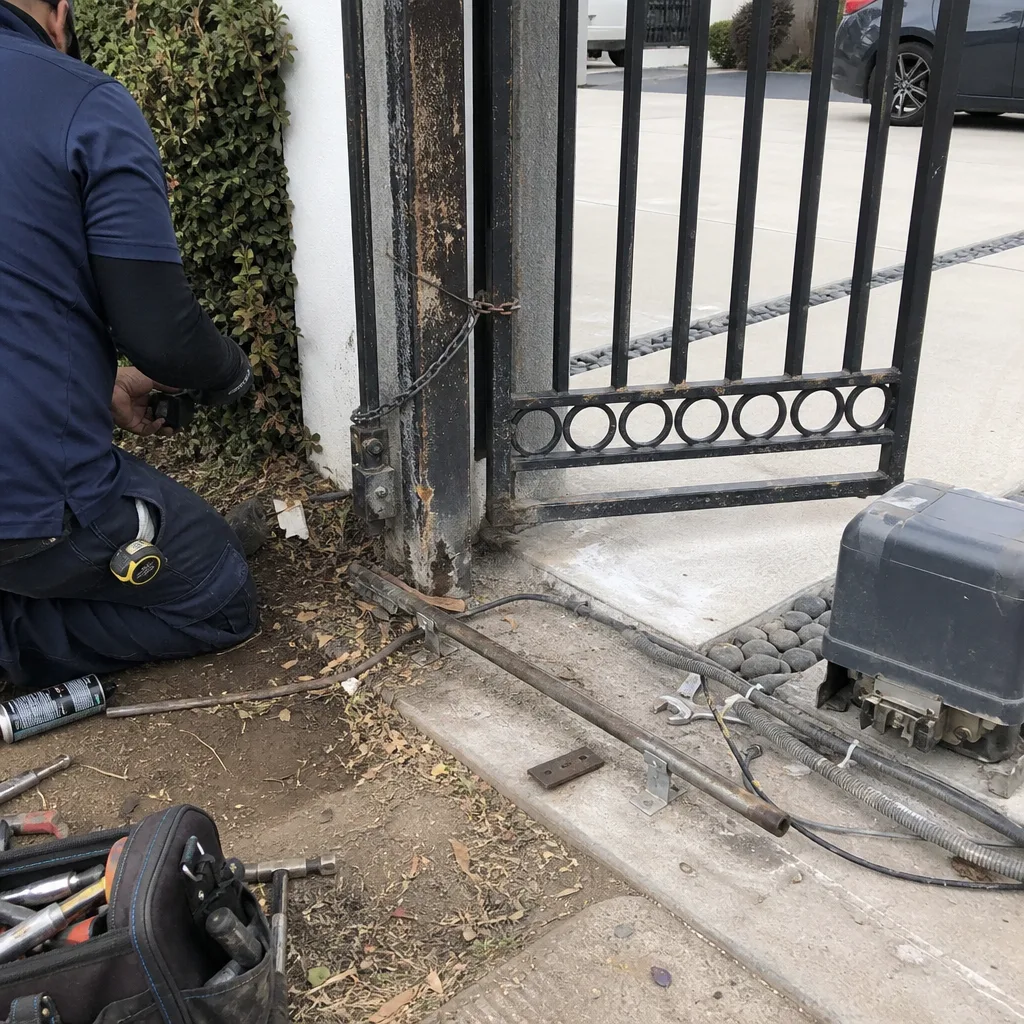 Before
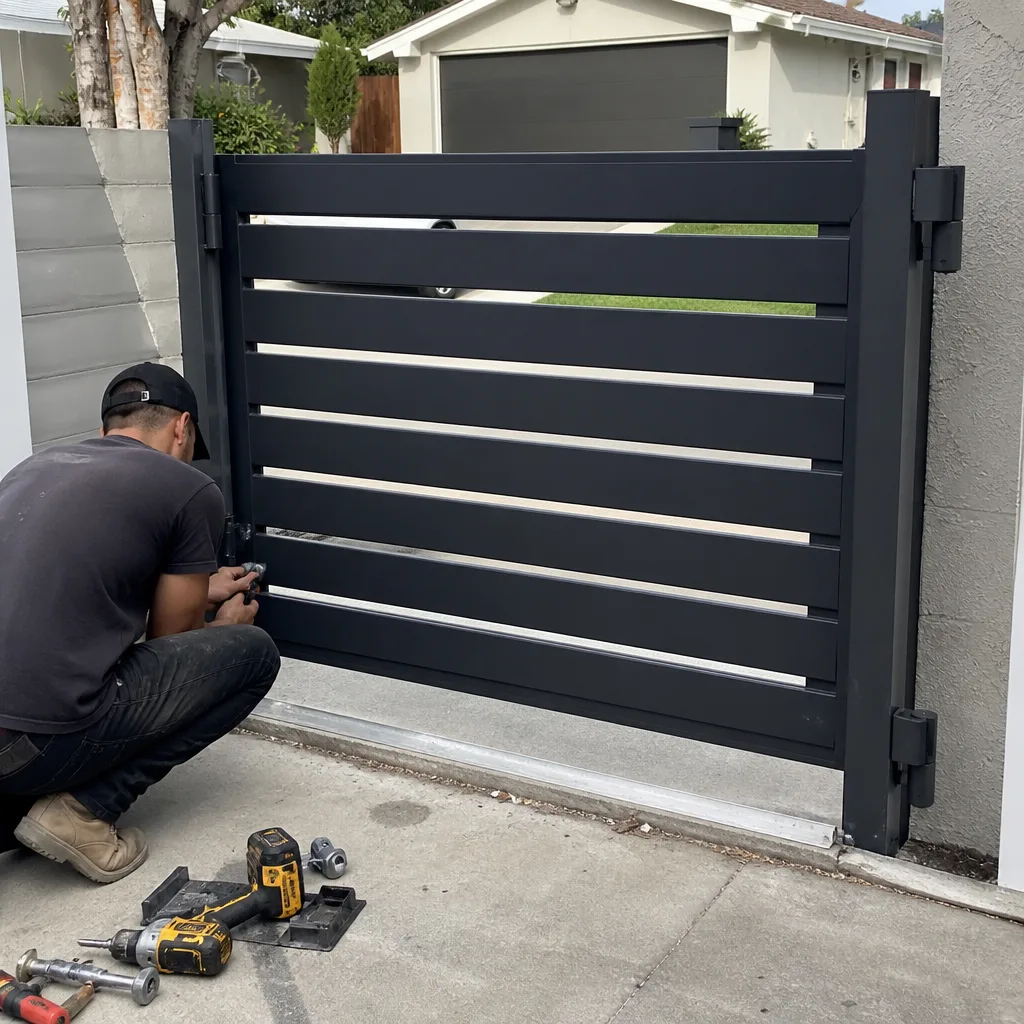 After
After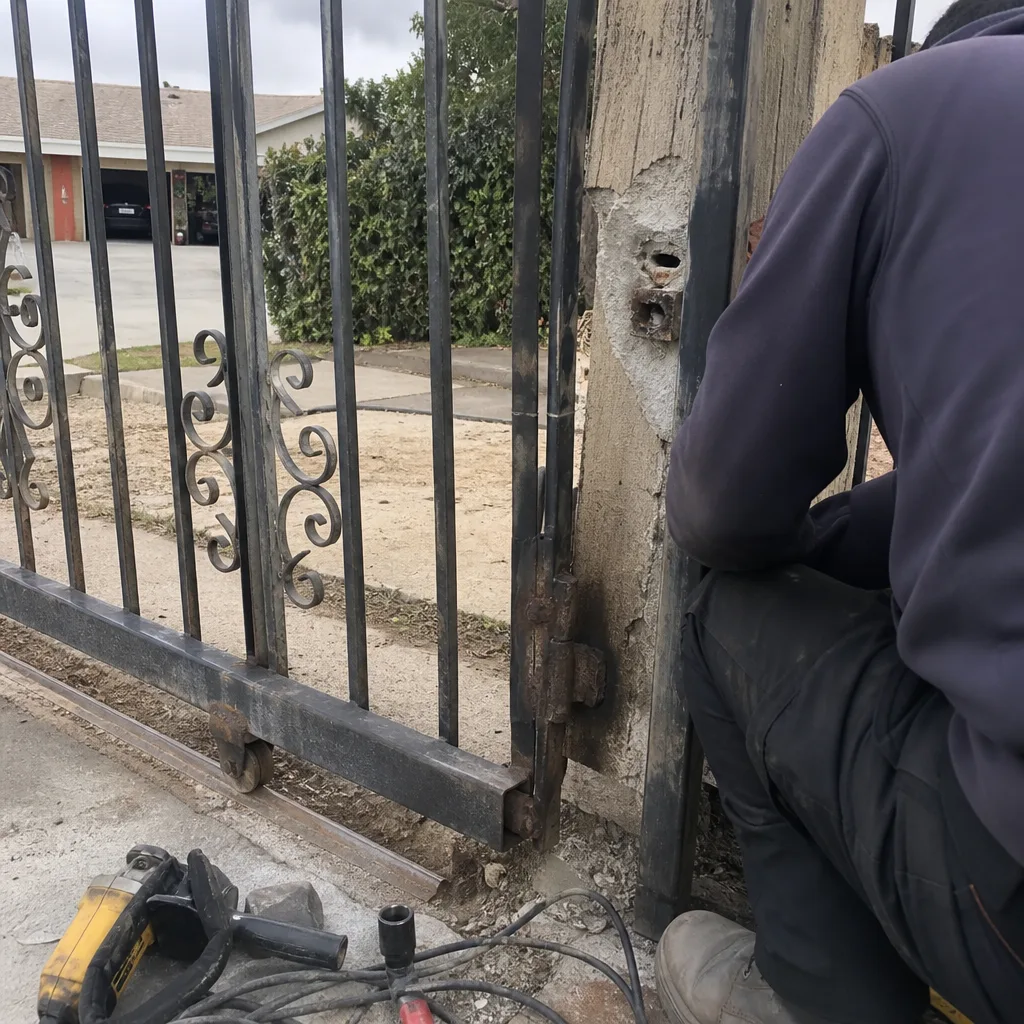 Before
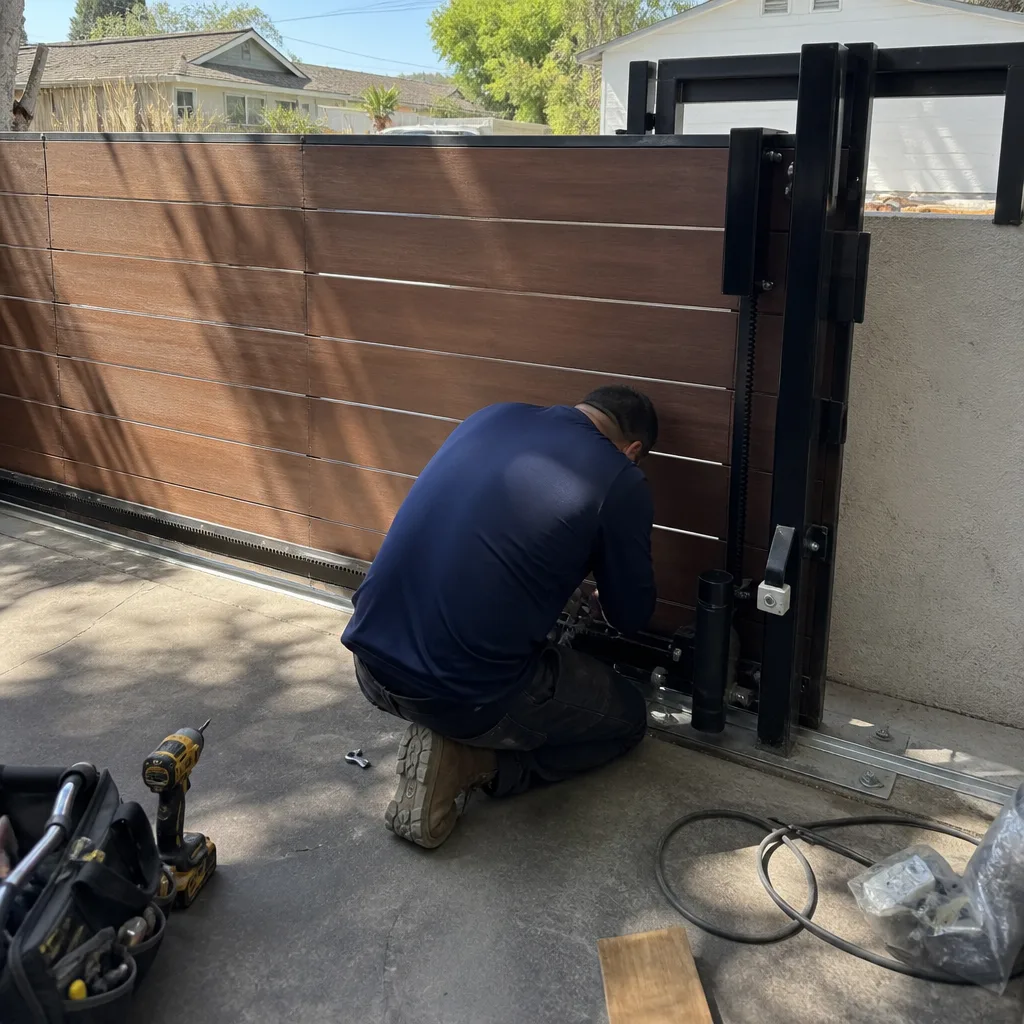 After
AfterGhost Controls Welding & Fabrication: The Los Angeles Owner’s Guide
Most Ghost Controls gate failures we see in Los Angeles aren’t motor failures at all. They’re weld failures: the gate bracket tears loose from the post, the arm mount cracks at the pivot, or the hinge plate fatigues until the gate sags into the driveway. We stock Ghost Controls-compatible brackets, hinge plates, and fabricated mounting hardware on our trucks, and we weld or replace them same-day in most cases. Installed pricing for Ghost Controls welding and fabrication work in Los Angeles typically runs $185 to $540 depending on what failed and whether we’re repairing the existing part or fabricating a replacement on site.
Here’s how owners usually find us: the gate worked fine for two or three years, then one morning it hesitated at the midpoint, or made a grinding sound, or just stopped. They check the motor. The motor’s fine. The problem is the metal that connects the motor to the gate, and that metal gave out. It’s the most common Ghost Controls issue we fix that has nothing to do with Ghost Controls electronics.
Which Ghost Controls Models This Applies To
Ghost Controls runs two main lines: the residential AXDP/AXCP series (solar-friendly, used on single and dual swing gates) and the heavier-duty R Series and TSS1 kits for wider or heavier gates. The welding and fabrication we do applies to all of them, because the failure point is almost never the opener itself. It’s the bolt-on hardware: the gate bracket, the post bracket, the hinge plates, and the clevis pins that transfer torque from the arm to the gate leaf.
The compatibility gotcha with Ghost Controls is the post bracket geometry. The AXDP arm ships with a specific post pivot bracket that assumes a flat, square post face and a gate leaf between 1.5 and 3 inches thick at the mounting point. A lot of Los Angeles gates don’t match that. Wrought iron gates with ornamental scrollwork at the top rail, stucco columns that aren’t square, posts set on a slight batter, gates that were custom-welded twenty years before the opener was ever bolted on. When the supplied bracket doesn’t fit, someone either shims it (which concentrates stress and cracks the weld within months) or wallows out the bolt holes (which lets the arm drift and throws the limit settings). We fabricate custom post brackets in those cases. It’s faster than trying three aftermarket brackets that almost fit.
Signs Your Ghost Controls Welding & Fabrication Is Failing
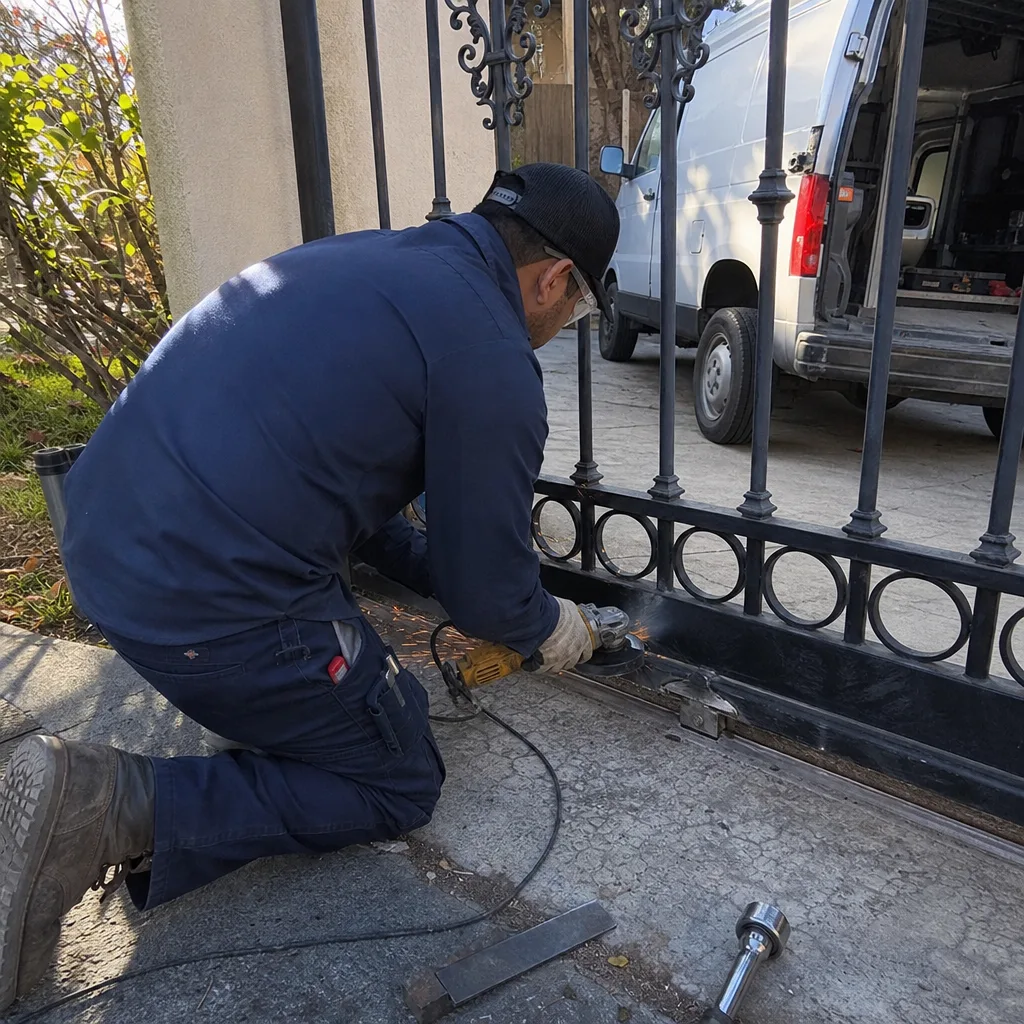
These are the symptoms we hear on the phone, and what each one usually means once we’re on-site:
- The gate slows at the same spot every cycle, then jerks forward. The arm bracket is binding on a bent mount or a worn clevis pin. The motor is fighting the hardware. If it runs long enough like this, the gear teeth in the arm start to strip and now you’re buying a new opener instead of a new bracket.
- The gate leaf sags lower on the latch side than it did six months ago. Hinge plate fatigue. The bottom hinge is carrying more weight than it was designed for, and in coastal Los Angeles air, rust accelerates it. We see this often within two or three miles of the beach.
- A visible crack runs from a bolt hole across the face of the bracket. This is classic vibration fatigue. Every cycle the opener torques the bracket, and if the gate is slightly out of balance or the post has any flex, the metal work-hardens and splits. Once you can see the crack, it’s done. No epoxy or re-tightening fixes it.
- You hear a metallic click or pop when the opener changes direction. Loose mount, wallowed bolt hole, or a bushing that’s worn through. The pop is the bracket shifting in the slop. Each shift increases the slop, which increases the next shift.
- The gate won’t fully close against the stop, or it rebounds repeatedly. A bent or broken gate bracket changes the closed position geometry. The opener’s limit settings were calibrated to the old bracket position. The motor thinks it’s closed; physically, the gate isn’t. Recalibrating without fixing the bracket just teaches the opener to stop at the wrong place.
BeforeAfterReplacement Cost & What’s Included
For Ghost Controls welding and fabrication work in Los Angeles, expect the following installed ranges:
- Weld repair on an existing bracket, in place: $185 to $260. We grind the crack back to clean metal, weld it with proper penetration, and re-mount. Faster than replacement, but not always possible if the metal’s too thin or the crack runs through a stress point.
- New gate bracket or post bracket, fabricated to fit: $240 to $380. Includes cutting, drilling, welding, primer and paint, and remounting the Ghost Controls arm. We use 3/16″ or 1/4″ steel plate depending on gate weight.
- Hinge plate replacement with gate leaf realignment: $320 to $540. This is the big one. We’re lifting the gate, cutting out the old plates, welding in new ones, and resetting the gate’s swing path so the opener runs true again.
The price is written and handed to you before we start. No vagueness, no “we’ll see how it goes.” Under Haven Standard Clause 1, you approve the exact number before a grinder or welder gets plugged in. Every weld comes with our 365-Day Done Right Promise, and you get a photo record of the work, including the weld before paint and after paint, which matters if you ever need it inspected.
DIY or Call Us?
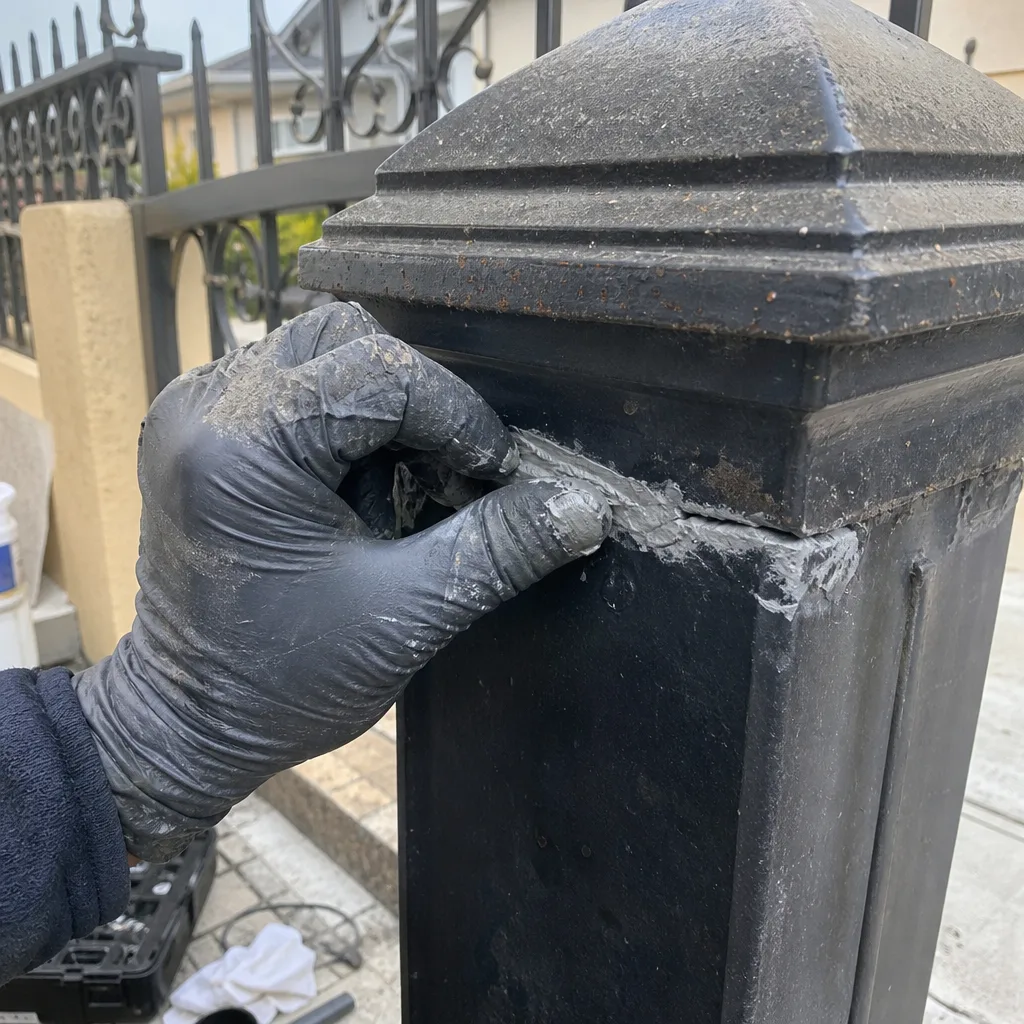
Welding on a gate that’s connected to a Ghost Controls opener is not a weekend project. The opener stores torque. If the bracket you’re welding is still attached to the arm, and the arm is under load, the weld heat can distort the arm barrel or damage the internal gears. We disconnect and release the opener tension before any welding happens. That’s the part most DIY repairs skip, and it’s the part that turns a $200 bracket job into a $900 opener replacement.
What you can safely check yourself: photograph the bracket and bolt holes. Look for cracks radiating from the holes. Try to wiggle the bracket by hand with the opener off. If it moves, something’s loose or broken. Then call us at (213) 674-2473 and describe what you saw. If it’s a simple bracket swap, we can often handle it the same day we’re out there.
FAQs
An undamaged, properly installed bracket usually lasts five to eight years, but the two things that kill them early in Los Angeles are weld fatigue from a gate that’s slightly out of balance, and salt air corrosion within a few miles of the coast. If your bracket cracked within three years, something else loaded it: a misaligned hinge, a post that flexes, or a gate leaf that’s heavier than the opener was rated for.
Sometimes, yes, if the crack is in the plate body and hasn’t reached a bolt hole or a weld joint. We’ll grind it back and weld it, and we’ll tell you honestly if it’s a temporary fix. If the crack is through a hole or at the stress point, we replace it. We won’t weld something that we know will crack again next spring. Call us at (213) 674-2473 and we’ll talk through what you’re looking at.
A straightforward gate bracket or post bracket swap takes about 90 minutes on site, including removing the old one, cleaning the post face, welding the new bracket, and remounting the opener. Hinge plate replacement with realignment is a half-day job. We’ll give you the time window when we quote the written price.
We stock Ghost Controls-compatible gate brackets, post brackets, clevis pins, and bushing kits for the AXDP and AXCP lines, plus universal hinge plate stock. For hardware from other brands on the same gate, we also carry parts for LiftMaster, Mighty Mule, and DoorKing. If you have a Ghost Controls part number, have it ready when you call and we’ll confirm fitment before we roll.
Written by Adrian Vance, Owner, Vance Gate Repair Los Angeles at Vance Gate Repair Los Angeles, serving Los Angeles and nearby areas.