
Last updated September 19, 2026
Free on-site gate assessment - hinges, posts, and your LiftMaster or Nice gate operator checked before anything is quoted
The assessment is free and the quote is the invoice.
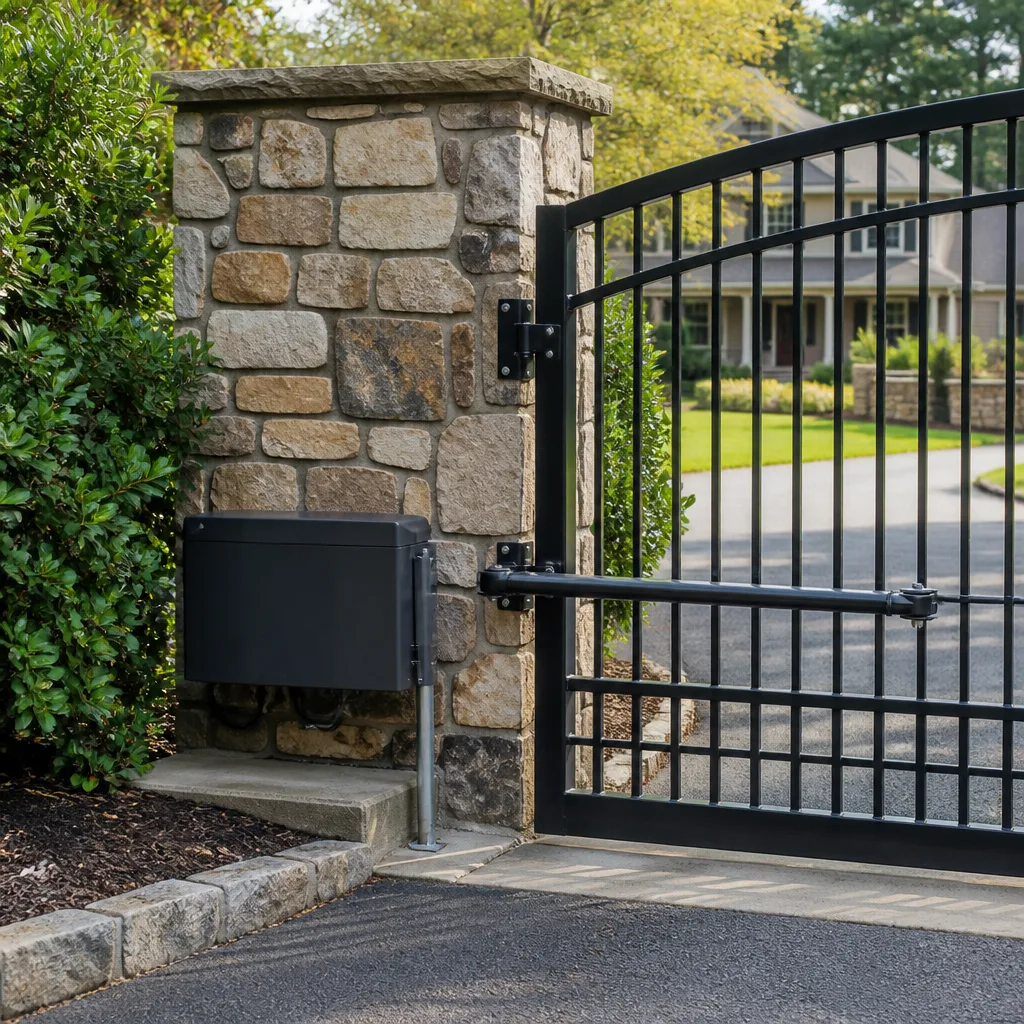
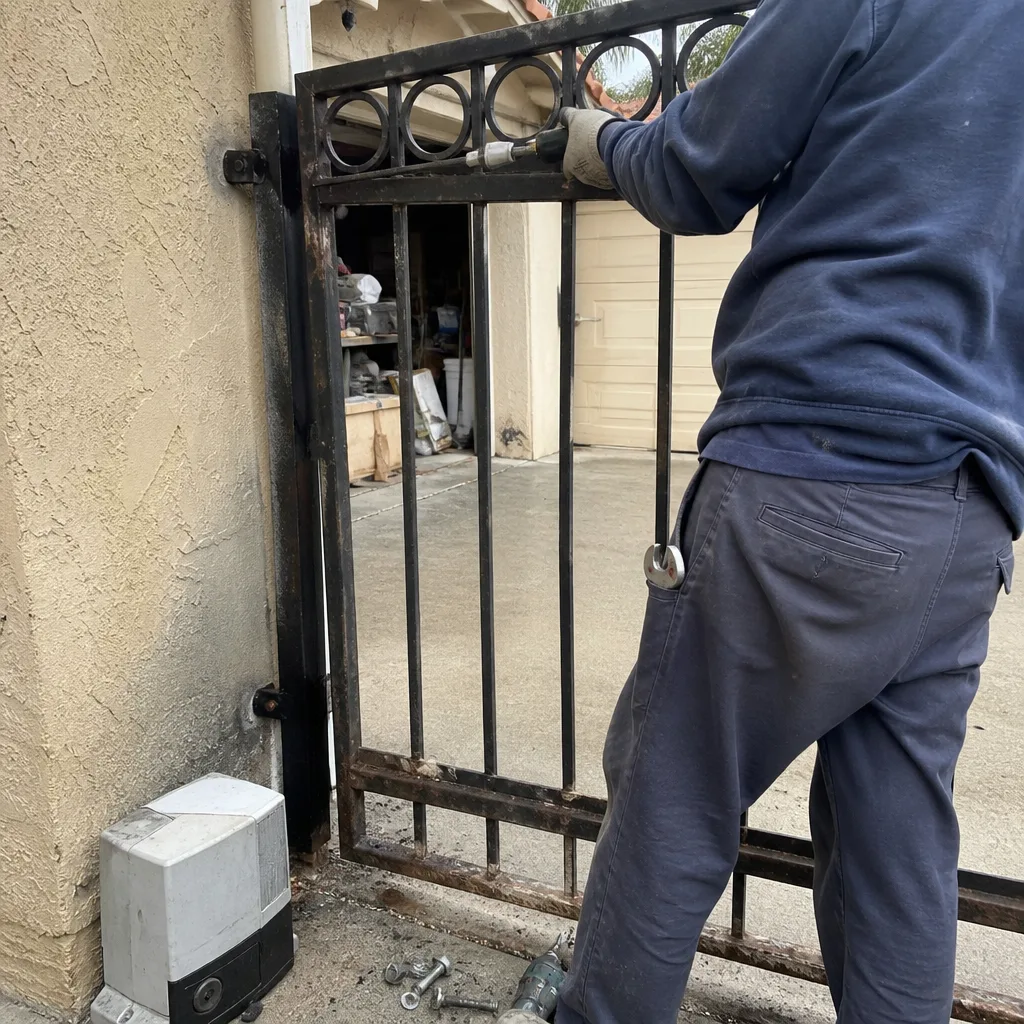 Before
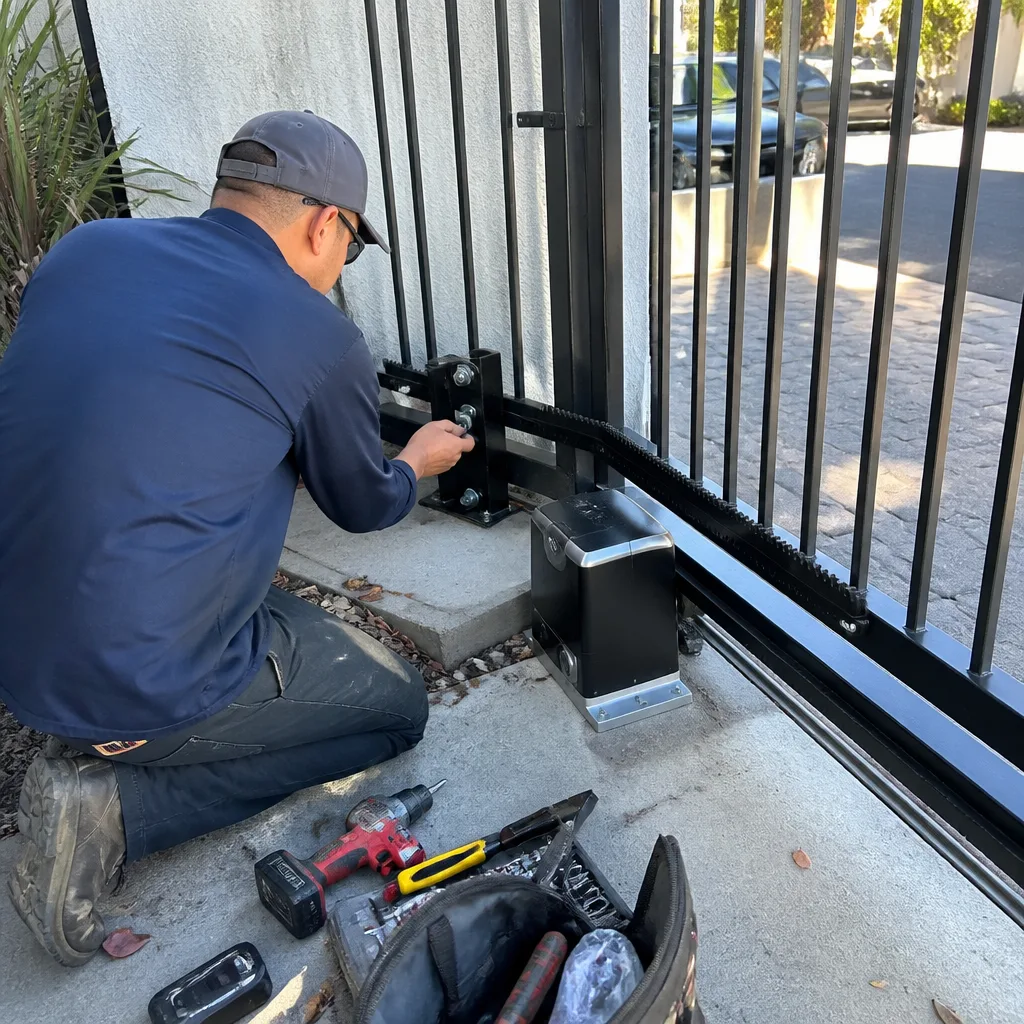 After
After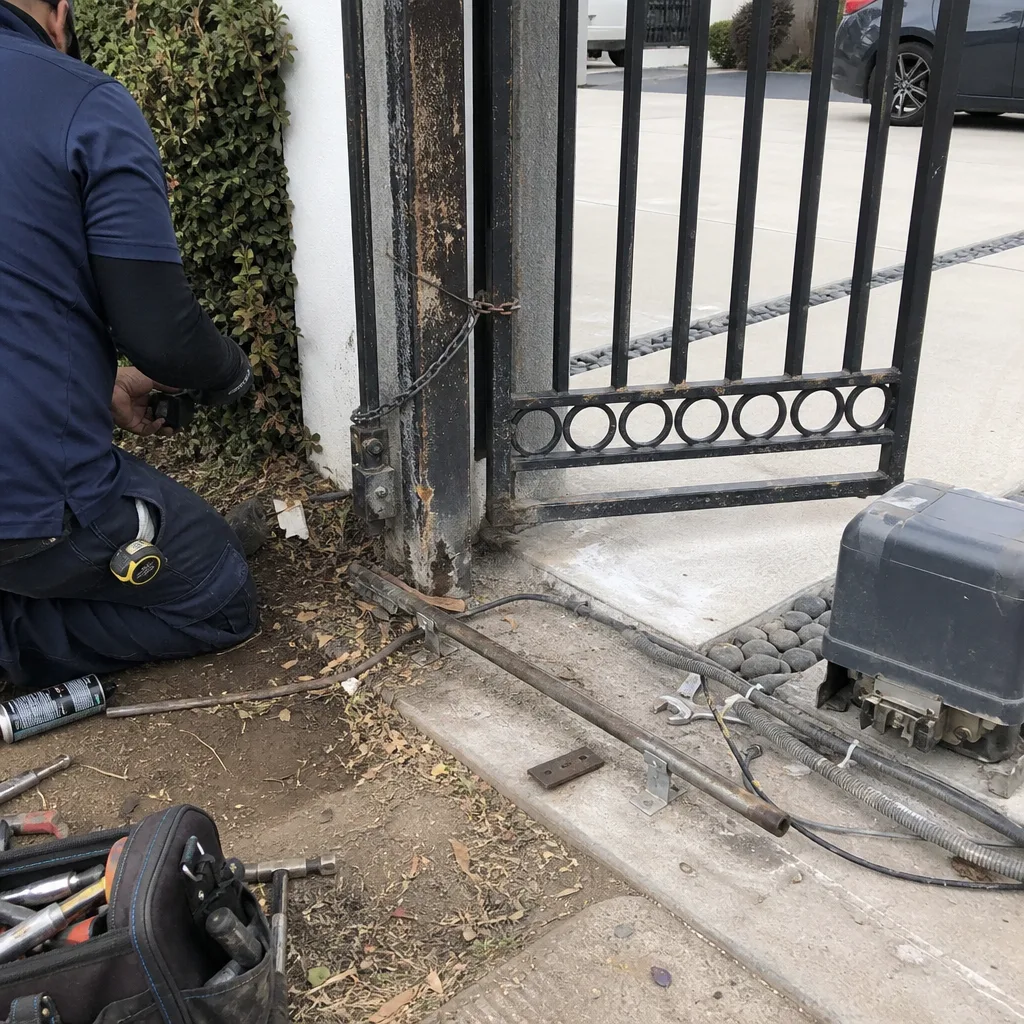 Before
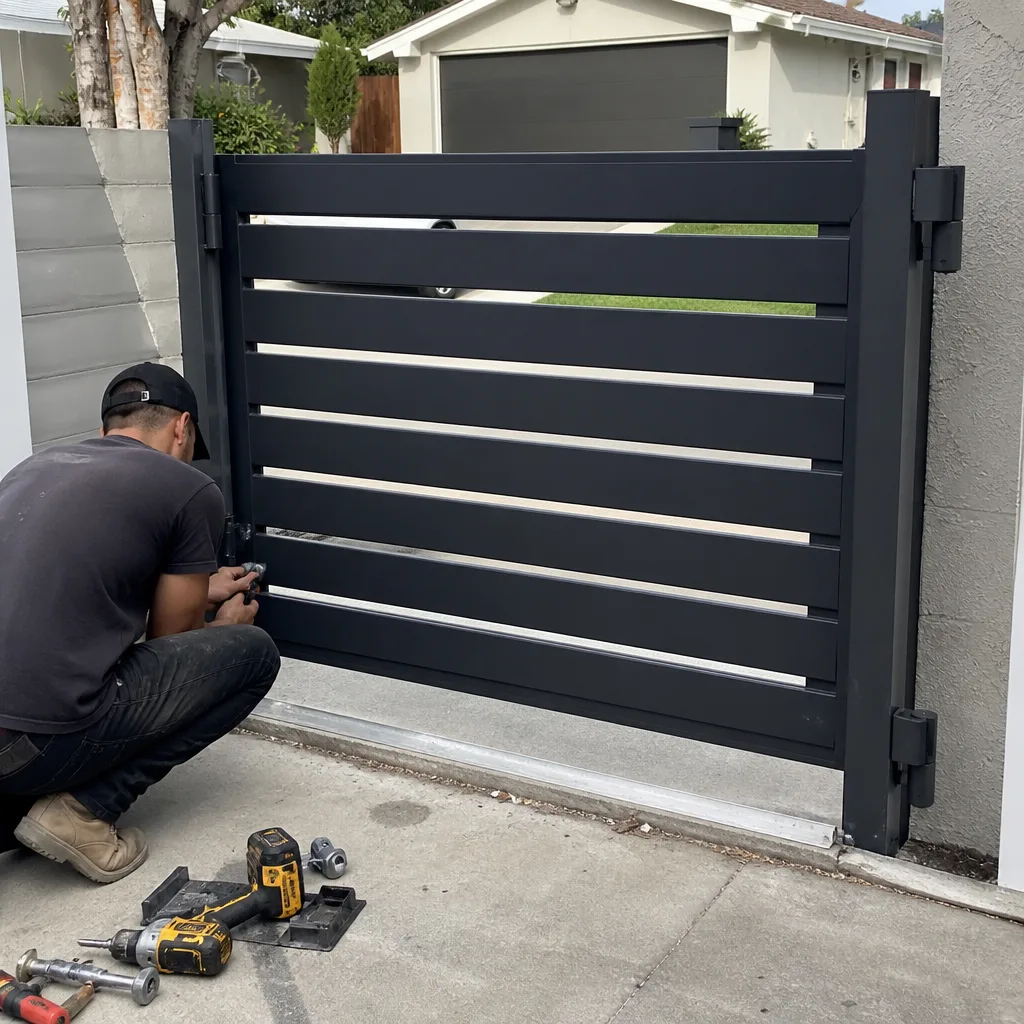 After
After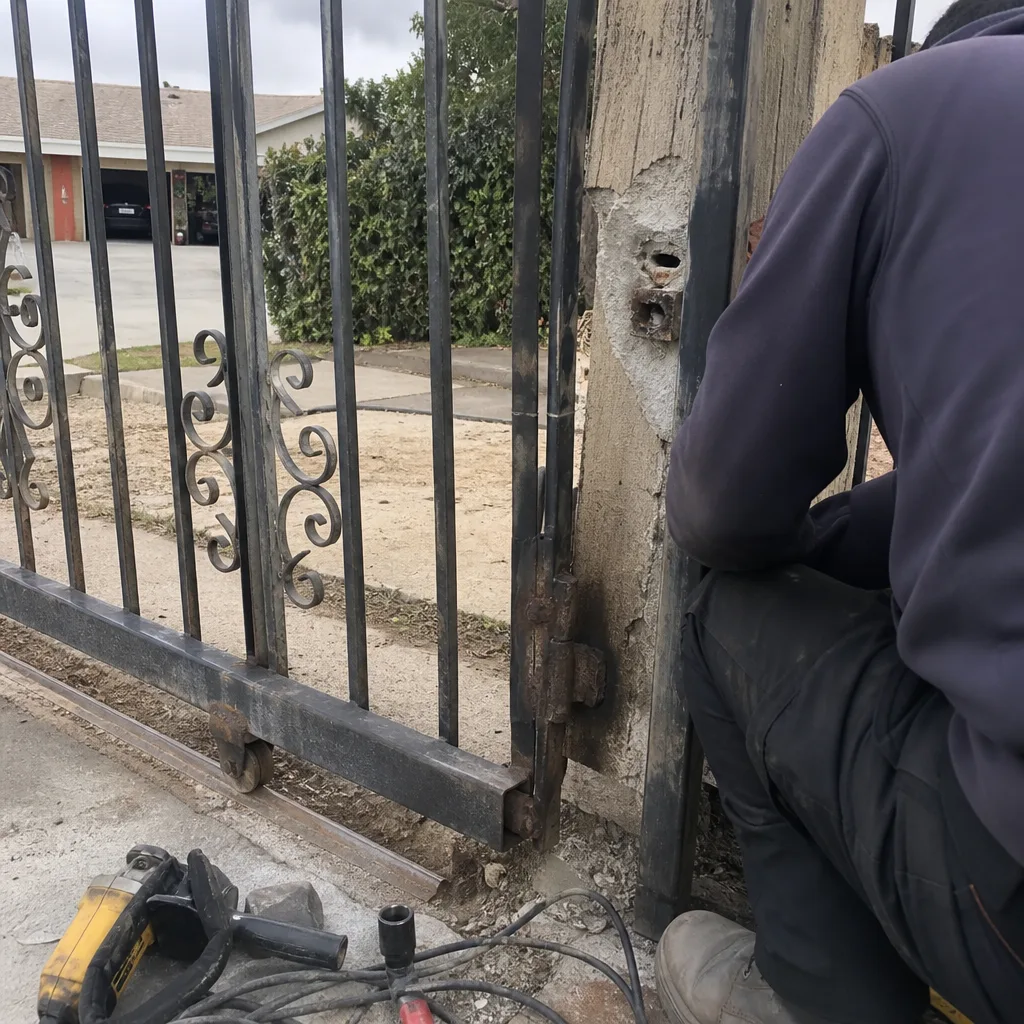 Before
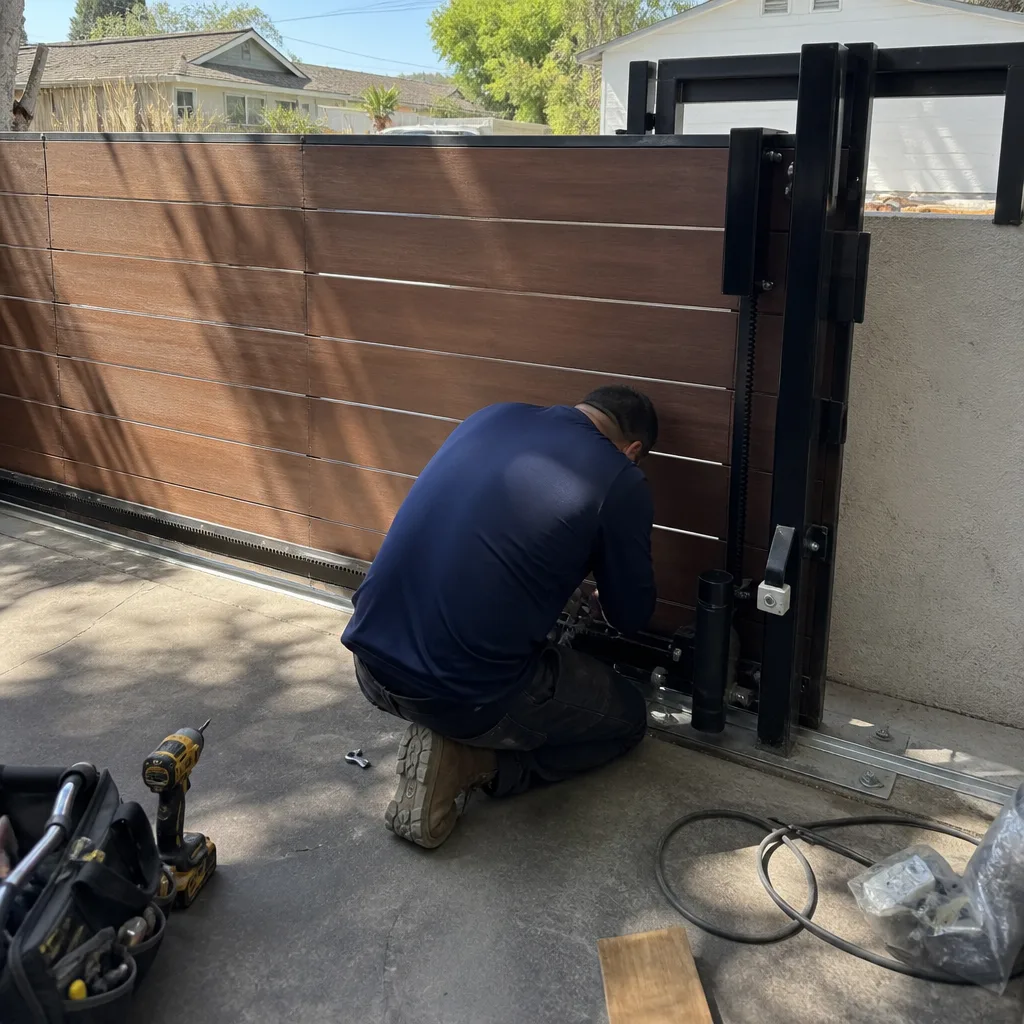 After
AfterSeasonal Gate Repair Care for Los Angeles: Year-Round Homeowner’s Guide
Most seasonal maintenance advice assumes a place has seasons. Los Angeles doesn’t, not in the way a gate cares. Your gate never sees frost heave or a February ice storm, but it does see something the rest of the country doesn’t: Santa Ana wind events that throw sustained 40-mile-per-hour gusts against a 14-foot steel panel, day after day, from October through March. Those winds don’t just threaten hillsides. They bend hinges, shift operator mounts, knock photo-eye alignment out of tolerance, and trigger safety-reverse faults that a technician in Chicago will never diagnose. This guide covers what actually happens to gate hardware through a Los Angeles year and what to check, when, so a $40 adjustment doesn’t become a $900 operator replacement. For more detail, see The Complete Guide to Gate Repair in Los Angeles.
Quick Answer
Seasonal gate care in Los Angeles means four distinct inspection periods tied to the region’s actual weather: pre-Santa Ana checks in early fall, post-wind-event checks after major gusts, summer heat inspections before sustained high temperatures hit operators and wiring, and a mild wet-season check from December through February. The highest-value action you can take is documenting your gate’s normal readings, limit-switch positions, and photo-eye alignment twice a year so drift becomes visible before it becomes a failure. Most seasonal gate damage in Los Angeles counties is either wind-related hinge and bracket stress or heat-related operator thermal faults, not rust or corrosion.
Table of Contents
- Santa Ana Season: October Through March Wind Stress
- Coastal vs. Inland vs. Hillside: Why the Same Gate Fails Differently
- Summer Heat and UV: What 280 Sunny Days Do to Operators
- The Mild Wet Season: December Through February Checks
- Month-by-Month Care Plan for Los Angeles Gates
- Building a Seasonal Inspection Log
- Common Mistakes to Avoid
- When to Call a Professional
- Frequently Asked Questions
BeforeAfterSanta Ana Season: October Through March Wind Stress
In Los Angeles, the single most damaging weather pattern for gate hardware runs from October through March. Santa Ana winds, those dry offshore gusts that blow from the high desert toward the coast, routinely sustain 30 to 45 mph with gusts exceeding 60 in the canyons and passes. A 14-foot driveway gate with a solid panel acts as a sail. The physics are simple: wind load multiplies across the surface area, and all that force transfers to the hinge posts, the hinge pins, the operator bracket, and, in the worst cases, the operator’s internal gear train.
We’ve watched a single strong wind event shift a gate enough that the safety reverse, the circuit that stops and reverses the gate when it meets resistance, began tripping on every cycle. The homeowner assumed the motor was failing. The motor was fine. The hinge bushings had ovaled out under sustained lateral load, and the gate was dragging its leading edge against the driveway. That’s a common Santa Ana story: wind creates mechanical drag, and mechanical drag creates electrical symptoms.
Post-Event Checks to Run After Major Wind
After any Santa Ana event with gusts above 35 mph, walk the gate through a full open-and-close cycle and look for these five things:
- Listen for a change in sound. A gate that hummed last week and growls this week has picked up resistance. Wind bends bracket arms subtly; the motor now works harder against the same load.
- Watch the leading edge at the fully open position. If the gate no longer lines up with the stop post or the open limit marker you remember, the hinges shifted. A quarter inch of movement at the hinge becomes an inch at the leading edge.
- Check the photo-eye alignment. The photo-eye, the infrared beam that stops the gate if anything crosses the path, sits in a housing that wind can rotate. If the beam is even two inches out of alignment, the gate may reverse and refuse to close. Wind routinely nudges the photo-eye bracket on gates with long exposed runs.
- Inspect hinge pins and bolts for shiny metal or powder residue. Shiny metal means movement that didn’t exist before. Powder residue at a bolt hole means the bolt is working back and forth under load and wearing the surrounding material.
- Check the operator’s mounting plate. On slide gate operators mounted to a pad, wind loads transfer through the chain or rack to the motor mount. Hairline cracks in the concrete or loosened anchor bolts show up as a gate that shudders when it starts moving.
Stress damage shows differently than cosmetic damage. Cosmetic wind effects are surface-level: leaves piled against the track, dust on the housing, a small dent in the panel. Stress damage is mechanical: changed sound, changed alignment, changed operating speed, changed stopping position. If you document the normal readings before wind season, you’ll know the difference. Our Gate Repair in Los Angeles page covers what typical wind stress repair involves and what it should cost.
Coastal vs. Inland vs. Hillside: Why the Same Gate Fails Differently
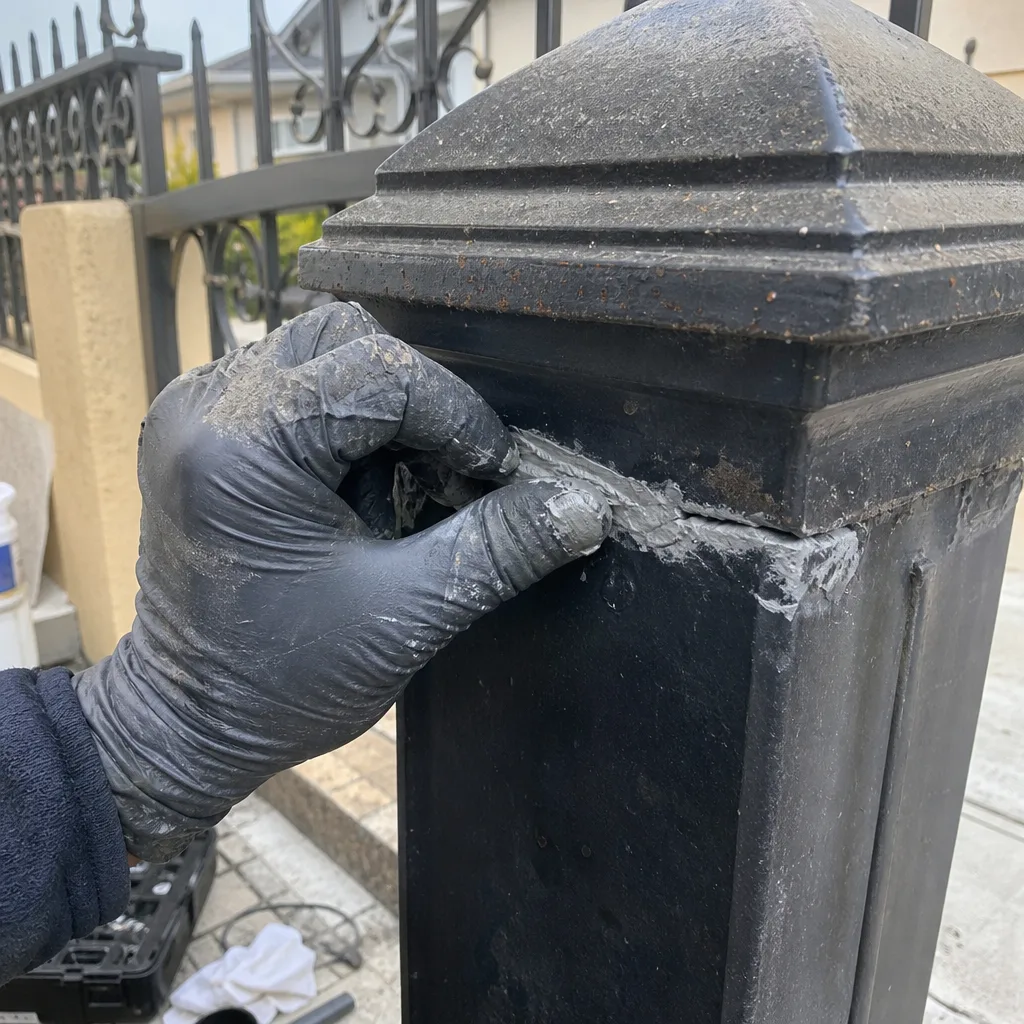
Los Angeles is not one climate. The marine layer that drapes coastal neighborhoods from Santa Monica through the South Bay keeps temperatures moderate and humidity elevated for part of the year. The San Fernando Valley and the Inland Empire run consistently hotter and drier, with summer highs regularly exceeding 100 degrees. The hillside communities, Bel Air, Mount Washington, the Santa Monica Mountains fire zones, catch the highest wind speeds and the steepest grade changes. A Gate Motor & Opener in Los Angeles does not see the same failure pattern across these zones, and the seasonal care plan has to account for that.
Coastal properties deal with salt air and persistent moisture that inland homes never see. The failure mode at a house near Playa del Rey is usually corrosion at connection points: terminal strips, limit-switch contacts, the small low-voltage wiring that carries signal from the keypad to the control board. Salt air accelerates oxidation, and a connector that would last 15 years in Pasadena might fail in 8 two miles from the beach. Coastal gate owners should check terminals and wiring connections twice yearly and expect to see green or white corrosion on exposed metal before it affects signal quality.
Inland and valley properties deal with heat and UV. The operator sits in a steel or plastic housing under direct sun, and on a 105-degree afternoon the internal temperature can climb past 140. Thermal faults appear as a gate that runs fine all morning and refuses to move by 3 p.m. The control board’s thermal protection is doing exactly what it was designed to do, cutting power before components cook themselves, but the homeowner experiences a dead gate. More on that in the summer section below.
Hillside properties face the compounded version. Steep driveways mean the gate travels on an incline, which loads the operator constantly, not just during wind events. Hillside gates are also the most exposed to the strongest Santa Ana gusts. At a home off Mulholland, we’ve seen the same model of swing operator fail in half the time it lasts at a flat lot in Culver City, purely from sustained slope load and wind exposure. Hillside owners in Los Angeles should budget for more frequent hinge inspections and expect operator lifespan on the shorter end of the manufacturer’s stated range.
The practical takeaway: don’t copy a seasonal maintenance schedule from a friend who lives 20 miles in a different direction. Your gate’s failure mode depends on which of these Los Angeles microclimates your property sits in.
Summer Heat and UV: What 280 Sunny Days Do to Operators
Los Angeles averages more than 280 sunny days per year. That’s a statistic you hear in real estate listings, but it is also the single most under-discussed driver of gate component failure in the region. UV radiation breaks down insulation, plastic housings, rubber seals, and photo-eye lenses. Heat pushes control boards into thermal shutdown. The combination shortens every manufacturer’s recommended service interval, because those intervals were written for a national average climate, not for a city where the operator housing bakes under direct sun for 300 days a year.
The most common Los Angeles summer failure mode is the thermal fault on the control board. Every quality operator, from DoorKing to Ghost Controls, includes thermal protection circuitry. When the board heats past its safe operating threshold, the gate simply won’t respond. The homeowner’s keypad lights up, the remote clicks, nothing happens. In our experience fielding summer calls across Los Angeles, this is one of the most common symptoms: intermittent failure that correlates with afternoon heat. The fix is sometimes as simple as relocating or shading the operator housing, but in many cases the board has cycled through enough thermal stress that components are degrading and replacement is the reliable path.
UV damage to wiring insulation is slower but more insidious. Low-voltage signal wire that enters the operator housing often runs exposed along a fence or through conduit that has cracked over years of sun exposure. The insulation becomes brittle, develops hairline cracks, and then moisture, or in dry conditions, simple air exposure, degrades the copper underneath. Signal quality suffers. A gate that opens intermittently, or opens fine from the keypad but not from the remote, is often a wiring issue, not a motor issue. The motor and the control board are dumb devices; they respond only to the quality of the signal they receive.
Photo-eye sensors face the most direct UV assault. The plastic lens that protects the infrared emitter yellows and clouds over 5 to 7 years of Los Angeles sun. A clouded lens scatters the beam enough to trigger false obstructions, so the gate reverses every time it tries to close. The standard fix is sensor replacement, not cleaning, and it is one of the most common small repairs we perform in summer. For broader opener issues, our Gate Motor & Opener in Los Angeles page covers motor and board failure patterns in detail.
The Mild Wet Season: December Through February Checks
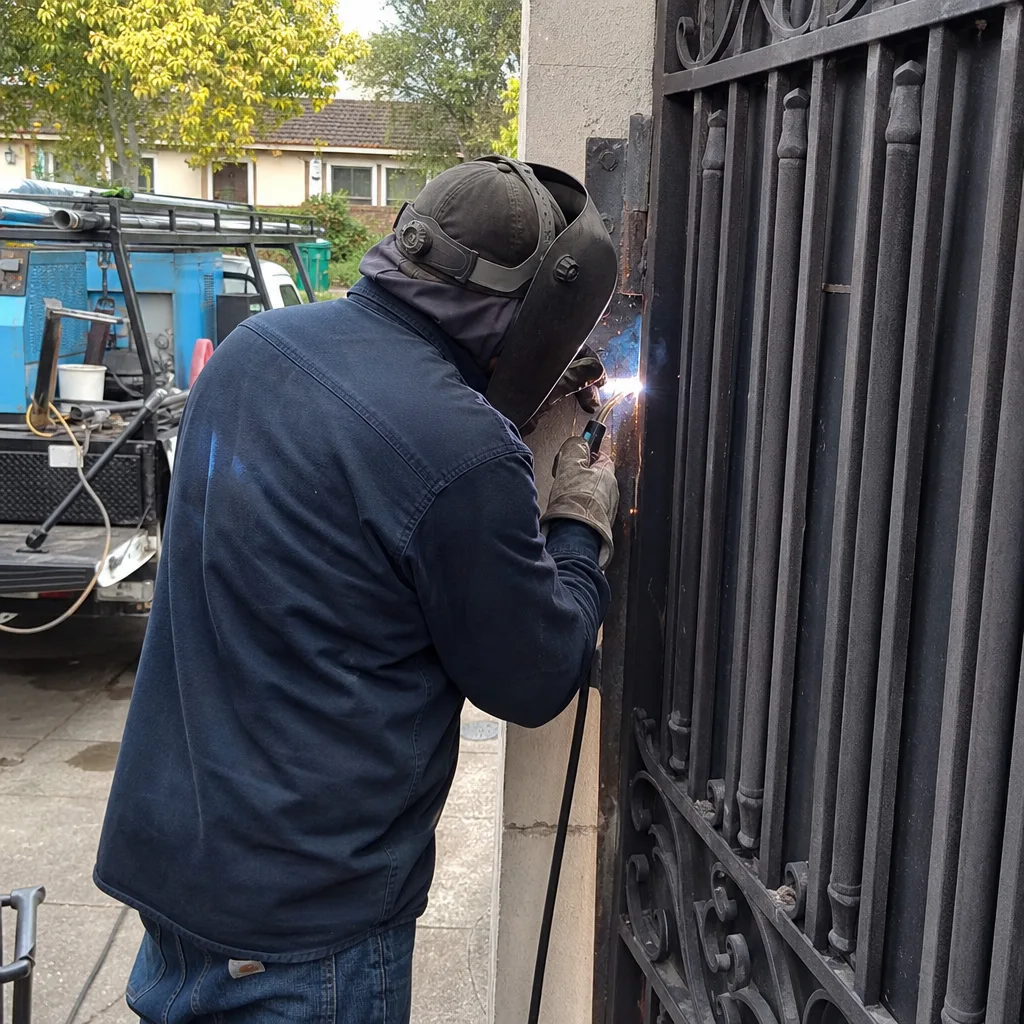
Los Angeles gets most of its rain between December and February, and a “wet year” by local standards is still dry by most of the country’s measure. But what LA lacks in rain volume it makes up for in drainage and debris problems. The real seasonal risk during the wet months is not water soaking into your operator; it is what the water carries and where it pools.
Slide gates are particularly vulnerable. The track that guides the gate runs along the driveway, and a heavy rainstorm sends silt, leaves, and debris into the track channel. The gate then rides over compacted debris, which typically happens with any of the major slide gate operators, and the added resistance accelerates wear on the drive wheels and the motor. After a heavy Los Angeles storm, inspect the track and clear anything that has settled in the rail. The same applies to the gate’s lower panel: accumulated debris at the base acts as a dam that holds water against the metal longer than it would otherwise sit there, and that’s where corrosion starts.
Water intrusion into the operator housing is a real but less frequent issue. Most outdoor-rated operators are built with gasketed housings, but gaskets age, and a decade-old unit that has been cooking in the sun may have lost its seal integrity. After the first heavy rain of the season, open the housing (with the power off) and look for condensation, standing water, or rust trails. Rust trails are the tell: water entered, sat against a steel component, and left a streak as it evaporated.
For swing gates, the wet season is a good time to lubricate hinge points. The standard advice is a silicone or lithium-based grease applied sparingly to the hinge pin and bracket contact points. This is not a repair task; it is a wear-prevention task. A gate hinge that runs dry through the dry months and then picks up gritty water during the rains will wear its bushings faster than one that received a light lubrication in November and again in January.
Month-by-Month Care Plan for Los Angeles Gates
Here is the month-by-month schedule we recommend for Los Angeles homeowners. It is built around the region’s actual climate patterns, not a generic four-season calendar. A gate in Los Angeles does not need a spring tune-up; it needs pre-wind and pre-heat preparation.
- October: Pre-Santa Ana inspection. Check hinge pins, operator mounts, and photo-eye alignment. Document the readings. If the gate already shows drift, schedule the repair before the first big wind event, not after it tears something loose. This is the single highest-value service month for gates in Los Angeles.
- November through January: Post-wind-event checks after any Santa Ana event with gusts over 35 mph. Focus on sound changes, leading-edge alignment, and safety-reverse behavior. Between wind events, clear debris from the track and check the lower panel for anything the rain has pushed against it.
- February: Wet-season moisture check. Open the operator housing and inspect for water intrusion, rust trails, and condensation. Lubricate hinge points. Check that drainage around the gate pad and track is still flowing, especially if you live on a hillside where runoff concentrates.
- March through May: Light inspection window. Los Angeles weather is generally benign in these months, but the marine layer at the coast means persistent moisture. Coastal homeowners should check terminal connections and wiring for corrosion. Inland homeowners can use this window for any deferred maintenance or upgrades, since the gate is not fighting wind or heat loads.
- June: Pre-heat preparation. Test the operator on a hot afternoon. If it runs fine in the morning but acts up at 2 p.m., you have a thermal issue that will only worsen through July and August. Check the operator housing’s ventilation and consider whether a shade structure is practical. For older operators, this is the time to have the control board inspected before the worst heat arrives.
- July through September: Heat and UV monitoring. Watch for afternoon thermal faults and any intermittent behavior from the keypad or remote. UV-damaged wiring shows up as inconsistent signal; the gate works irregularly and the problem comes and goes. Document the pattern: time of day, temperature, which input device was used. That documentation is what makes a repair call fast and cheap instead of diagnostic and expensive.
- End of September: Post-summer review. Look back at your documentation from the year. Did the gate require any repairs? Did it drift? Did the limit switch need resetting? That summary becomes the baseline for next October’s pre-wind inspection, and it is how year-over-year degradation becomes visible.
Building a Seasonal Inspection Log
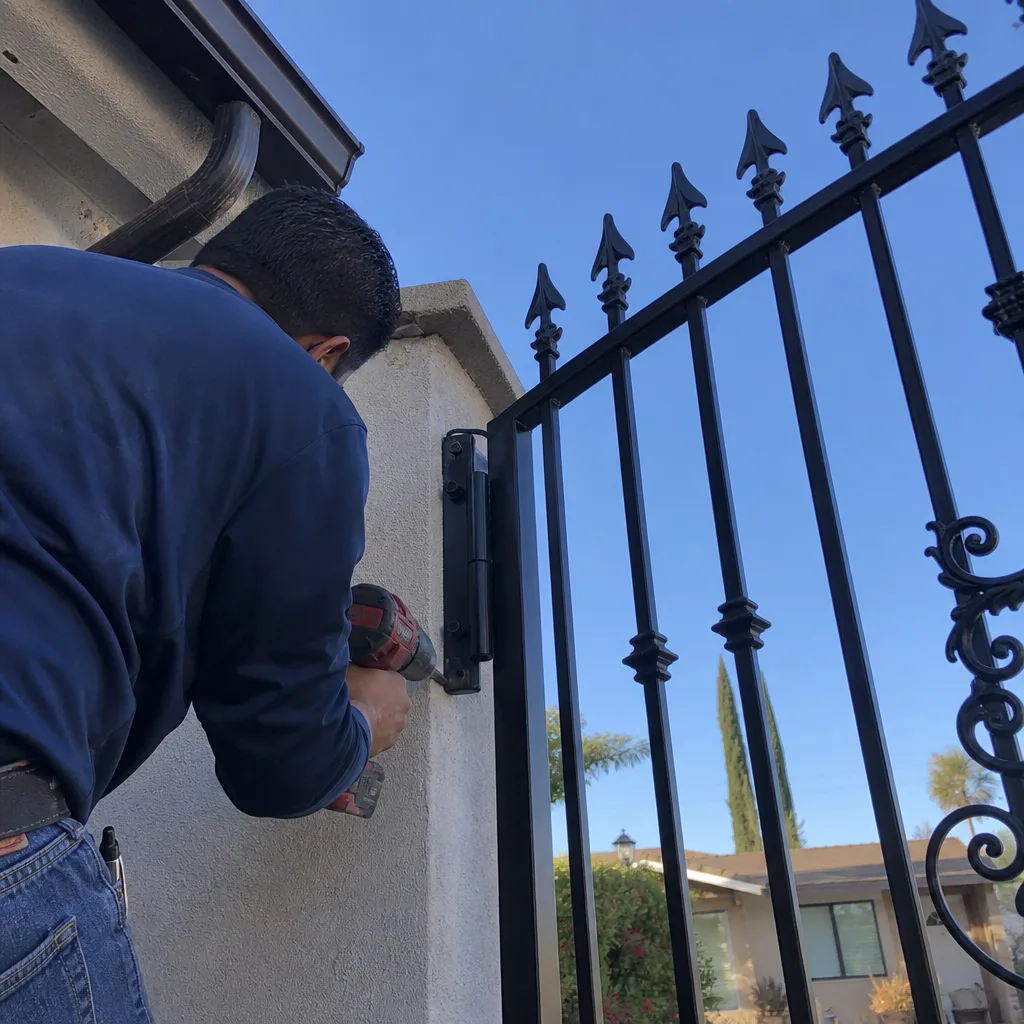
The single best tool a Los Angeles homeowner can build is a two-page seasonal log that captures readings before and after each stress season. This is the same habit we bring to every gate we service: write down the numbers, photograph the settings, and file the record. When a gate fails, the log tells you what changed. Without a log, you’re guessing, and guessing is how homeowners end up paying for the same diagnosis twice.
Your log doesn’t need to be elaborate. A sheet of paper clipped to the operator manual works. A notes app on your phone works. The important thing is that it captures the same measurements each season so the comparison is meaningful.
Here is a two-page structure that covers the essential readings:
Page 1: Pre-Season Baseline (October and June)
- Date and time of the baseline reading
- Full open-to-close cycle time in seconds (use a stopwatch) and whether the gate pauses, hesitates, or shudders
- Leading-edge resting position at fully open and fully closed relative to the stop post or limit mark, measured in inches
- Photo-eye alignment: does the beam indicator light show clean alignment on both sides? Any obstruction warnings?
- Operator housing condition: any new cracks, rust, or sun damage?
- Sound assessment: describe the normal operating sound in three words (e.g., “smooth low hum”). If it changes later, you’ll hear it.
Page 2: Post-Season Reading (After Wind Season and After Summer)
- Date and time of the post-season reading
- Cycle time compared to baseline (a change of more than 1 second means added resistance)
- Leading-edge position compared to baseline (any drift of more than 1/4 inch means hinge or bracket movement)
- Photo-eye alignment compared to baseline (any misalignment is a likely source of safety-reverse faults)
- Any repairs performed, parts replaced, with part numbers and dates
- Notes on any intermittent behavior: what happened, when, at what temperature, and which input device was used
The log does something else that most maintenance advice misses: it creates evidence. When a technician arrives to diagnose a problem, your documentation tells them what normal looked like and when it deviated. That’s the difference between a 30-minute fix and a two-hour diagnostic hunt. It is also, to be direct about it, the same philosophy we apply to our own work: every Vance Gate Repair Los Angeles home visit leaves a documented photo record of what was found, what was adjusted, and what was installed. Your log is the homeowner’s version of that habit.
Common Mistakes to Avoid
- Following a generic four-season maintenance schedule. Gate care advice written for Boston or Chicago assumes winterizing, snow load, and freeze-thaw cycles that are irrelevant in Los Angeles. The Los Angeles schedule is wind-preparation and heat-preparation, and the timing matters more than the checklist.
- Ignoring the gate until it fails. Most gate component failures in Los Angeles announce themselves weeks or months before the gate stops moving, in the form of changed sound, slowed travel, or a safety reverse that trips more often. If you catch the drift in October, the fix is often a bracket adjustment. If you wait until the gate fails in January, the fix may be a new operator.
- Assuming the motor is the problem. The most common gate symptom in Los Angeles, a gate that reverses and refuses to close, is usually a photo-eye alignment issue, a hinge binding issue, or a wiring signal problem, not a failed motor. Replacing the motor without addressing the mechanical resistance it was fighting is the most expensive common mistake we see.
- Skipping post-wind-event checks. In Los Angeles, a big Santa Ana event is the equivalent of a hard freeze in the Midwest. Something shifted. Check it. The gate that was fine before the wind and slow after the wind has changed mechanically, and you want to know that before the second wind event compounds the stress.
- Cleaning the cloudy photo-eye lens instead of replacing it. Once a photo-eye sensor’s lens has yellowed from years of Los Angeles UV exposure, the plastic is degraded all the way through. Surface cleaning does not restore optical clarity. Replace the sensor. The part is inexpensive relative to the diagnostic time wasted chasing an intermittent obstruction fault.
- Treating a thermal fault as a dead board. A gate that refuses to run in the afternoon heat and works fine the next morning is almost never a dead control board. Replacing the board without addressing the heat issue, often an unventilated housing or a sun-blasted mounting location, is a temporary fix that will fail again next summer.
When to Call a Professional
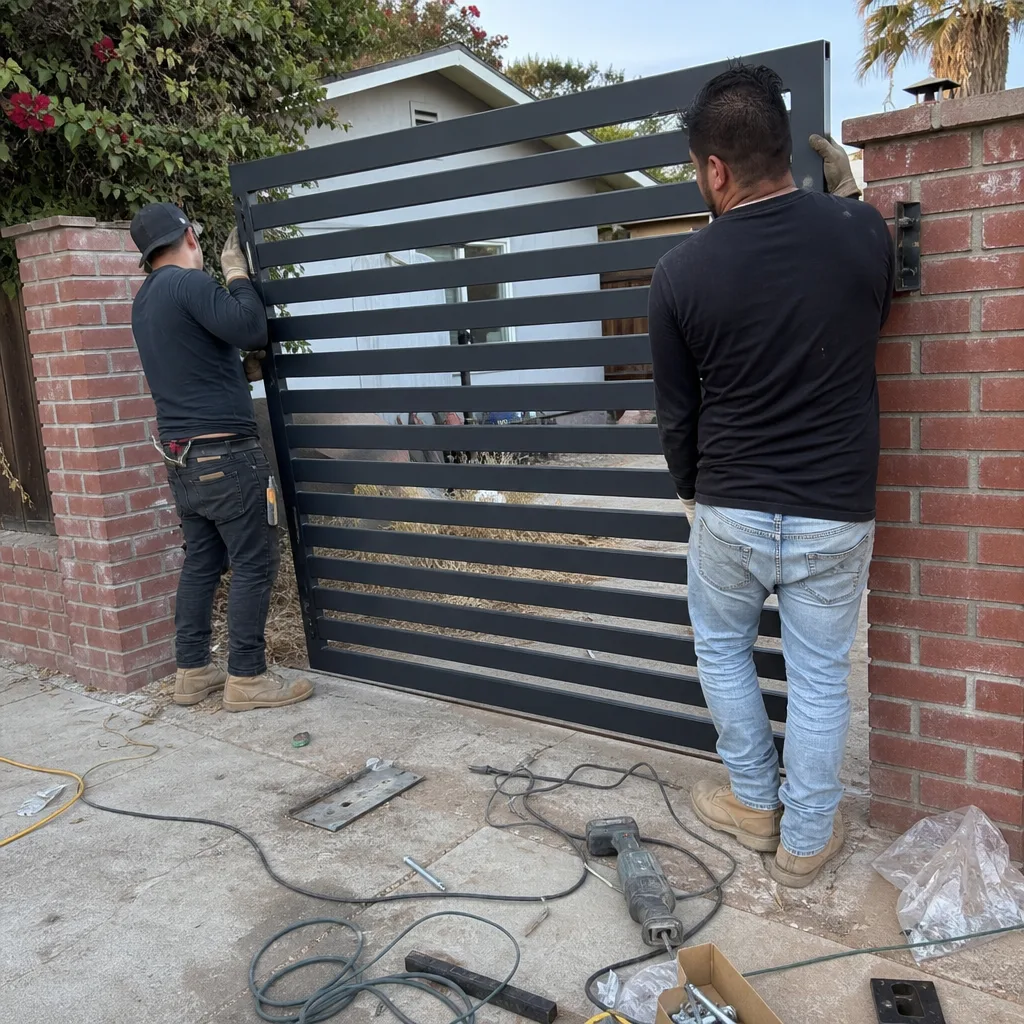
Most of the seasonal checks in this guide are things a careful homeowner can do safely, though some situations call for our Gate Repair services instead. The moment the task involves handling the gate’s electrical connections, opening the control panel with power applied, working with high-tension swing-arm springs, or adjusting the operator’s internal limit switches, the work should go to a trained technician. A residential gate operator runs off mains power, and the control board carries live voltage even when the gate is not moving. A miswired connection at best damages the board; at worst it creates a serious electrical hazard. The same caution applies to anything involving high-tension components on a swing gate. The stored force in a wound spring or a loaded hinge bracket can release without warning, and most injuries from gate repair work involve exactly that. If the task involves the mechanical load-bearing parts or any exposed wiring, call a professional.
Vance Gate Repair Los Angeles offers free estimates in Los Angeles. Call (213) 674-2473 and a live person answers. We will give you a written price before any work starts, so you know the number before you decide.
Frequently Asked Questions
The pre-Santa Ana inspection in October is the single most valuable seasonal gate check in Los Angeles, because it catches hinge and bracket drift before the wind season loads the gate and turns small issues into operator failures. A pre-wind baseline reading gives you a comparison point for every post-event check through March. Call (213) 674-2473 for a free estimate if you want the inspection done professionally.
In Los Angeles, we recommend a structured inspection twice a year, once in late September or early October before wind season and once in late May or early June before the summer heat, plus a quick post-event check after any Santa Ana wind event with gusts over 35 mph. Coastal properties should add a corrosion check on electrical connections each spring, and hillside properties should expect more frequent hinge inspections due to slope load. This is more than a generic national recommendation, but it matches how Los Angeles weather actually ages gate hardware.
That symptom is almost always a photo-eye alignment problem or a mechanical resistance issue caused by the wind shifting the gate, the hinges, or the operator mount. The wind can rotate the photo-eye bracket just enough to break the infrared beam alignment, or it can shift the gate so the leading edge drags on the driveway or track. Both trigger the safety reverse circuit. The fix is usually an adjustment, not a motor replacement, and it is worth having a professional check it before you try resetting anything.
Yes, and it is one of the most common Los Angeles-specific failure modes. On a hot summer afternoon, the operator housing can exceed 140 degrees internally, and quality operators from brands like DoorKing and Ghost Controls include thermal protection circuitry that shuts the gate down until temperatures drop. Repeated thermal cycles accelerate control board aging, and UV exposure from 280-plus sunny days per year degrades wiring insulation and photo-eye lenses faster than manufacturer service intervals assume.
The inspection and documentation tasks are safe for most homeowners: listening to the gate, watching the leading-edge position, clearing the track, checking for visible debris, and recording cycle times. Do not attempt electrical work, limit-switch adjustments, or anything involving high-tension springs or loaded hinge brackets. Those components carry live voltage or stored mechanical force, and they are the source of most serious gate repair injuries. If a task requires opening the control panel or loosening anything under tension, call Vance Gate Repair Los Angeles at (213) 674-2473.
We service nine major gate automation brands, including Ghost Controls, DoorKing, Elite, and Mighty Mule, along with LiftMaster, FAAC, BFT, Linear, and Viking. That means seasonal maintenance and repair are available for whatever motor is already on the property. There is no need to replace a functioning operator just because a technician doesn’t work on that brand. If you need a new gate or a full replacement, our Gate Installation in Los Angeles page covers that process from measurement to final documentation.
The Bottom Line
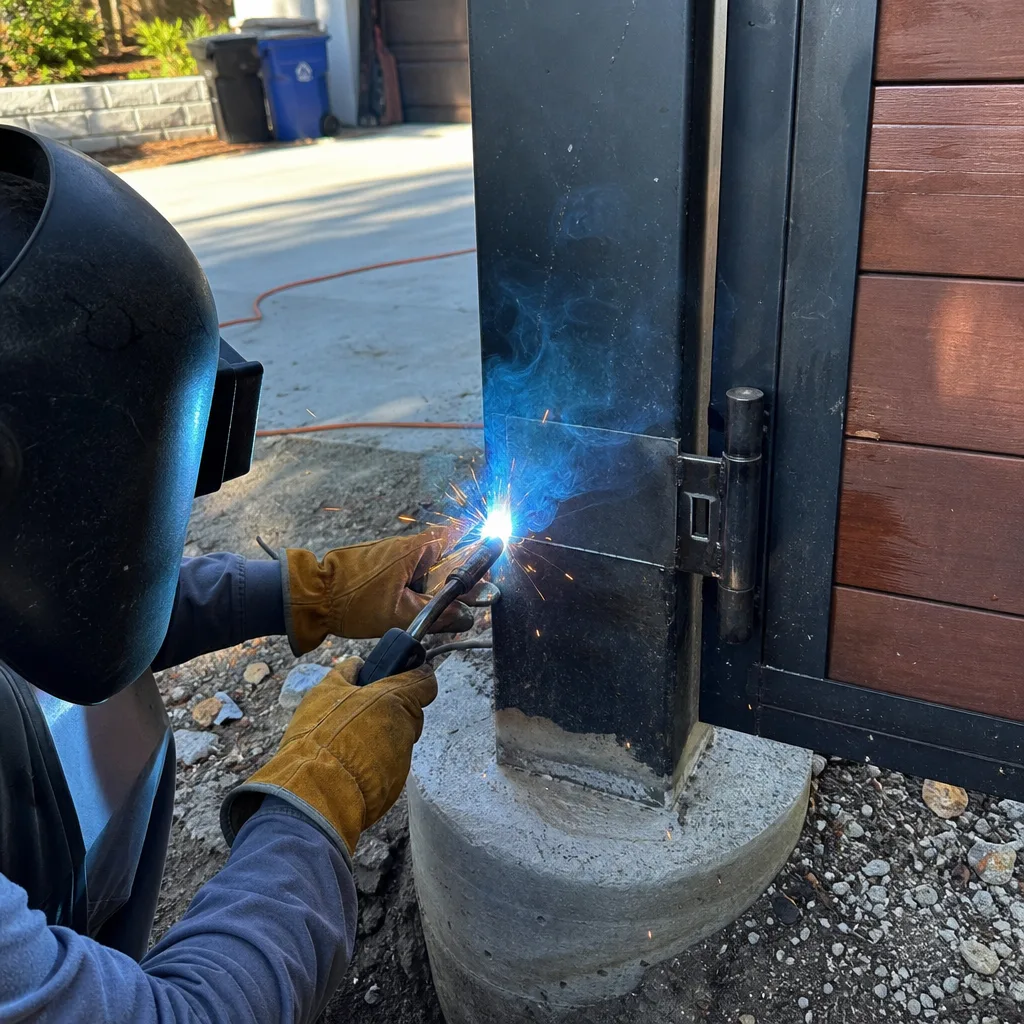
Seasonal gate care in Los Angeles is not about snow, ice, or freeze-thaw cycles. It is about wind stress from October through March, UV and thermal degradation through the long sunny season, salt air and moisture at the coast, and compounding load on hillside properties. The highest-value habits are the boring ones: document your baseline readings before each stress season, check after every major wind event, and track the pattern of any intermittent behavior. That documentation is what turns a vague gate problem into a specific, fast, and less expensive repair. If you live in Los Angeles and want a professional seasonal inspection, a written price before work starts, and a photo record when the technician leaves, call Vance Gate Repair Los Angeles at (213) 674-2473. For DIY vs Professional Gate Repair: The Los Angeles Homeowner’s Decision Guide, see our comparison.
Written by Adrian Vance, Owner at Vance Gate Repair Los Angeles, serving Los Angeles since 2014. Browse more guides & resources on gate maintenance and repair.