
Last updated September 19, 2026
Free on-site gate assessment - hinges, posts, and your LiftMaster or Nice gate operator checked before anything is quoted
The assessment is free and the quote is the invoice.
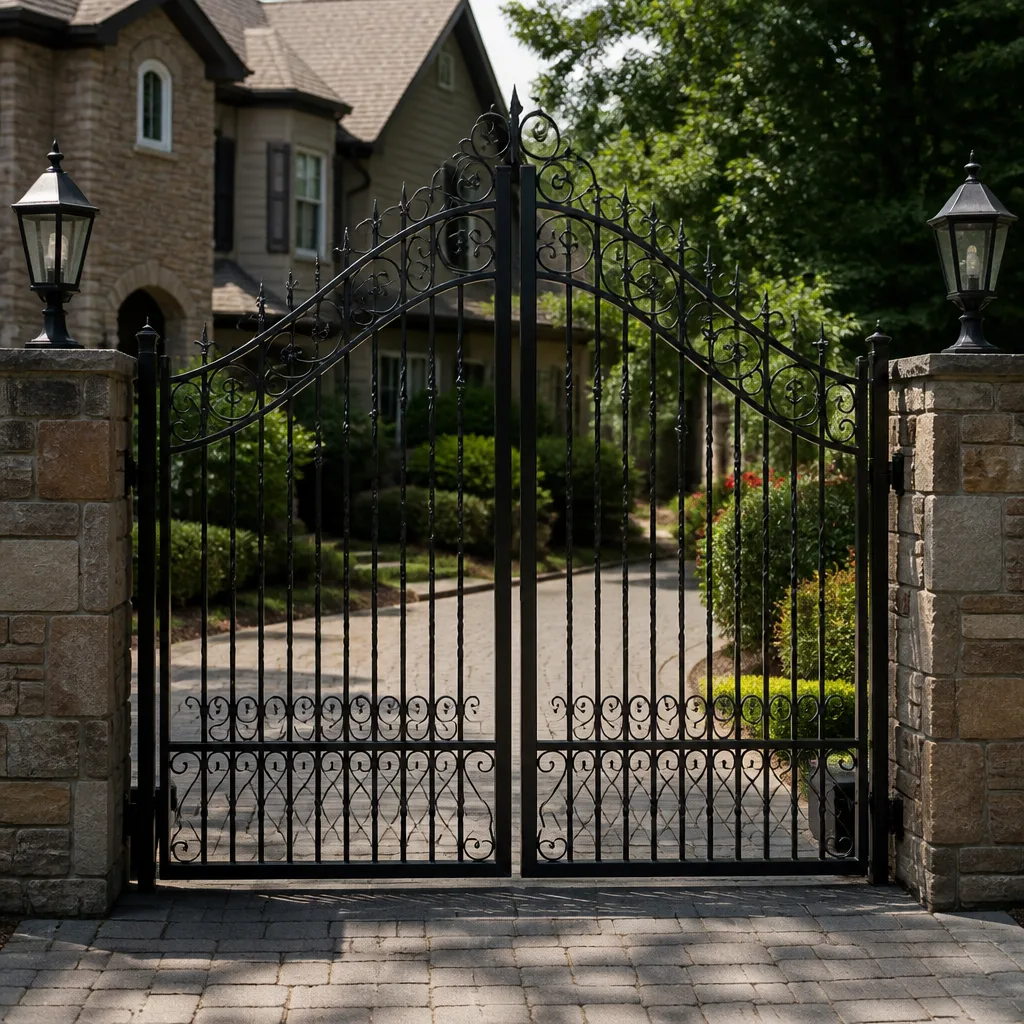
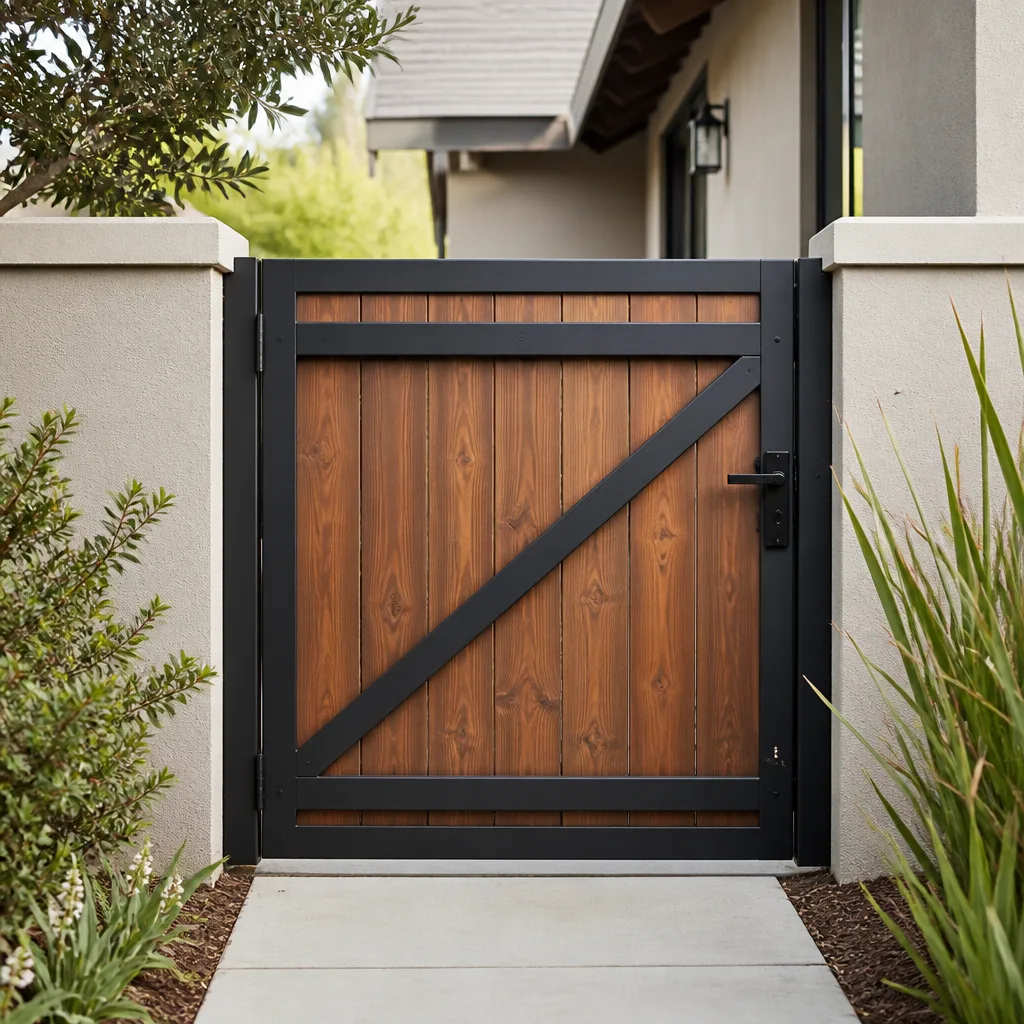
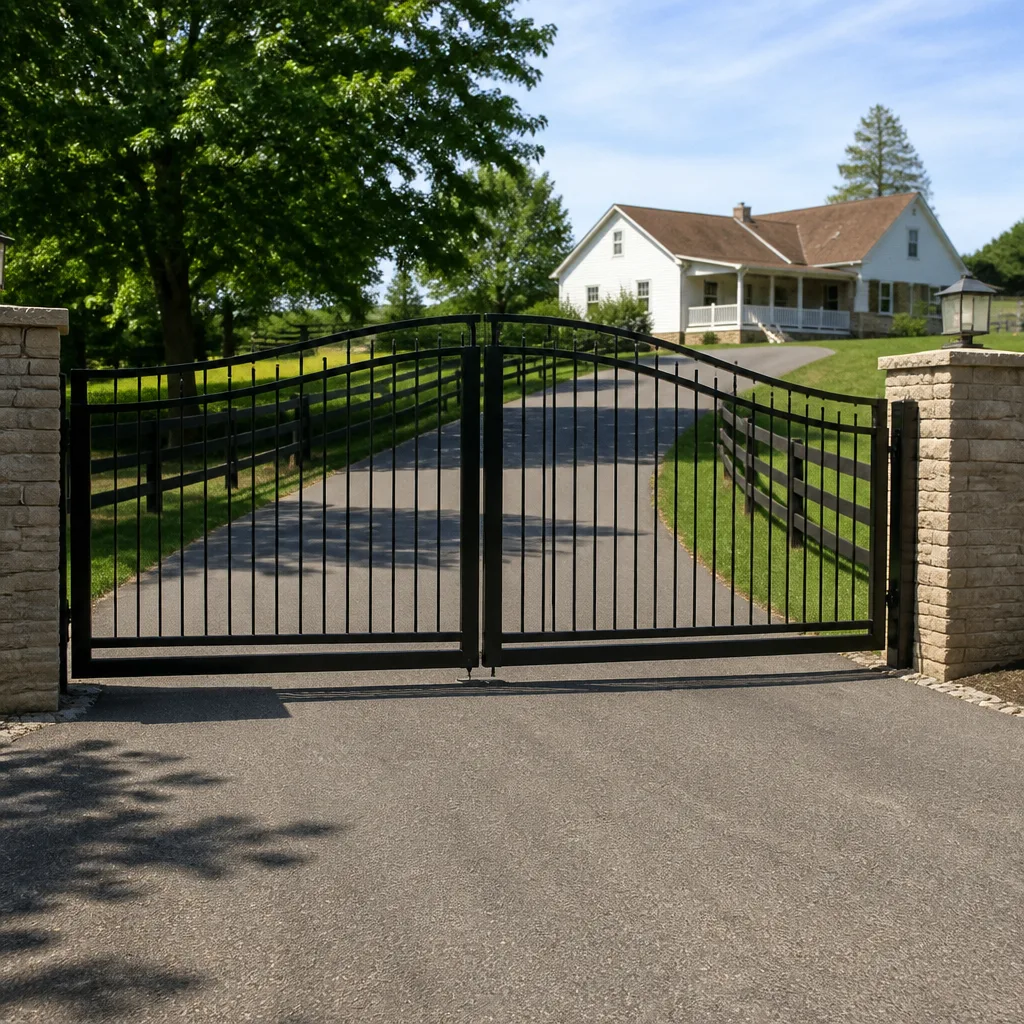
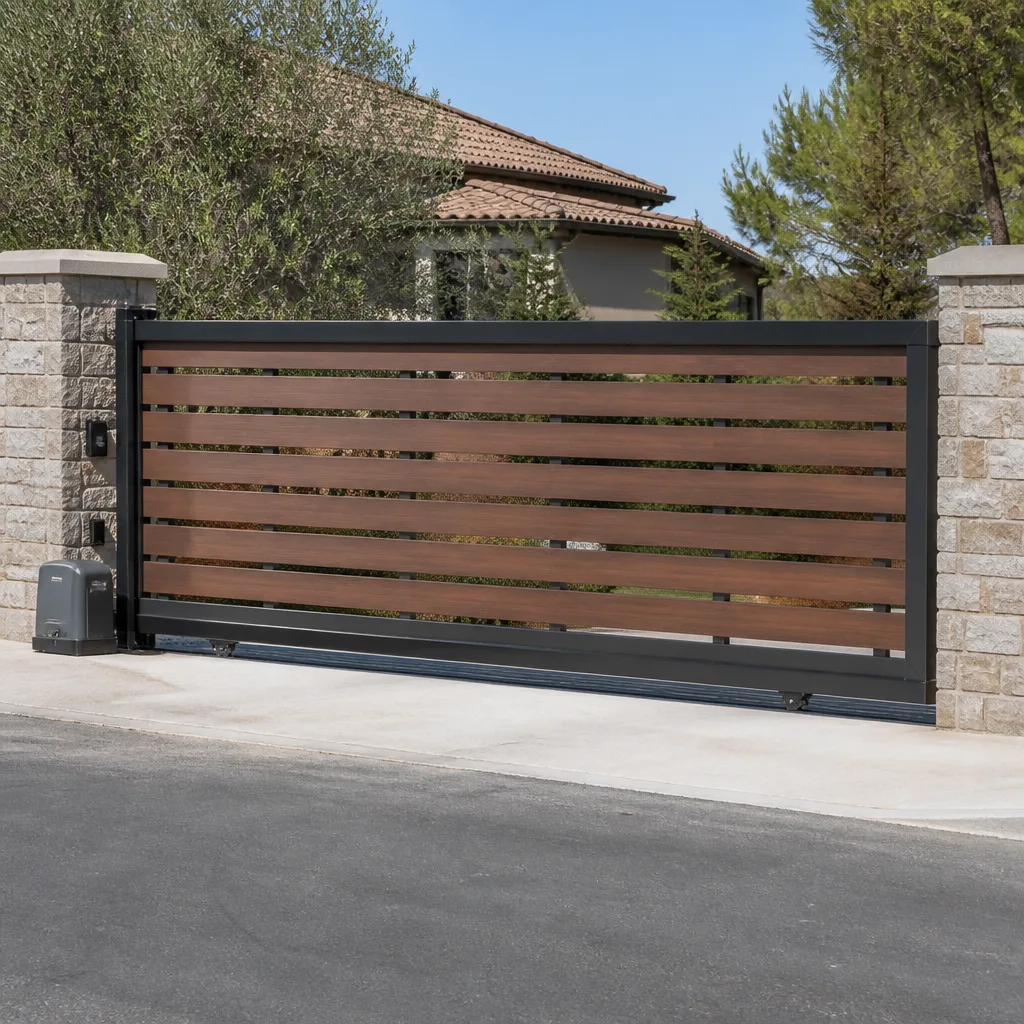
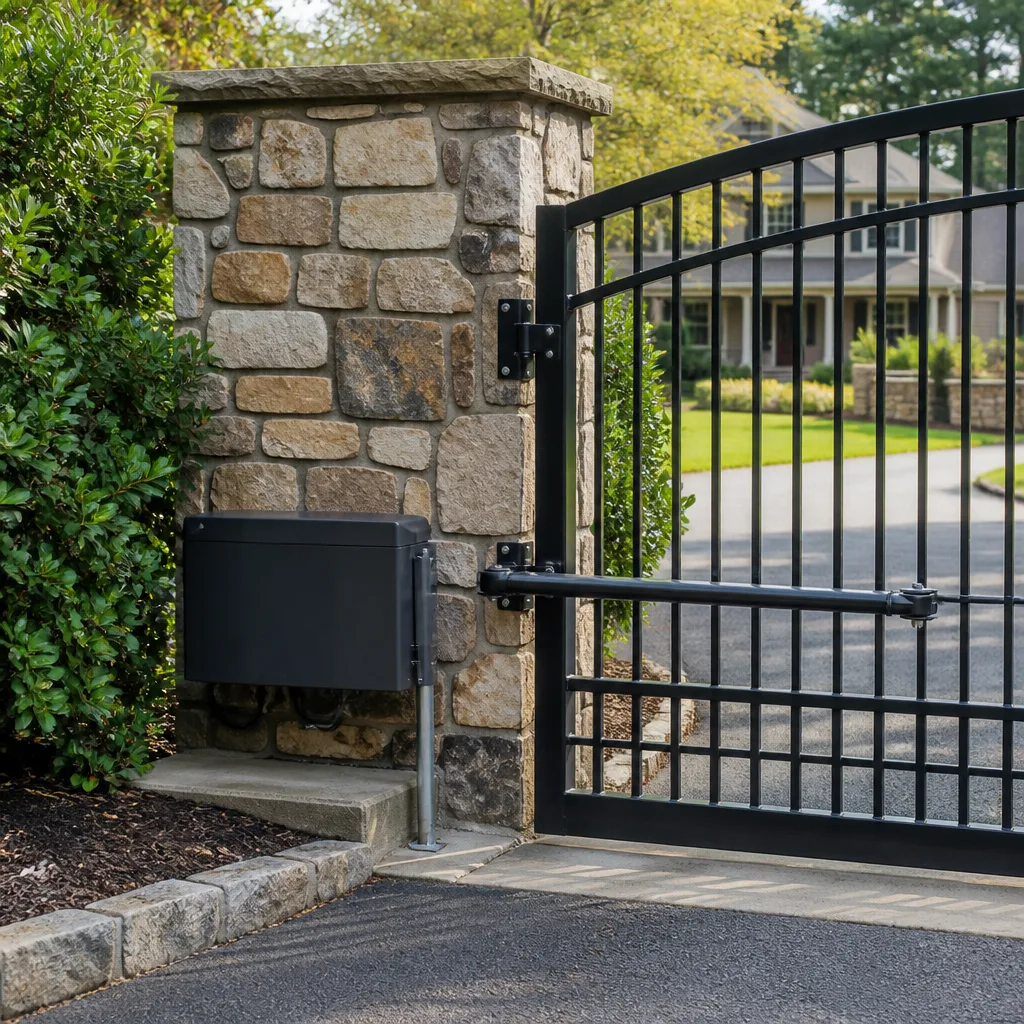
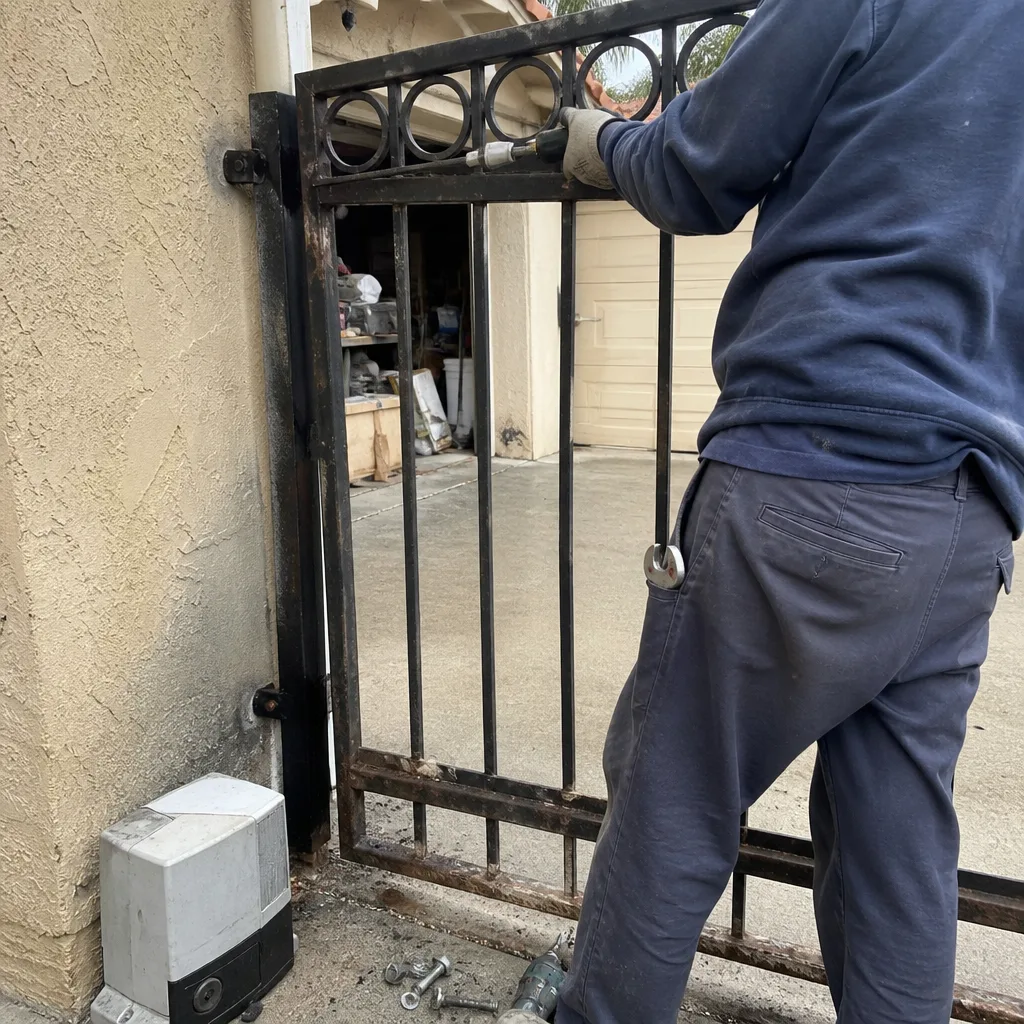 Before
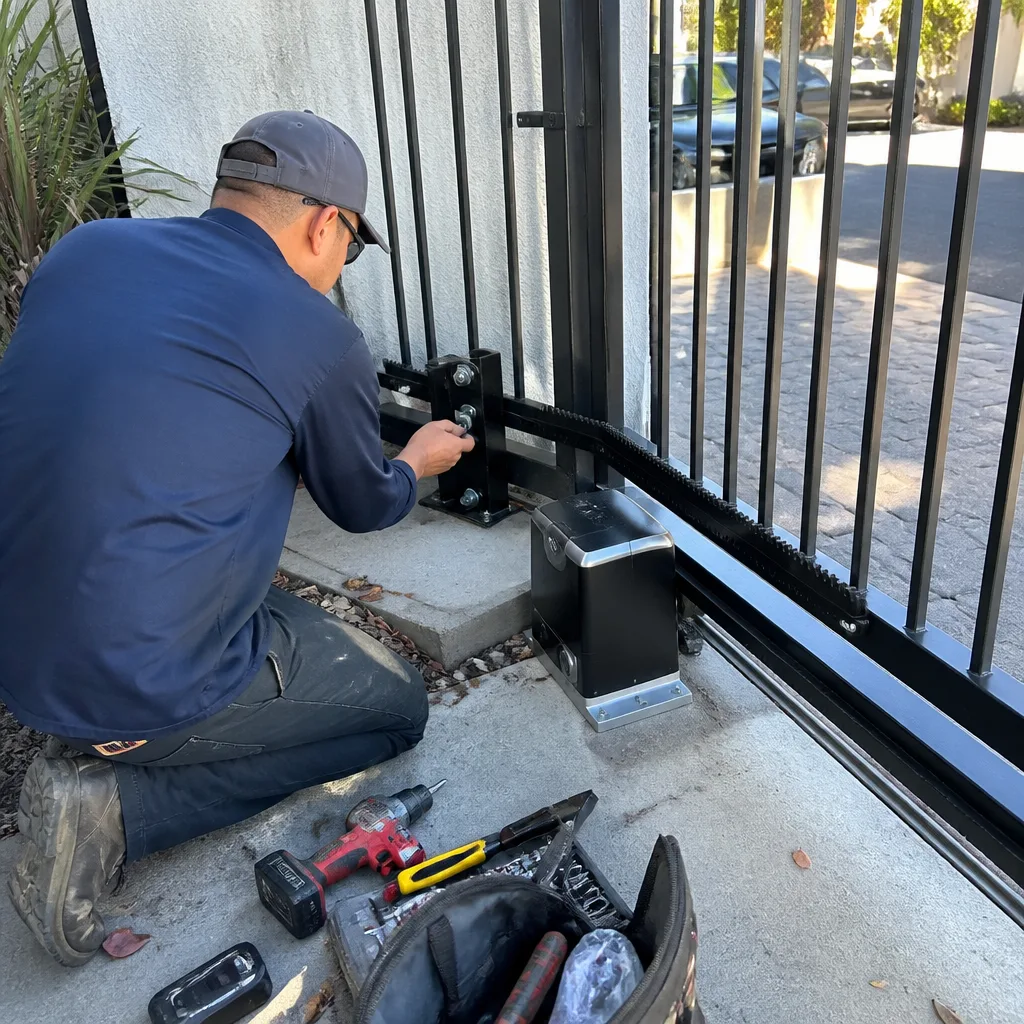 After
After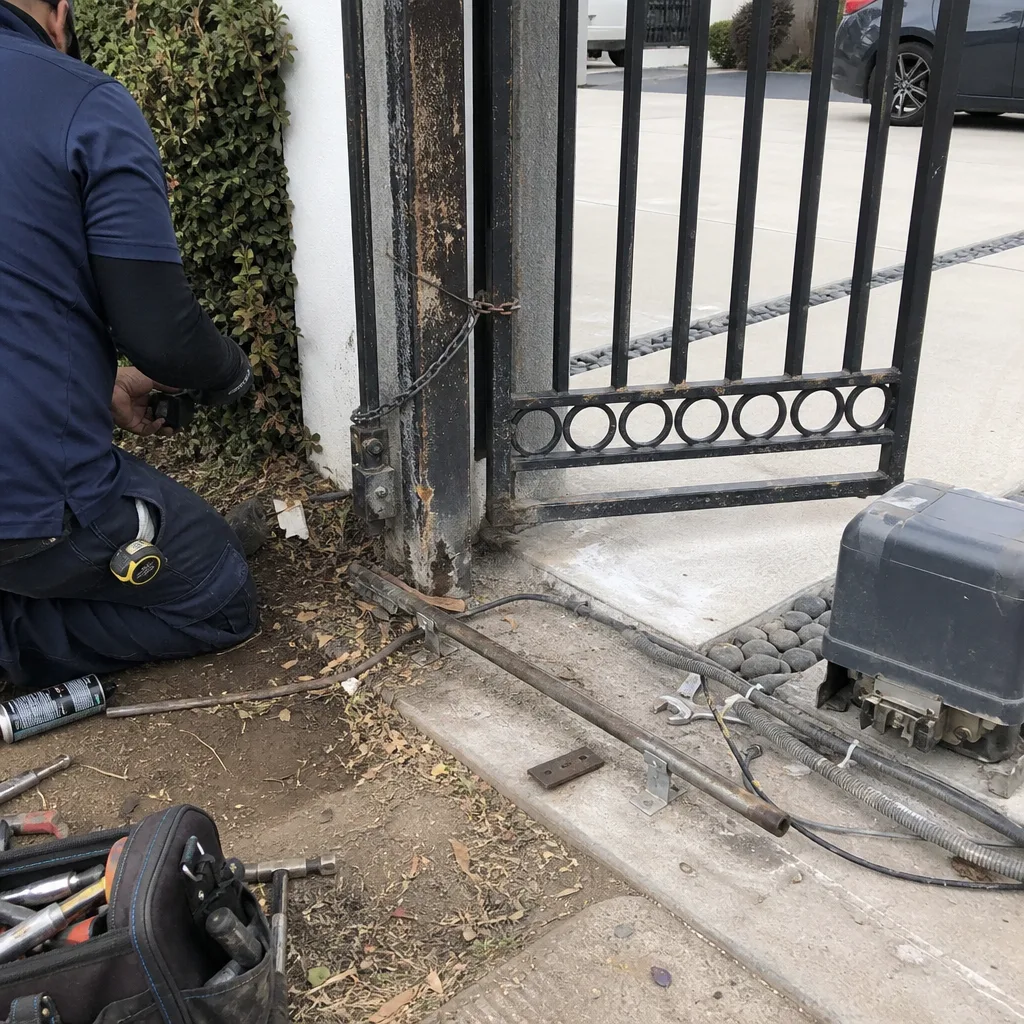 Before
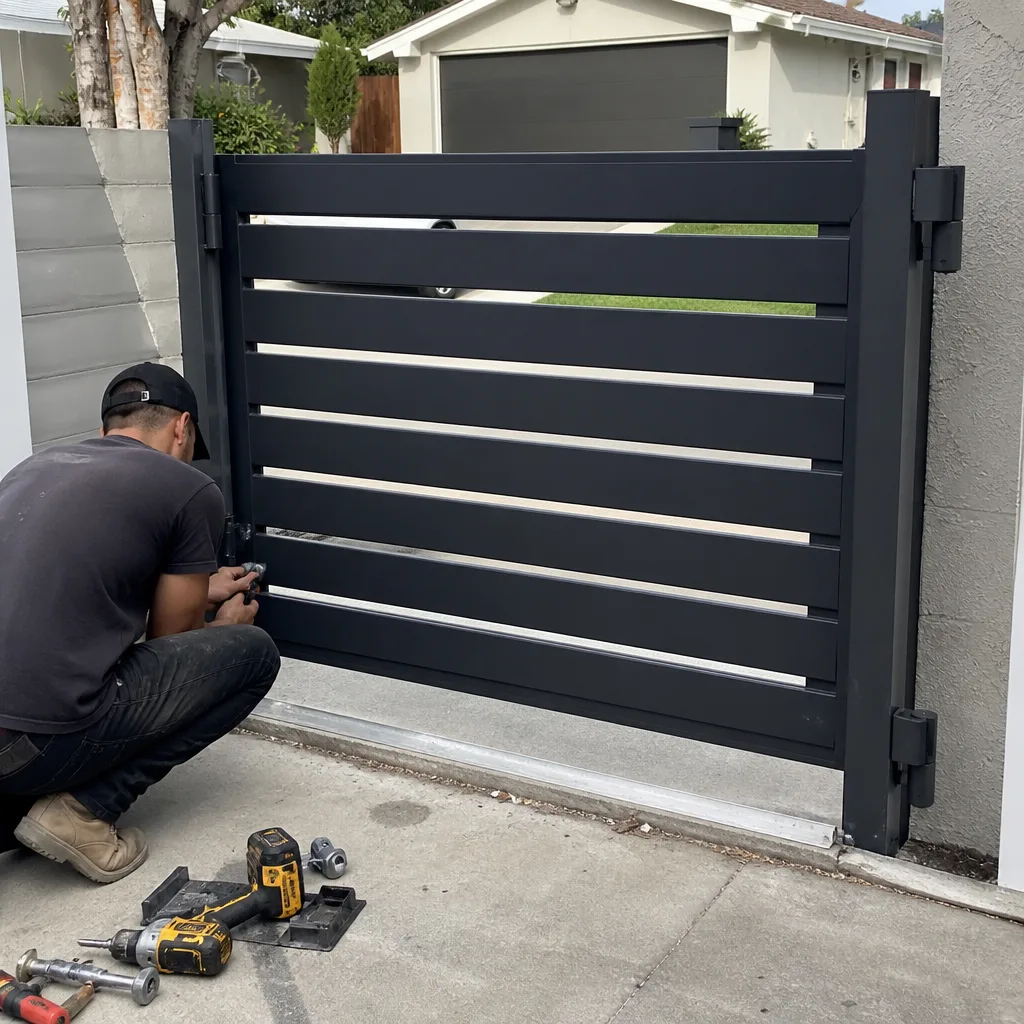 After
After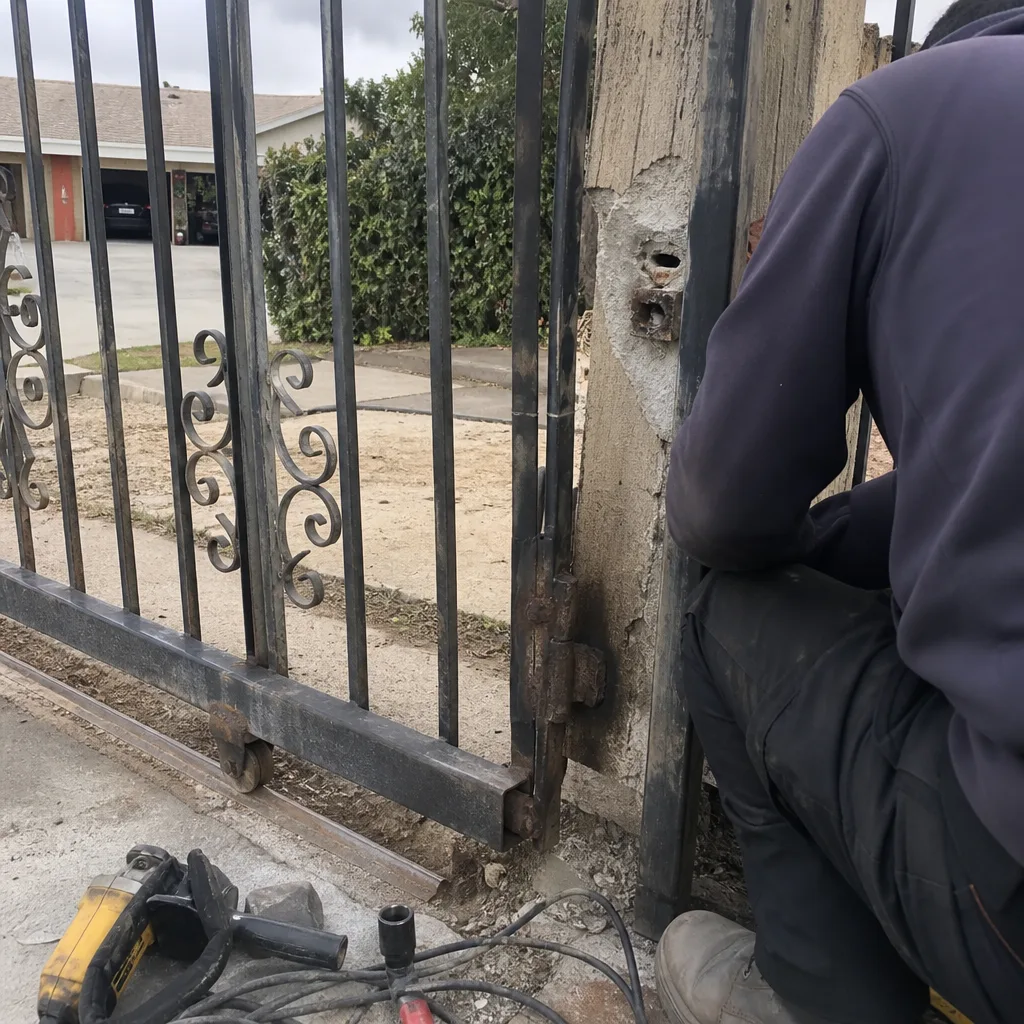 Before
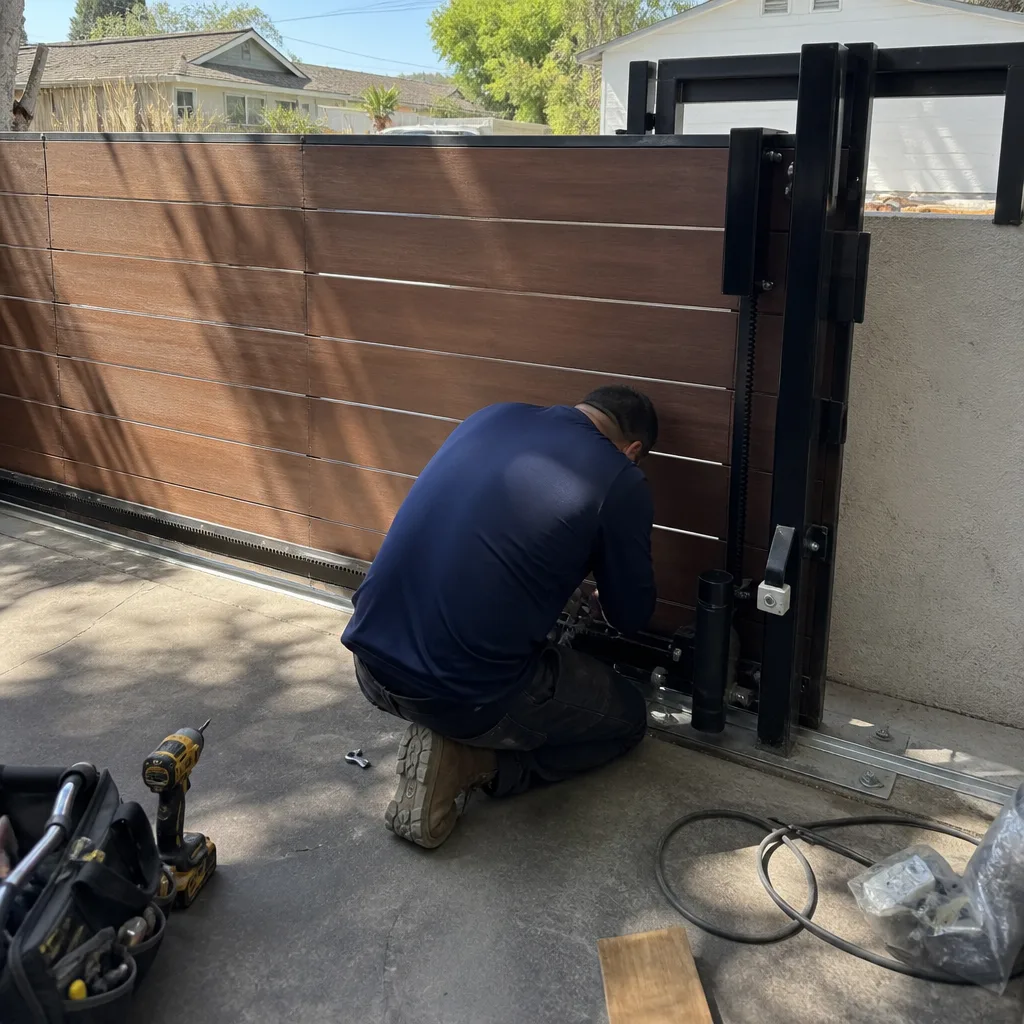 After
AfterDIY vs Professional Gate Repair: The Los Angeles Homeowner’s Decision Guide
California Civil Code Section 1714 holds a property owner liable for injuries caused by a failure to maintain their premises in a reasonably safe condition. An automatic driveway gate is a moving machine weighing 300 to 1,500 pounds, driven by a motor with enough torque to break bone. When a Los Angeles homeowner reconnects a safety sensor incorrectly, or adjusts the force setting too high so the gate stops dragging, the question is no longer whether the gate opens and closes. The question is what happens when a delivery driver, a child, or a neighbor walks through that opening at the wrong moment, and the gate does not stop. This guide walks through which gate repairs a homeowner can reasonably own, which ones carry liability and code exposure in Los Angeles, and how to make the call without paying twice to learn the same lesson. We will also show where the line sits between “I can handle this” and “this needs a written record and a professional’s name on it.”
Quick Answer
DIY gate repair in Los Angeles is appropriate for lubrication, remote programming, minor realignment of a sliding gate on its track, and cleaning of sensor lenses. It is not appropriate for spring replacement, operator or motor repair, limit switch adjustment, entrapment protection wiring, or any repair that changes how the gate detects an obstruction, because UL 325 safety standards and California premises liability make those tasks the legal responsibility of the homeowner if done incorrectly. A professional gate repair in Los Angeles typically runs between $180 and $650 depending on the failure, and that price includes a written record of what was done, which protects the homeowner on two fronts: safety and resale documentation.
Table of Contents
- What You Can Safely Do Yourself in Los Angeles
- What You Should Not Touch: Liability and Code Exposure
- UL 325 and Why It Applies to a Single-Family Driveway Gate
- The Real Cost of a DIY Repair vs a Professional Quote
- The Documentation Problem: What a DIY Repair Leaves Behind
- Partial DIY: The Tasks Homeowners Can Own Before and After a Pro Visit
- What We See on Los Angeles Gates: Brand-Specific Repair Notes
- Common Mistakes to Avoid
- Frequently Asked Questions
BeforeAfterWhat You Can Safely Do Yourself in Los Angeles
There is a real, legitimate list of tasks a Los Angeles homeowner can do on a driveway gate without creating risk or redoing a professional’s work. These tasks do not involve the motor, the springs, the entrapment sensors, or the wiring. They are maintenance and minor adjustment tasks. Done regularly, they extend the life of the gate and reduce the number of service calls, which is the goal of every competent technician.
The distinction is simple: you may lubricate, clean, program, and observe. You may not disassemble, rewire, or adjust anything that controls force, speed, or entrapment protection. Here is the working list:
- Lubricating hinges, rollers, and track bearings. On a Los Angeles hillside gate or a gate in the Valley, dust and dry heat wear metal against metal. A lithium-based grease on hinge pins and a dry silicone on the track can quiet a noisy gate and prevent premature wear. Use a lubricant that does not attract grit. This is a ten-minute job with no risk.
- Cleaning the photo-eye lenses. The photo-eye is the infrared beam that stops the gate when something crosses its path. In Los Angeles, especially in canyon neighborhoods or near construction, dust and cobwebs land on those lenses and trigger false faults. Wipe them with a dry cloth. Do not bend the housing. If the beam is misaligned, stop there and call a professional because realignment is a safety adjustment, not a cleaning task.
- Programming remotes and keypads. Most gate operators from LiftMaster, FAAC, BFT, Linear, and Viking have a learn button or a simple programming sequence printed in the manual. If you have the manual, you can add a new remote. This is low risk and does not affect safe operation of the gate.
- Clearing debris from a sliding gate track. Sliding gates in Los Angeles, especially in flat areas like the Westside, collect leaves, sand, and small rocks. Scrape out the track with a screwdriver or a stiff brush. If the track itself is bent, that is a professional repair because the gate’s travel path and the limit switches depend on a straight track.
- Recording a baseline. Take ninety seconds and write down how the gate sounds on a good day, how long it takes to open, and the location of any grease fittings. That record is a legitimate DIY task and it is worth real money because it lets a technician diagnose faster and it gives you a comparison point when a problem starts.
We have walked onto Los Angeles properties where the homeowner had kept a small notebook of every squeak and every remote they added over five years-exactly the kind of record-keeping our Gate Repair Maintenance Checklist for Los Angeles Homeowners recommends. Those jobs go faster, cost less, and produce a better outcome because the diagnostic history is already in the book. That is the homeowner owning their maintenance without owning the risk.
What You Should Not Touch: Liability and Code Exposure
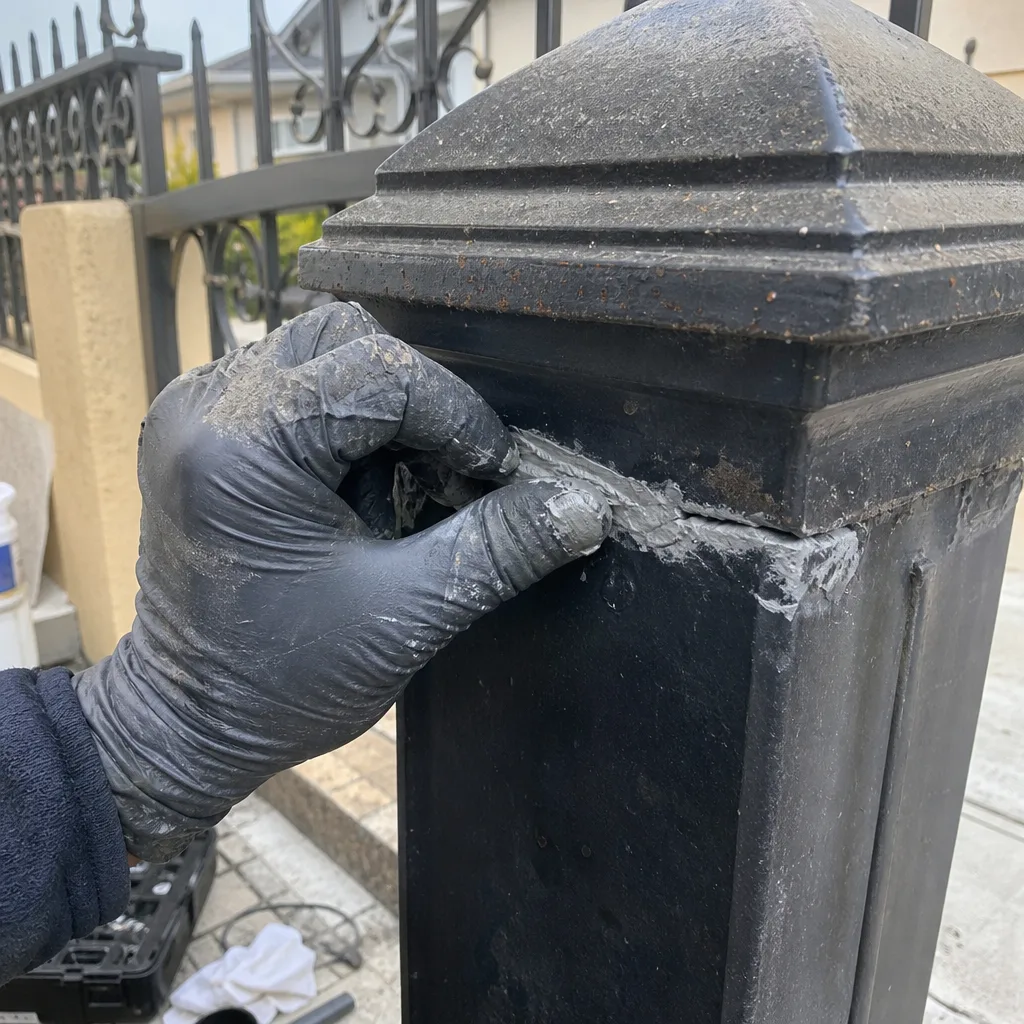
The “do not touch” list begins where the gate leaves manual operation and becomes an automatic gate operator. Any repair that involves a spring, a sensor, a wire, a circuit board, or a force setting changes the gate’s behavior. In California, the law does not care whether you intended to make the gate stop stopping. It cares whether the gate was maintained in a safe condition after you worked on it.
Here is the task-level breakdown of what creates liability or code exposure:
- Spring replacement or spring tension adjustment. Swing gates use extension springs or torsion springs, and either one stores enough mechanical energy to take a finger, a hand, or worse if the stored energy releases under tension. This is not a question of skill. It is a question of the spring being one of the few components in a residential setting that can kill without warning. We do not give step-by-step instructions for this task, and no responsible gate company will either. A Los Angeles homeowner who watches a spring replacement video and buys the part online is betting their hand against a procedure where the failure mode is irreversible.
- Limit switch adjustment. A limit switch tells the operator where to stop opening and closing. Set too far, the gate rams the stop or shears a bracket. Set too short, the gate reverses early and the next person to work on it has to guess at the original travel. More importantly, on many swing-gate models, the limit switch also sets the point where the gate’s force setting is tested against the load. A miscalibrated limit switch can mask a force problem, which is an entrapment risk under UL 325.
- Photo-eye realignment or bypass. The photo-eye is the primary external entrapment protection device on most residential gate operators. When a homeowner moves a photo-eye, cuts a wire to a photo-eye, or bypasses it because the gate keeps faulting, the gate now operates as a non-monitored machine. If an injury happens, the modification will be discovered, and it will be traced to the homeowner. This is the single most expensive DIY mistake we see in Los Angeles, because it converts a $300 service call into a premises liability case.
- Any work on the operator’s internal wiring or circuit board. Modern operators from FAAC, BFT, Linear, and Viking use low-voltage control wiring that is safe to touch but not safe to improvise. A jumped relay, a mismatched capacitor, or a reversed polarity on the motor leads can destroy the board and turn a $120 repair into an $800 replacement. Worse, a poorly spliced wire can leave a live conductor exposed in a metal gate post that children touch. That is a code violation and a liability risk in one exposed copper conductor.
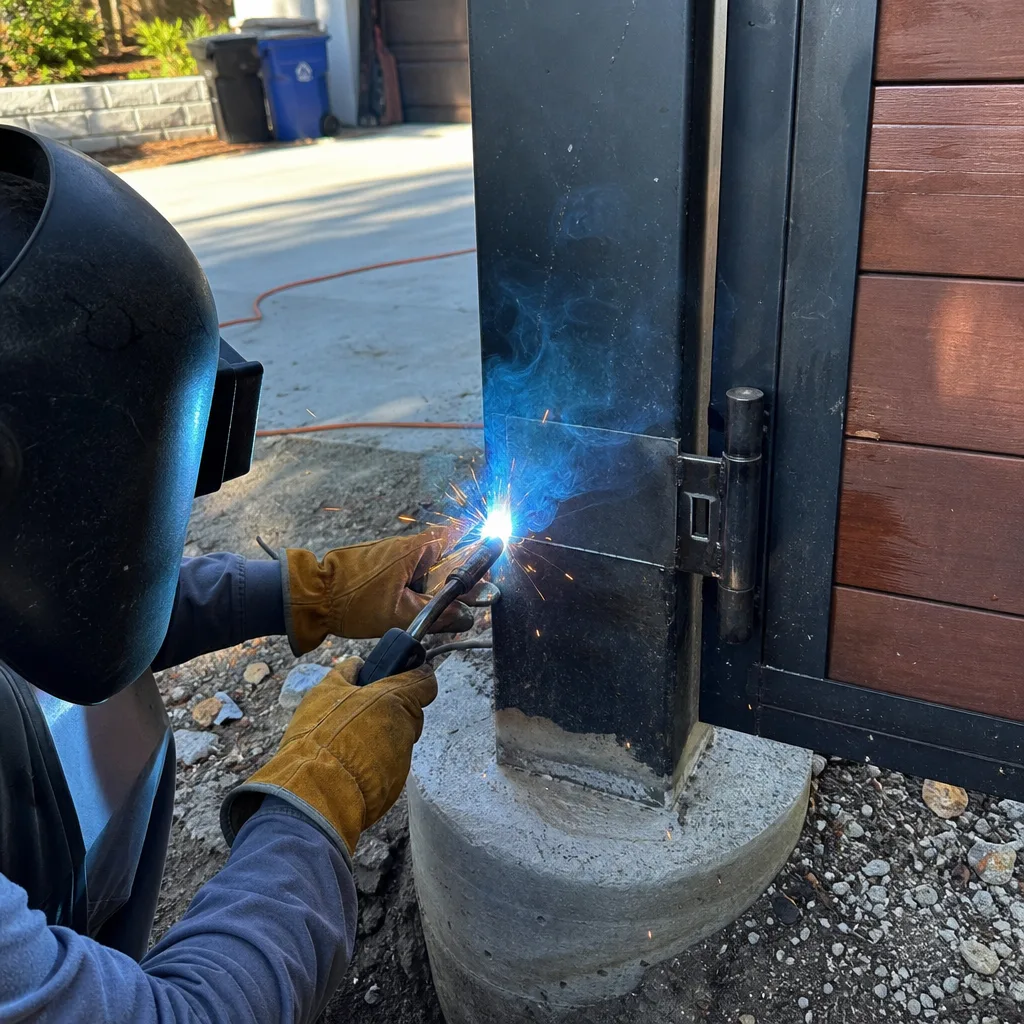
- Welding or structural repair on the gate frame. A driveway gate is a moving structural element. A cracked weld that is not repaired to full penetration, or a gate that is plated instead of re-welded, now has a live crack that flexes with every cycle. In Los Angeles, where gates on hillside driveways see constant wind loading, that crack grows. The gate fails when someone is underneath it or when it wedges against the post during a fire-evacuation moment. Welding on a gate that is still hung and powered is a professional task, full stop.
The common thread across all five items is that the failure is not immediate. The gate opens the next morning and the homeowner thinks the repair worked. That is the trap. Entrapment protection failures and weakened structural components do not announce themselves. They wait.
UL 325 and Why It Applies to a Single-Family Driveway Gate
Some homeowners assume UL 325 is a commercial code that does not apply to their single-family gate in Los Angeles. That assumption is expensive and wrong. UL 325 is the standard for gate and door operators that has been adopted into California law, and it applies to every automatic gate operator installed or maintained in the state, regardless of whether it is on a commercial parking structure or a three-bedroom house in Sherman Oaks.
What UL 325 requires on a residential gate operator
- Entrapment protection devices. Every automatic gate must have a primary entrapment protection device, most commonly a photo-eye or an edge sensor, and a secondary entrapment protection device. On newer operators, the secondary device is built into the motor control as a “sensing feature” that reverses the gate when the motor draws abnormal amperage. On older operators, the secondary device may be a physical edge sensor on the gate’s leading edge. Both must function. A homeowner who disconnects one to stop a false fault now has zero redundancy, and UL 325 is explicit about what zero redundancy means when a gate meets a person.
- Force settings. The operator’s force setting must be adjusted so that the gate reverses before it can crush. The exact figure is a matter of the gate’s weight and the motor’s spec, and it is set with a force gauge on professional visits. Setting it by feel is not compliance, and if an injury occurs, the technician’s name and the gauge reading are what the court will want to see. A DIY adjustment leaves no name and no reading.
- Warning signage. Automatic gates require placement of warning signs or labels. On many Los Angeles residential properties, the original sign has faded, been painted over by a house painter, or never installed because the previous owner bought the gate used. This is a small fix and a cheap one, but it is also one that tells an inspector or an insurance adjuster whether anyone has touched the gate since installation.
What a professional brings to a UL 325 repair
When our technicians service a gate in Los Angeles, the visit record includes the brand and model of the operator, the force reading before and after adjustment, the photo-eye alignment verification, and a photo log of the limit switch position. That record exists for one reason. If there is ever a question about whether the gate was safe on the day it was serviced, the answer is documented rather than argued. That is what UL 325 compliance actually looks like on a residential property. It is not a sticker. It is a written record.
The Real Cost of a DIY Repair vs a Professional Quote
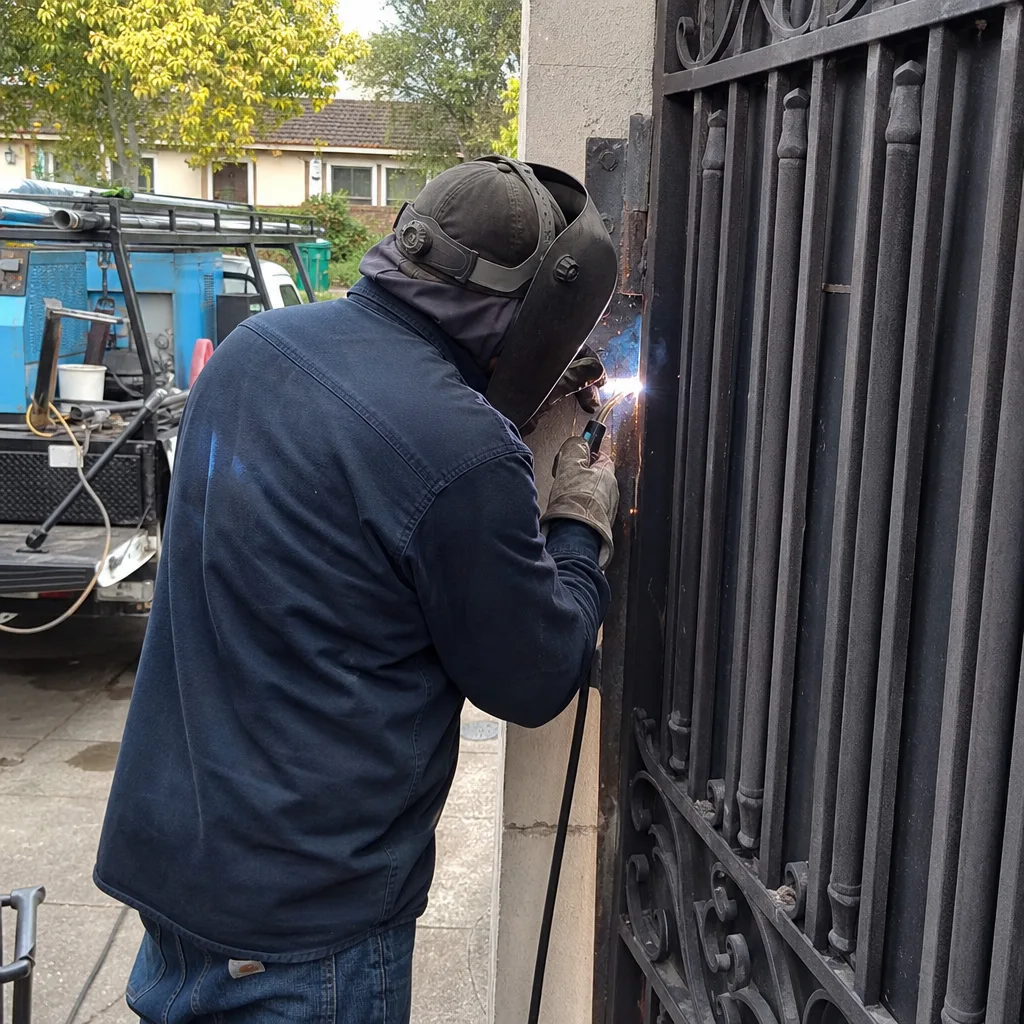
Homeowners who price a DIY gate repair usually price the part. They look up the cost of a replacement circuit board or a new arm bracket on a parts site and compare it to a professional quote. That comparison is incomplete. The real cost of a DIY repair includes the part, the tools you do not already own, the return trips to the hardware store, the hours spent on the learning curve, and the market cost of the professional who eventually fixes the DIY attempt if it fails. For a detailed look at what professionals actually charge, see our Gate Repair Cost Breakdown: The Los Angeles Homeowner’s Reference for 2026. When that last cost is included, most DIY gate repairs are more expensive than hiring a professional the first time.
A worked example: swing-gate arm bracket replacement
Let us run a typical Los Angeles swing gate. The gate is an 8-foot steel unit on a FAAC operator. The arm bracket that connects the operator’s piston to the gate has cracked the weld. The gate now opens halfway and stalls. Here is the comparison:
| Line Item | DIY Route | Professional Route |
|---|---|---|
| Parts (bracket, hardware, paint) | $45-$110 online | $45-$110 (billed at cost) |
| Tools (welder, grinder, clamps) | $180-$600 if not owned | $0 (already on truck) |
| Time to research, buy, attempt | 6-14 hours | $0 |
| Labor | $0 (your time) | $195-$360 |
| Cost if the DIY weld fails, professional re-do | $195-$360 | $0 (covered by 365-Day Done Right Promise) |
| Total, if DIY works | $225-$710 | $240-$470 |
| Total, if DIY fails | $420-$1,070 | $240-$470 |
The numbers above are not worst-case. They are the mode of what we see in Los Angeles. The homeowner buys the bracket, discovers the weld does not penetrate, rents or borrows a welder, welds it cold, rehangs the gate, and the bracket cracks again within six months because the original crack went back into the gate frame. At that point the professional is also fixing the amateur weld, which takes longer than fixing the original crack would have. You pay for the amateur work twice: once in your own time, once in the extra hour the technician spends grinding it off.
The pattern repeats across almost every gate repair category. The homeowner replaces a control board without a multimeter and fries the new board. The homeowner adjusts the limit switch “just a little” and silently over-travels the gate until the piston bends. The repair that would have cost $220 on a first visit becomes a $600 job because the failure mode now includes the homeowner’s repairs.
What the professional quote actually includes
When Vance Gate Repair Los Angeles quotes a gate repair, the written price includes the labor, the part, the adjustment, the documentation, and the guarantee. That last item is not free. It is built into the price, and it is worth more than the part itself. A homeowner doing the work accepts the cost either way. The only question is whether the guarantee is worth the difference between the DIY parts cost and the written quote. In most cases, on safety-critical repairs, the answer is yes.
The Documentation Problem: What a DIY Repair Leaves Behind
There is a hidden cost to DIY gate repair that no parts invoice shows, and it does damage long after the repair is done. It is the documentation gap. When you repair your own gate, you leave no written record of what was changed, what was set, what was measured, or what part number went in. The next technician who comes to the property has to rediscover all of that, and the homeowner pays for the rediscovery.
We see this constantly in Los Angeles. A homeowner bought a house in Los Feliz or Pasadena, the gate worked when they moved in, and it stopped working eighteen months later. The previous owner did a DIY repair before the sale and left no paperwork. Now the new homeowner is paying a technician’s diagnostic time just to reverse-engineer what the previous owner did. On a complex operator like a Viking or a BFT with multiple accessory connections, that diagnostic hour is $95 to $145. The documentation gap cost real money, and the person who paid it was not the person who created the gap.
By contrast, every professional visit under our Haven Standard produces a photo log, a written note of what was found, what was set, and what part was installed. That record stays with the gate. When the next technician arrives, they are not starting from zero. They are reading the notes and opening the hood on a machine with a service history. The homeowner saves the diagnostic hour, and the next repair gets done in one trip instead of two.
What a DIY repair lacks is the continuity. The work itself may be acceptable. But a repair with no record is a repair that the next repair will have to pay to rediscover. In Los Angeles, where properties change hands every five to seven years on average, that missing history is a recurring gift that costs the next owner money.
Partial DIY: The Tasks Homeowners Can Own Before and After a Pro Visit
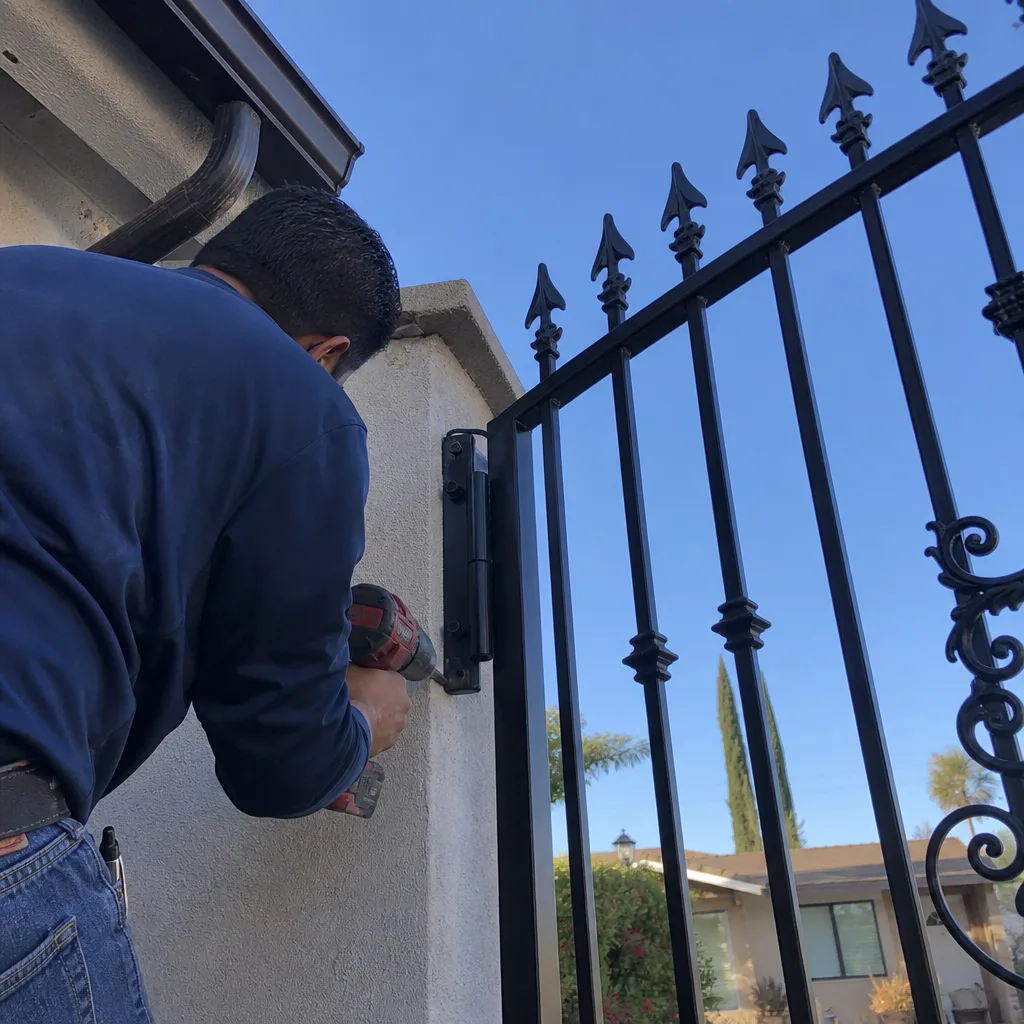
There is a middle path, and it is the one most Los Angeles homeowners should walk. It is what we call partial DIY: owning the low-risk tasks around the edges of a professional visit to reduce billable time, without taking on the high-stakes work. Done right, partial DIY can cut a repair bill by $75 to $150 and leave the gate better maintained than it was. Here is what to own.
Before the technician arrives
- Photograph the gate and the operator. Take clear photos of the operator’s brand label, the control board, the arm or chain, and the gate in both open and closed positions. Write down the symptoms in plain language: “gate opens but does not close,” “motor hums but arm does not move,” “photo-eye blinks red in the evening.” That record lets the technician arrive with the right parts on the truck, which means the repair is more likely to be one trip.
- Clear the work area. Move cars, trash bins, planters, and anything within an eight-foot arc of the gate. A technician who has to move a car or work around a parked vehicle bills you for that time. A clear work area is the easiest $50 you will ever save.
- Test the gate’s manual release. On most operators, there is a release handle or key that disengages the motor so the gate can be pushed by hand. Test it. If the gate is hard to move by hand when released, tell the technician before the visit. That one sentence changes the diagnostic direction completely and saves time.
After the technician leaves
- Photograph the work as it was left. The technician will leave a photo record. Add yours to it. A photo of the new part number and the new limit switch position, taken the same day, gives you a baseline you can compare against in a year when the gate starts behaving differently.
- Run three full cycles and write down the results. After any professional repair, the gate should open and close three times without hesitation, without reversing unexpectedly, and without a fault light. If it fails on cycle two, call the technician back under the 365-Day Done Right Promise. That guarantee exists for exactly this situation, and it costs you nothing to invoke in the first year.
- Set a calendar reminder for lubrication. Roller chains, hinge pins, and track bearings need lubrication on a schedule. In Los Angeles, with the dry heat and dust, every 90 days is reasonable for a gate in the Valley, every 180 days for a gate near the coast where the air is less abrasive. A recurring reminder costs nothing and keeps the gate out of the repair queue.
That is the full extent of the homeowner’s ownership. You can maintain, record, photograph, and observe. You should not adjust, splice, weld, or bypass. The distinction is consistent and it works. For more guides & resources on safe gate ownership, visit our blog.
What We See on Los Angeles Gates: Brand-Specific Repair Notes
Most Los Angeles gates have one of nine major operator brands on them, and the DIY decision changes somewhat from brand to brand. Some brands tolerate homeowner maintenance gracefully. Others punish it. Here are the three patterns we see most often in the field.
FAAC and BFT: European logic, unforgiving of improvisation
FAAC and BFT are the two most common European hydraulic and electro-mechanical operators on Los Angeles residential gates. They are durable machines, but they are control-board-driven and they fault on specifics. A FAAC board that sees a shorted photo-eye wire will not simply stop; it will log a fault and refuse to operate until the fault clears. A homeowner who cuts the wire to the photo-eye and splices it back together with a wire nut has now introduced a tiny resistance change that the board can detect. The gate works for a week and then faults intermittently. The technician arrives and finds the splice. The repair is now more expensive than the original photo-eye replacement would have been. We service FAAC and BFT regularly at Gate Motor & Opener in Los Angeles, and the pattern is consistent: these brands reward clean, documented repairs and punish improvised ones.
Linear and Viking: American boards, more forgiving but not proof
Linear and Viking operators tend to use simpler logic boards that do not log faults the way the European brands do. That makes them more forgiving of a loose wire or a rough splice, but it also means the gate will keep running with a problem a European board would have caught and flagged. A homeowner who bypasses a photo-eye on a Viking operator may not notice any change at all. The gate just opens and closes. But the entrapment protection is now gone, and the only indication is a missing green light on the photo-eye that no one is watching. The machine is not telling you it is unsafe. That is when the liability risk is highest. For more on the overall service picture in the city, see Gate Repair in Los Angeles.
The brand-neutral truth
No matter the brand, the safety-critical parts of the repair are the same: springs, photo-eyes, limit switches, force settings, welds. Those parts do not care whether the operator says FAAC, BFT, Linear, or Viking. They care whether the person working on them knows the failure mode and leaves a record. That is the entire argument for professional work on those components, and no brand on the market changes it.
Common Mistakes to Avoid
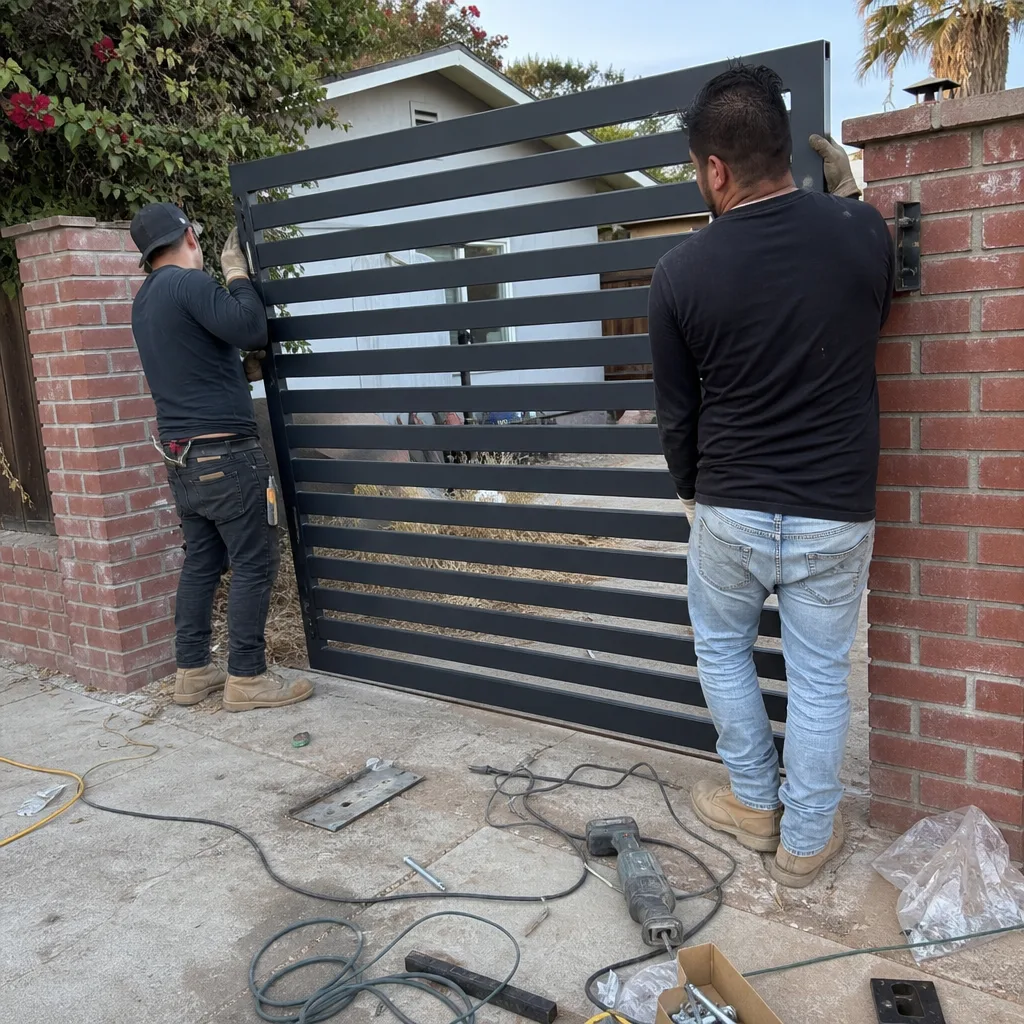
- Bypassing the photo-eye to stop a false fault. The false fault is usually a dirty lens or a misaligned beam. Bypassing the sensor removes the gate’s primary entrapment protection and turns a $40 fix into a life-safety issue. In Los Angeles, with delivery drivers, gardeners, and kids on foot, this is the one mistake that can follow a homeowner for years.
- Adjusting the force setting “just a little” to compensate for a dragging gate. A gate that drags has a mechanical problem: a worn roller, a bent track, a bad hinge. Increasing force to push through the drag wears the piston and the board, and it means the gate can now crush before it reverses. Fix the drag, not the force.
- Buying a replacement part before diagnosing the actual failure. A gate that hums and does not move might be a capacitor, and it might be a stripped gear, and it might be a seized bearing. The homeowner guesses, buys a board, replaces it, and the gate still does not move. The diagnostic call would have cost less than the wrong board.
- Welding on a gate while it is still hung and wired. The weld current can travel through the gate frame and into the operator’s control board, frying the board instantly. A professional disconnects and isolates the operator before welding. A DIY welder on a hung gate is a real risk to the equipment and to the person holding the torch near a live low-voltage circuit.
- Skipping the documentation because “it’s fixed now.” The gate is fixed now. It will not be fixed forever. When it fails again in two years, the absence of a record means the next technician starts from zero and the homeowner pays for rediscovery. A written note costs nothing and saves a diagnostic hour.
- Assuming a manual gate has no safety concerns because it has no motor. A manual swing gate still has springs under tension and still carries its own weight. If a weld fails, the gate can still fall. The fact that there is no operator does not make the gate safe to work on without understanding the loads.
When to Call a Professional
Call a professional when the repair involves a spring under tension, a photo-eye or any entrapment protection wiring, a limit switch, a force setting, a circuit board, or a weld. Also call when the gate has faulted more than twice in a month, when it reverses unexpectedly or fails to reverse on an obstacle, or when it makes a noise it never made before. These are the signs that the gate has entered the failure mode where homeowners get hurt and property gets damaged. Vance Gate Repair Los Angeles offers free estimates in Los Angeles. Call (213) 674-2473 and a live person answers, twenty-four hours a day, seven days a week. For new gate projects, see Gate Installation in Los Angeles and the Vance Gate Repair Los Angeles home page for the full service picture.
Frequently Asked Questions
Most professional gate repairs in Los Angeles run between $180 and $650, with circuit board replacements at the lower end and spring or weld repairs at the upper end. The price is quoted in writing before any work starts, and any reputable Los Angeles gate company should hand you that written number on the spot rather than asking you to wait for a callback. Call (213) 674-2473 for an exact quote on your specific gate.
You can clean the photo-eye lenses, lubricate moving parts, and program remotes. You should not open the operator housing, touch the internal wiring, adjust force settings, or replace the control board. Those tasks affect entrapment protection, and under California premises liability law, a homeowner who modifies a safety device and then sees an injury on the property is exposed to a claim no home insurance policy may cover.
Yes, it is legal to maintain your own gate, but the legal standard under California Civil Code 1714 is that a property owner must maintain the premises in a reasonably safe condition. If a DIY repair removes or degrades an entrapment protection device and someone is injured, the law will not accept “I did my best” as a defense. The work is legal; the liability exposure is proportionate to the risk of the component you touched.
UL 325 is the national safety standard for automatic gate operators, adopted into California law, and it applies to residential driveway gates as well as commercial ones. It sets requirements for entrapment protection devices, force settings, and warning signage. A professional repair includes documentation of compliance; a DIY repair leaves no record, and that gap becomes a legal vulnerability if the gate ever injures someone.
If the component stores mechanical energy under tension, like a spring; if it controls entrapment protection, like a photo-eye or a force setting; if it carries welding current near a control board; or if it controls the gate’s travel, like a limit switch, it is dangerous to do yourself. The rule is simple: you may clean, lubricate, record, and program. You may not adjust, splice, weld, or bypass. Call (213) 674-2473 when you are not sure.
Yes. Call (213) 674-2473 and describe the problem, and we will give you a written price before any work starts. The price covers the repair and the documentation, and every job is backed by the 365-Day Done Right Promise. A live person answers at any hour.
The Bottom Line
The DIY-versus-professional decision for Los Angeles gate repair comes down to a line that is easy to draw and expensive to cross. You can safely own lubrication, cleaning, remote programming, track clearing, and record-keeping. You should not own springs, photo-eyes, limit switches, force settings, control boards, or welds, not because you lack the skill, but because those components carry liability, code, and safety consequences that a written record and a professional’s name must stand behind. Hire the professional for the safety-critical work, own the maintenance around the edges, and keep the documentation. The gate will last longer, and so will the homeowner’s peace of mind. Call (213) 674-2473 when you are ready for a written price instead of a guess.
Written by Adrian Vance, Owner at Vance Gate Repair Los Angeles, serving Los Angeles since 2014.