
Last updated September 19, 2026
Free on-site gate assessment - hinges, posts, and your LiftMaster or Nice gate operator checked before anything is quoted
The assessment is free and the quote is the invoice.

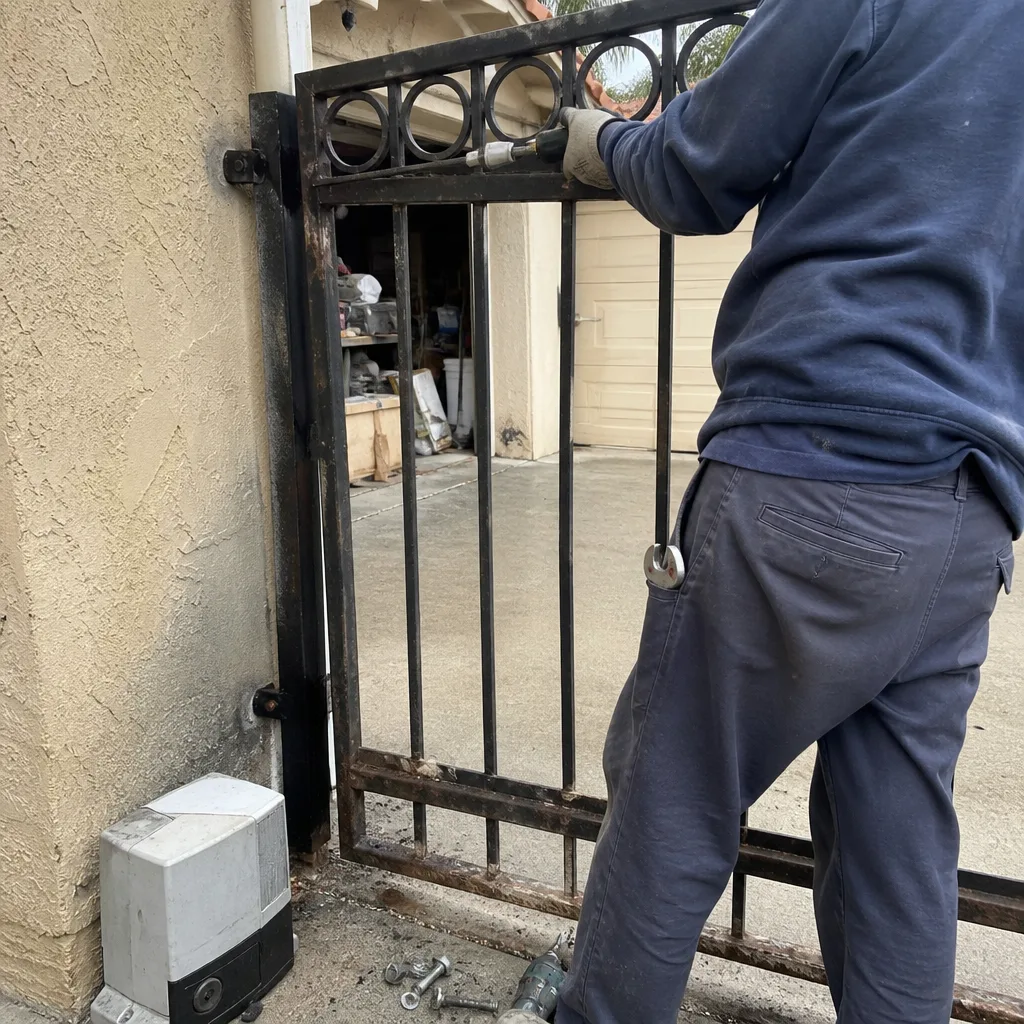 Before
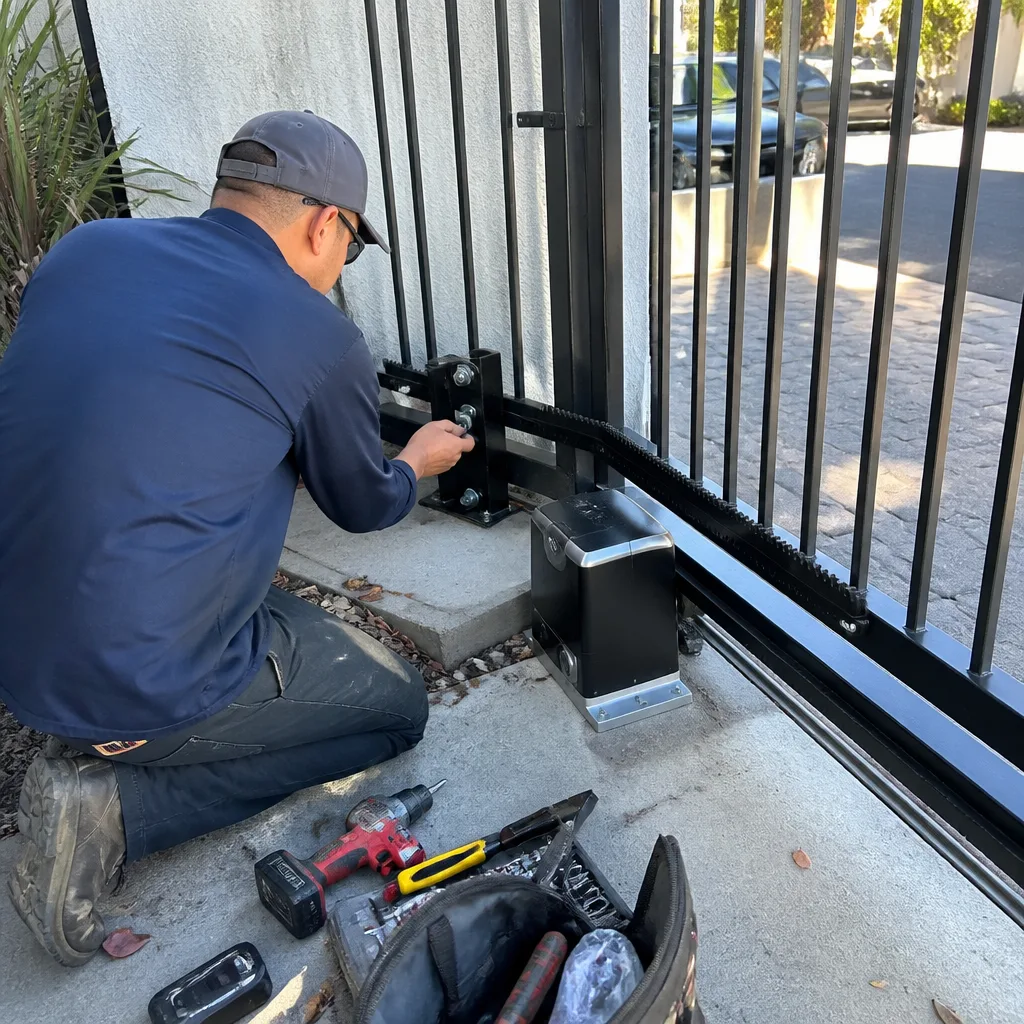 After
After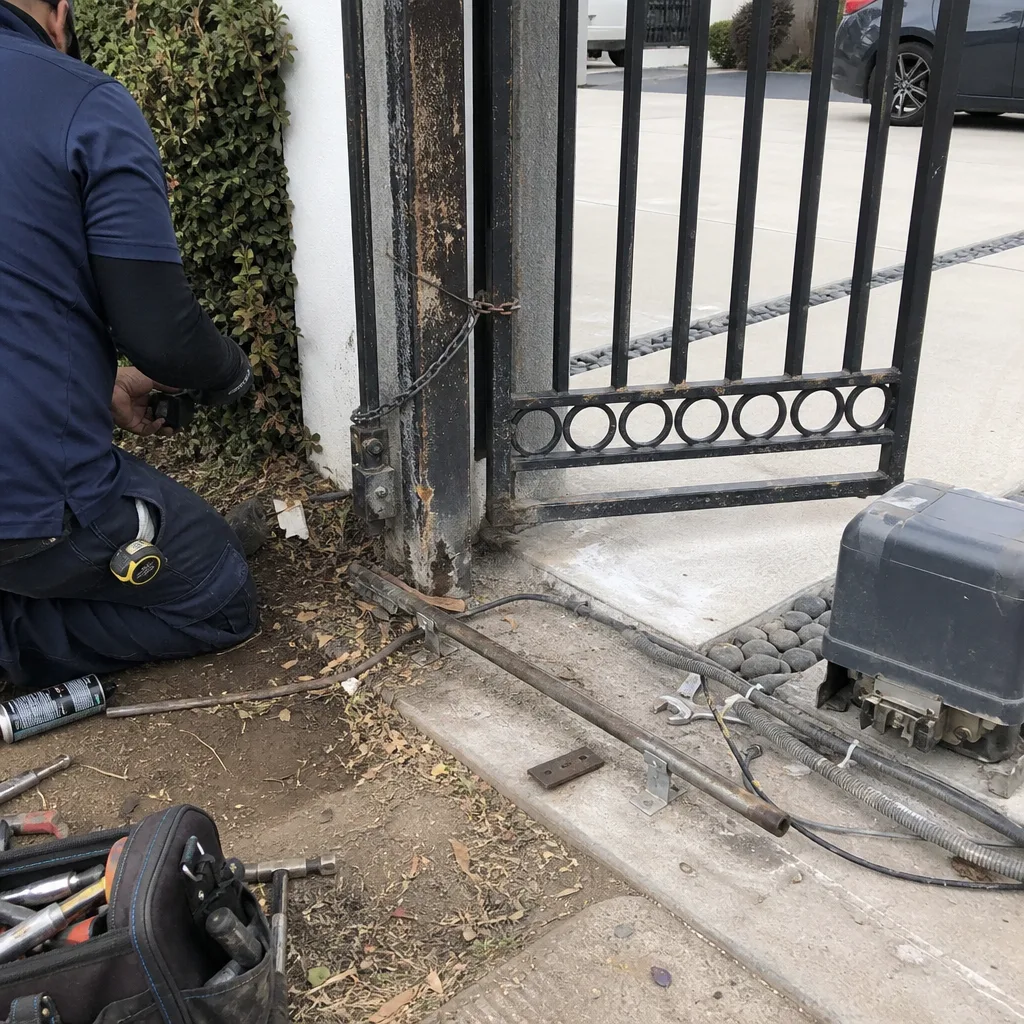 Before
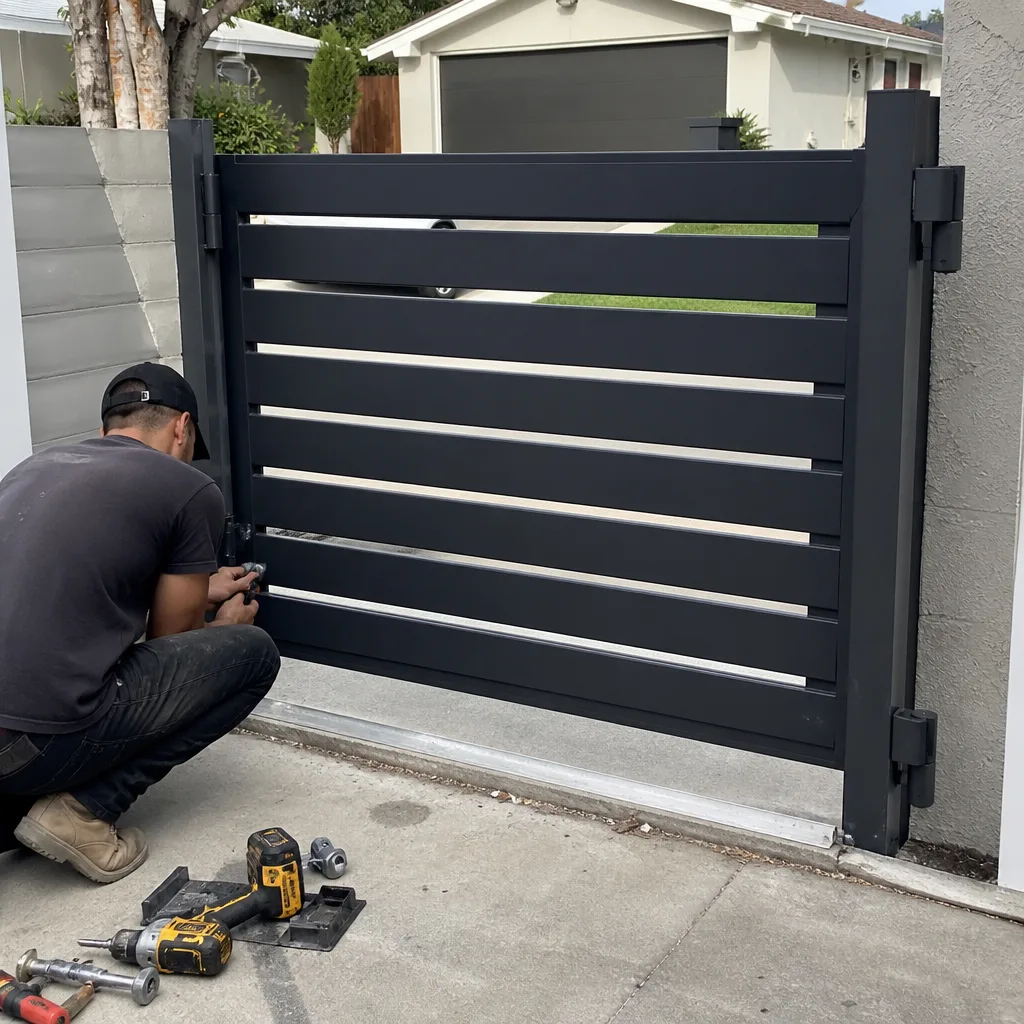 After
After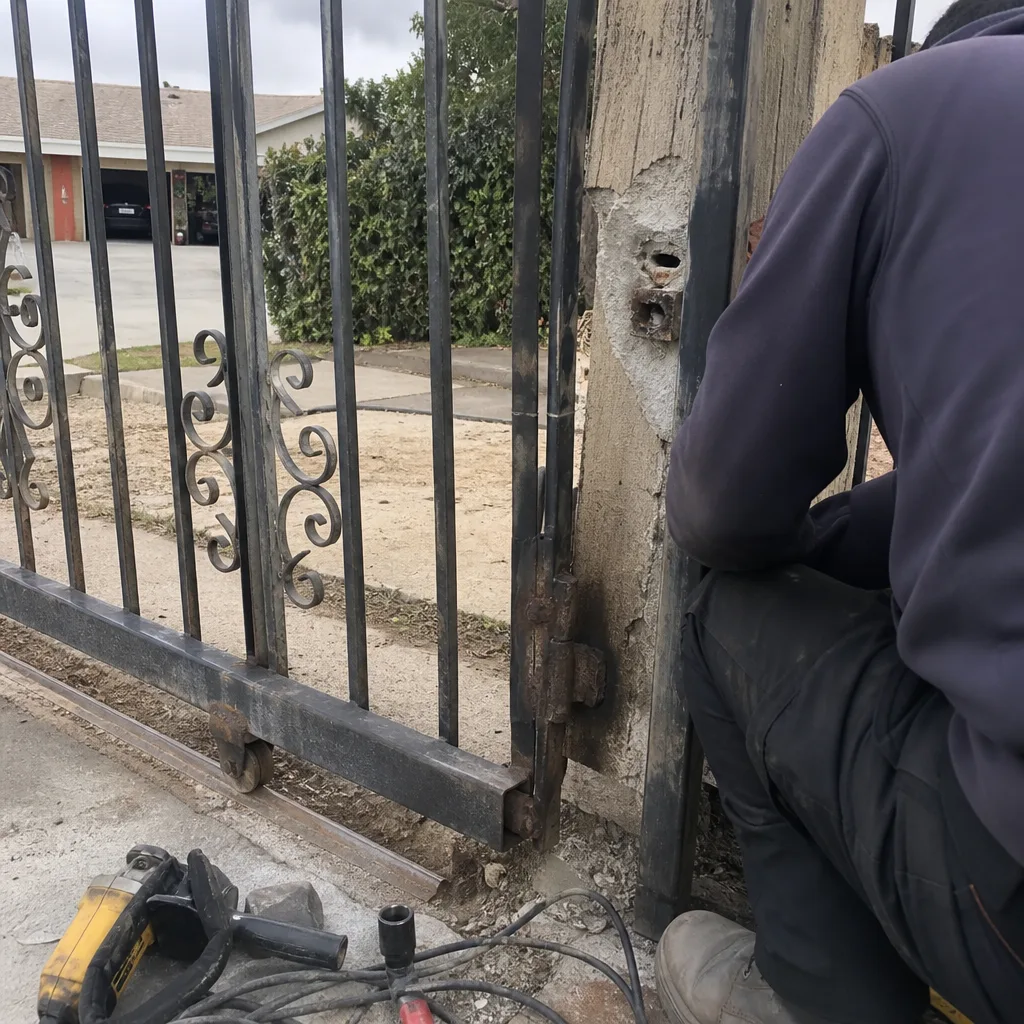 Before
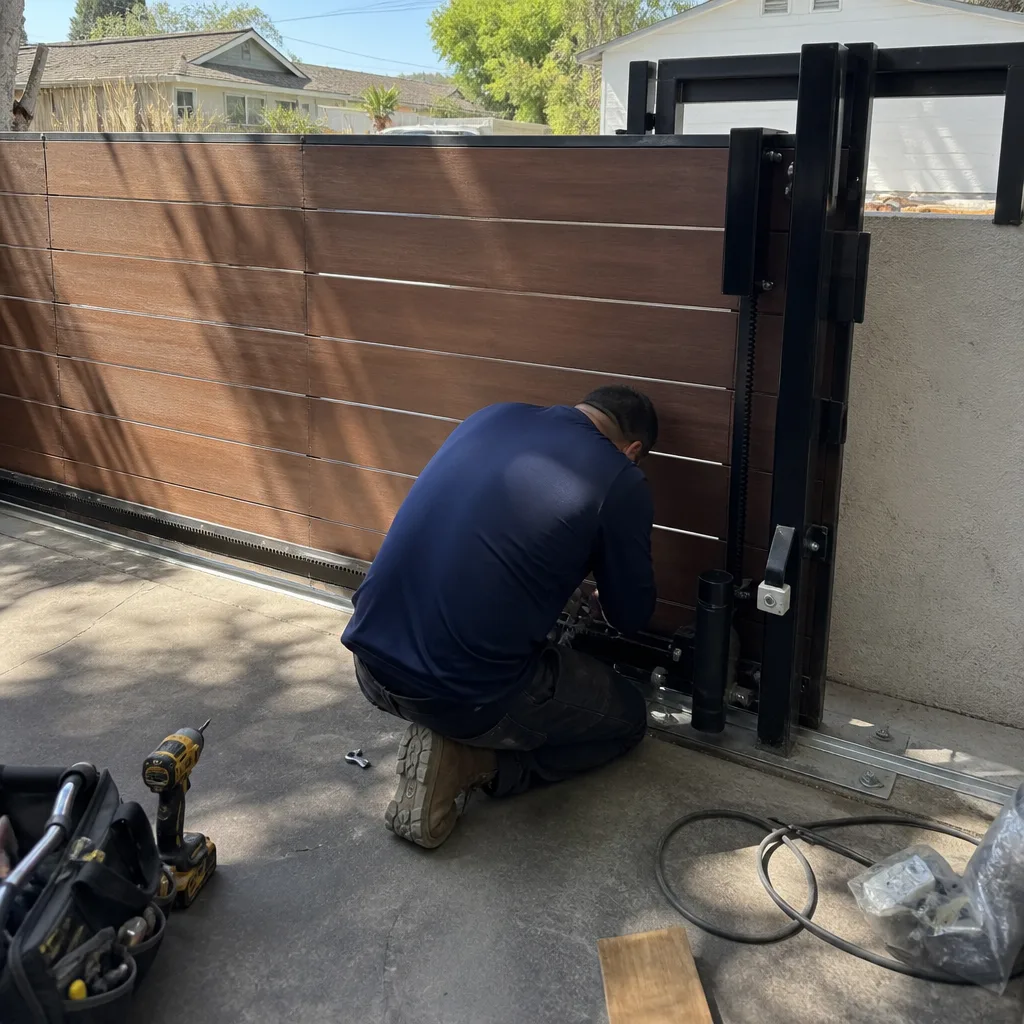 After
AfterGate Repair Maintenance Checklist for Los Angeles Homeowners
Most gate maintenance checklists say “inspect hinges for wear.” That instruction produces nothing actionable. A hinge either measures within tolerance or it doesn’t, and the difference is visible with a tape measure and five minutes. This guide replaces vague prompts with pass/fail thresholds: exact measurements, voltage floors, and tension ranges. If you own a driveway gate in Los Angeles, you’ll finish this page-and can explore our more guides & resources-knowing which items you can check yourself, which ones require a technician, and when a measurement means call now versus keep watching.
Quick Answer
A Los Angeles driveway gate needs monthly visual checks, quarterly mechanical checks with basic tools, and professional service when hinge gaps exceed 1/8 inch, battery voltage drops below 12.4 volts DC, or the gate takes longer than 15 seconds to complete a full open cycle. Most preventable gate failures trace back to three skipped items: hinge lubrication, photo-eye alignment, and battery voltage testing.
Table of Contents
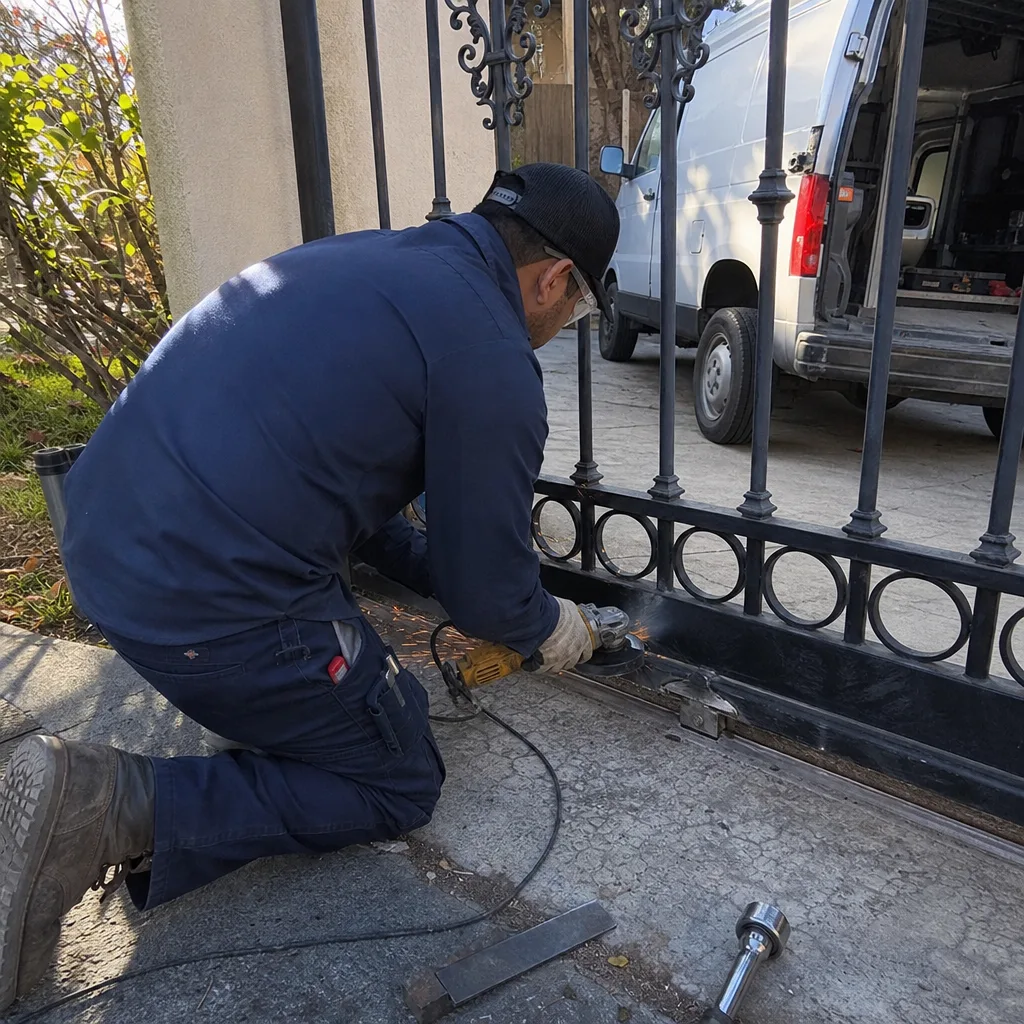
- The Monthly Visual Inspection: What to Look For
- Quarterly Mechanical Checks: Measurements That Matter
- Battery and Electrical: Voltage Floors and What They Mean
- Hinge Maintenance: Gap Tolerances and Lubrication
- Safety Systems: Photo-Eyes, Edges, and Force Settings
- LA Seasonal Schedule: Santa Anas, Marine Layer, and Heat
- How to Keep a Maintenance Log That Saves You Money
- The Three Items Most LA Homeowners Skip
BeforeAfterThe Monthly Visual Inspection: What to Look For
This is the five-minute walkaround. You’re not fixing anything. You’re establishing a baseline so that when something changes, you notice it immediately. Los Angeles gates accumulate a specific kind of debris: fine dust from dry months, salt film near coastal neighborhoods like Playa del Rey and San Pedro, and eucalyptus debris in hillside areas like Silver Lake and Mount Washington. Each of these creates different wear patterns.
What you’re checking each month:
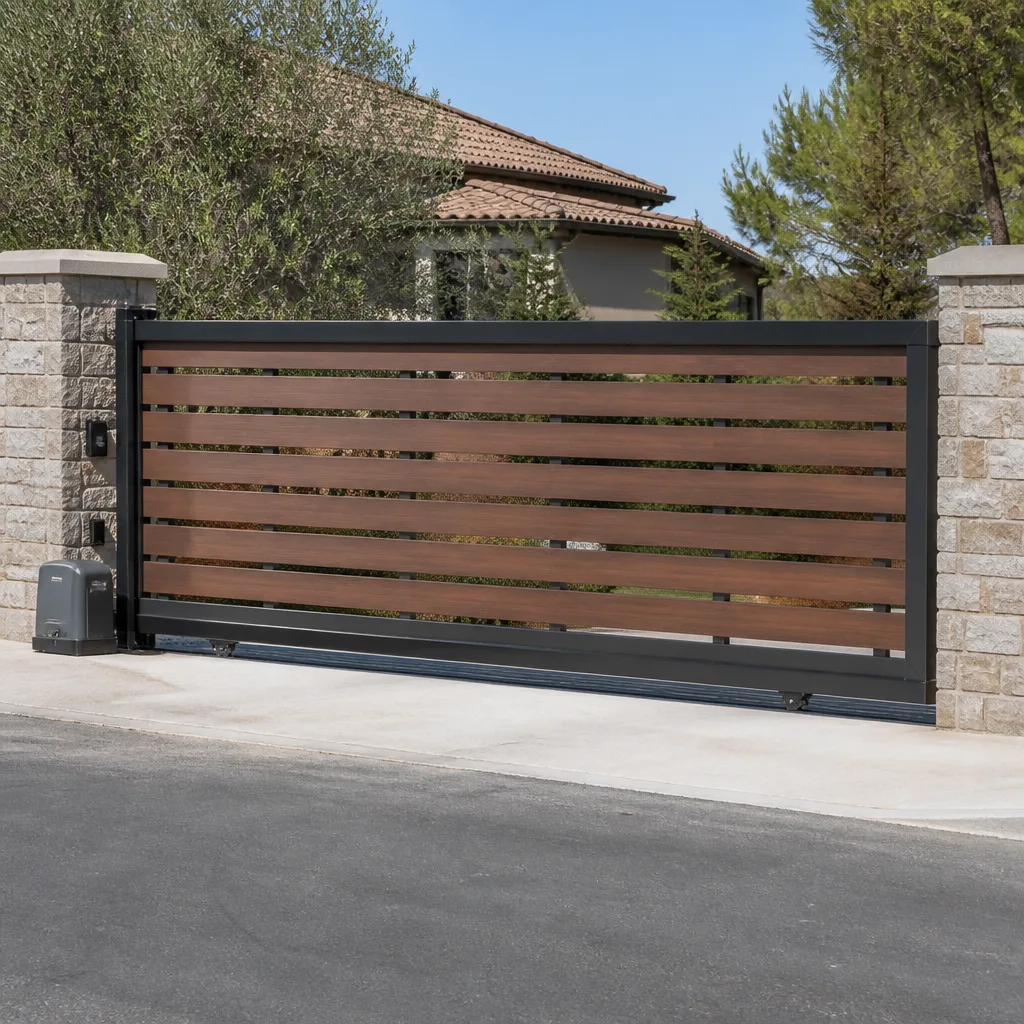
- Track debris: Slide gates run on a steel track. If you see more than a quarter inch of packed dirt, sand, or leaf matter in the track, clear it. Debris in the track forces the gate motor to work harder, which shortens motor life and can burn out the capacitor on brands like FAAC and BFT.
- Wheel contact: The gate wheels should sit flush on the track. If one wheel hovers even slightly, the gate is riding on fewer contact points than designed. Mark the wheel with chalk and run the gate. If the chalk mark doesn’t rotate, that wheel is seized or out of alignment.
- Surface rust: Los Angeles is not a rust belt city, but coastal fog carries salt. Check welds, hinge points, and the bottom rail. Surface rust is cosmetic. Rust that flakes when scraped with a fingernail is structural and needs a welding evaluation.
- Fastener tightness: Grab the gate at mid-height and push firmly. Movement at the hinge or bracket means a fastener is loosening. A quarter turn with the right wrench now prevents a dropped gate later.
In our experience across gate repair in Los Angeles, the monthly walkaround catches roughly 40% of issues before they become service calls. The key is consistency, not thoroughness. Five minutes, same day each month, written down.
Quarterly Mechanical Checks: Measurements That Matter
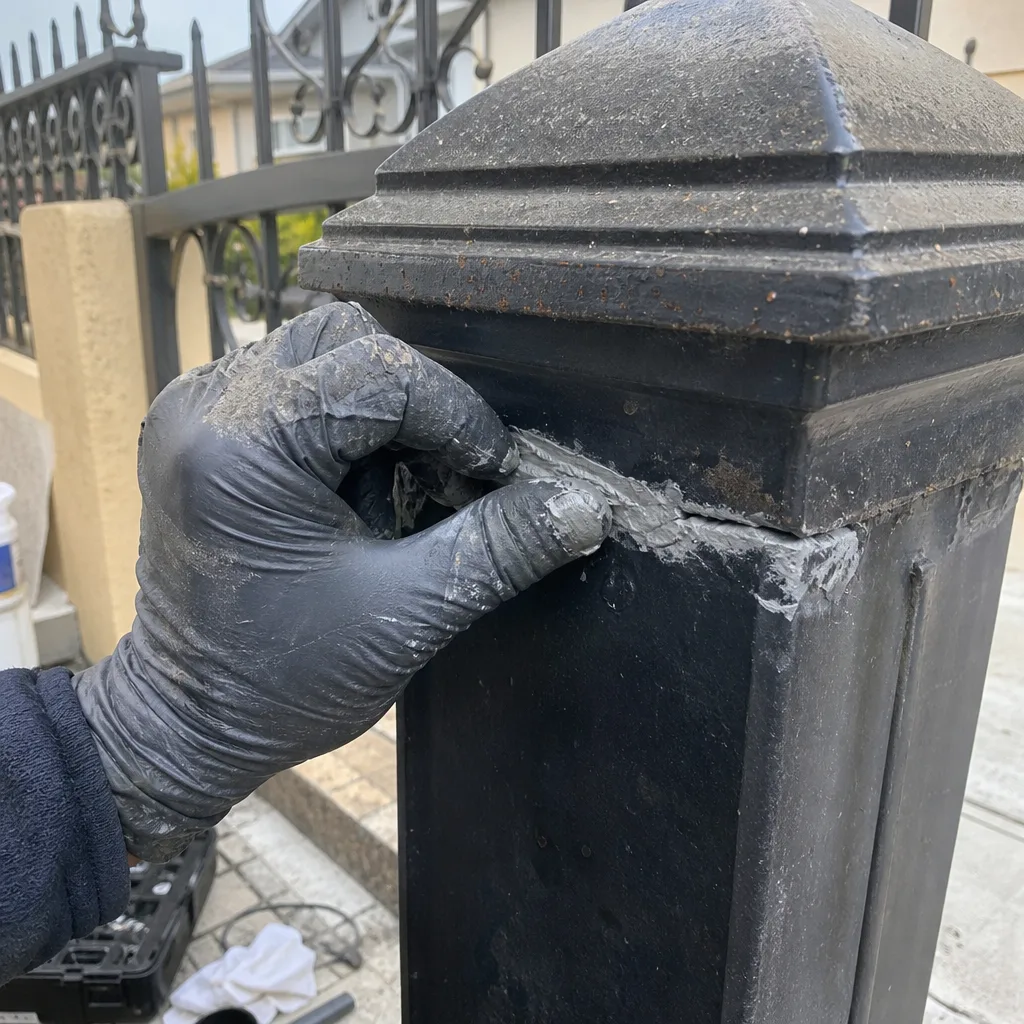
Every three months, you’re adding measurements to the visual routine. This is where a tape measure, a level, and a multimeter become more useful than your eyes. Los Angeles gates run more cycles per year than gates in most cities because we use our driveways year-round. A gate that cycles six times per day racks up over 2,000 cycles annually. That wear shows up in measurable ways.
Here are the four measurements that tell you the most:
1. Hinge Gap
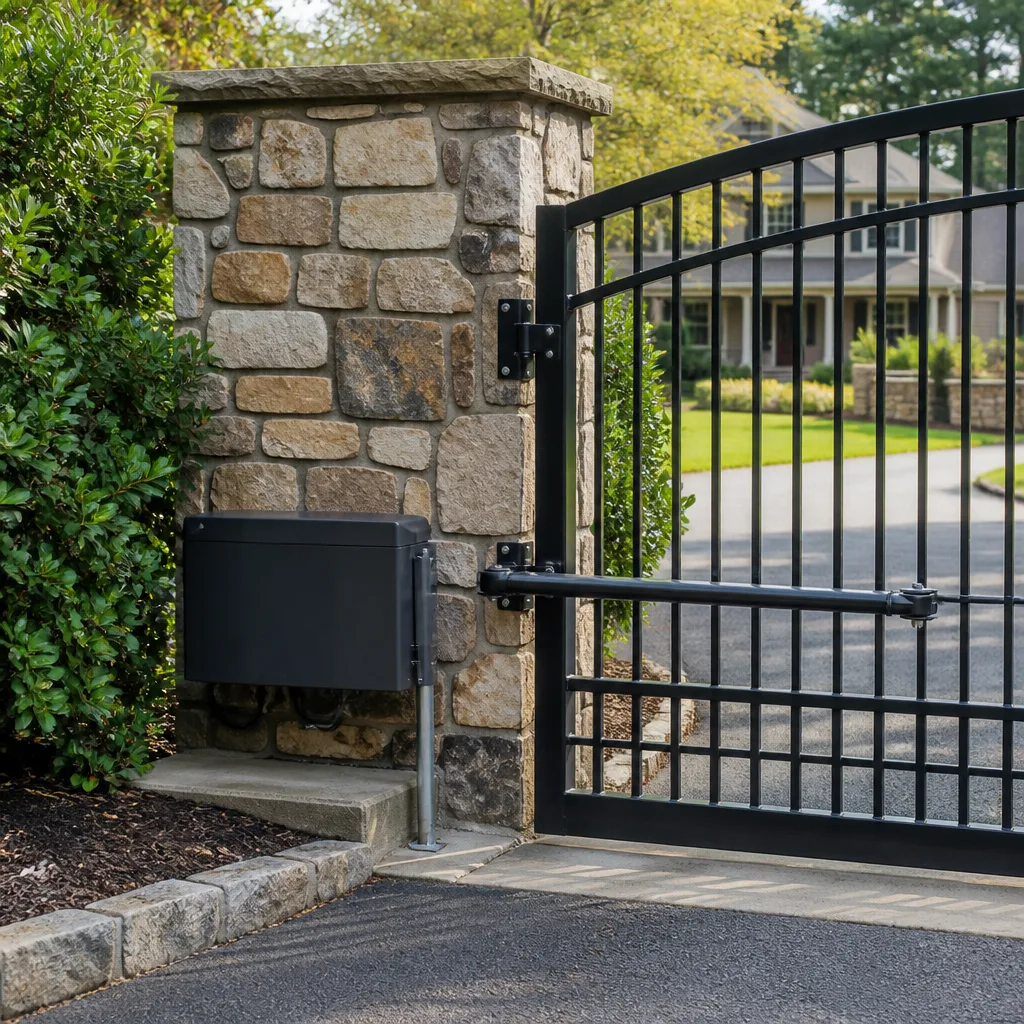
Measure the gap between the gate leaf and the post at the top hinge, middle hinge, and bottom hinge. On a properly hung swing gate, all three gaps should match within 1/16 inch. If the top gap is wider than the bottom by more than 1/8 inch, the gate is sagging. Sagging is not a hinge problem, it’s a load problem: the frame is flexing or the post is moving. This requires professional correction before the sag damages the motor or the latch.
2. Chain or Belt Tension
For slide gates with chain drive, press down at the midpoint of the chain run. Acceptable deflection is 1/2 inch to 1 inch. More than 1 inch means the chain is loose and wearing the sprocket. Less than 1/2 inch means the chain is overtight, which loads the motor bearings prematurely and can cause a BFT or Linear operator to trip its overload protection.
3. Level Reading
Place a 4-foot level on the top rail of a slide gate. The bubble should sit within the center third of the vial. If it’s outside that zone, the gate has racked. Racking twists the gate frame and causes the wheels to wear unevenly, which eventually carves grooves into the track.
4. Cycle Time
Time the gate from fully closed to fully open. Write down the number. If it increases by more than 3 seconds from the previous quarter, something is adding load: a failing capacitor, a dragging wheel, a motor working against a misaligned track. The number itself matters less than the trend.
These four measurements take roughly 15 minutes. They tell you more than an hour of staring at the gate. When any reading falls outside tolerance, that’s the moment to call a technician, not the moment the gate stops working.
Battery and Electrical: Voltage Floors and What They Mean
Most Los Angeles gate operators with battery backup run on two 12-volt sealed lead-acid batteries wired in series for 24 volts DC. These batteries have a finite lifespan, typically three to five years depending on heat exposure. Los Angeles heat, especially in the San Fernando Valley and inland areas like Pasadena and Glendale, shortens that lifespan. Heat kills batteries faster than cold.
Here’s the measurement protocol:
- Locate the battery compartment on your operator. On Viking and Linear units, it’s usually behind a small access panel on the side of the motor housing.
- Set a multimeter to DC voltage and place the probes on the battery terminals.
- A healthy, fully charged battery reads between 12.6 and 12.8 volts at rest. A reading of 12.4 volts DC is the floor. Twelve point four is the number we tell homeowners to remember.
- Anything below 12.4 volts means the battery is discharging, failing to hold charge, or the charging circuit in the operator has stopped working.
One thing to note: voltage testing is safe for a homeowner to perform. Battery replacement is also a reasonable DIY task if you can safely disconnect the operator from AC power first. But if the voltage drops below 12.4 and the batteries are less than two years old, the problem is likely the charging circuit inside the operator, not the battery itself. Replacing batteries in that scenario wastes money. That diagnosis requires a technician with a schematic.
If your gate operates on solar power, the voltage reading should be taken at the end of a full sunny day. Los Angeles averages over 280 sunny days per year, but solar panels lose efficiency as they accumulate dust. A panel that’s 20% dusty produces 20% less current. Clean the panel quarterly with water and a soft cloth during the dry season.
Hinge Maintenance: Gap Tolerances and Lubrication
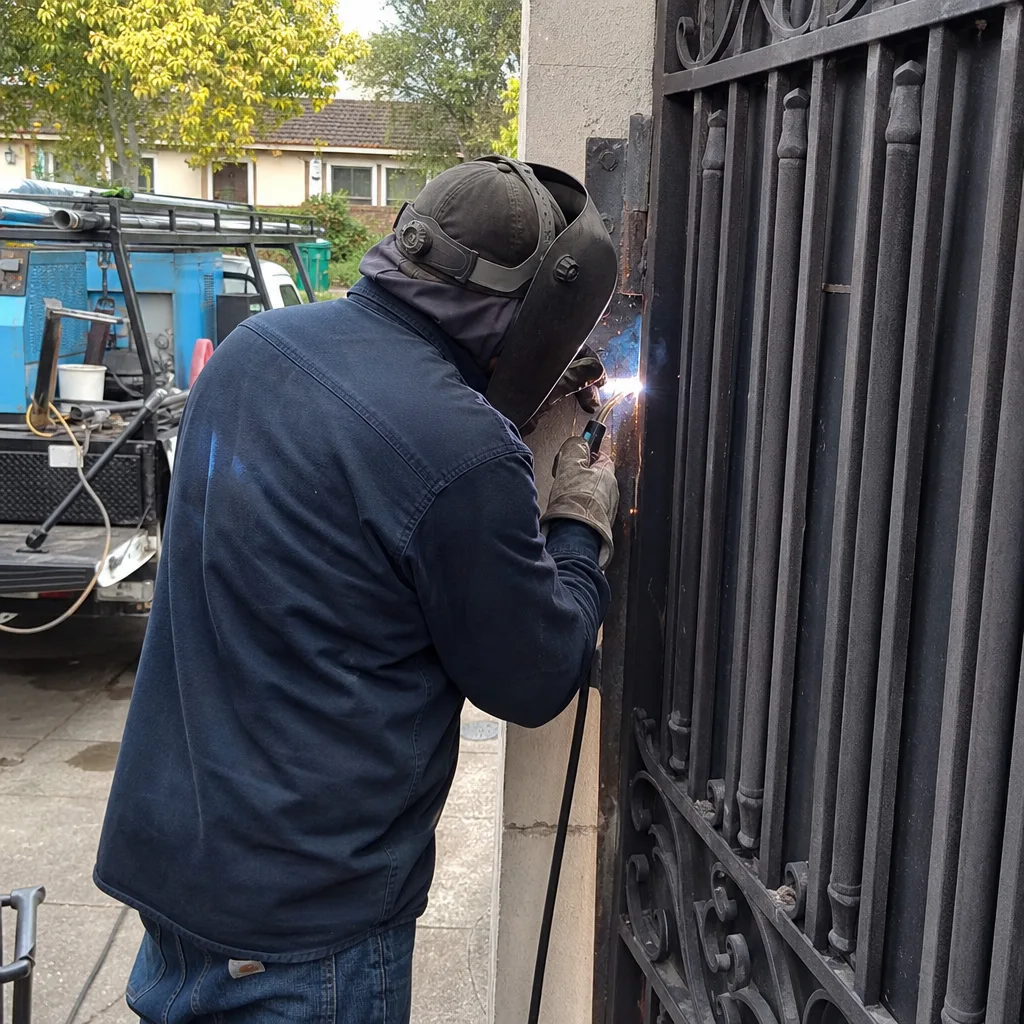
Hinges are the most mechanically loaded components on a swing gate. A typical Los Angeles residential swing gate weighs between 400 and 800 pounds. All of that weight transfers through two to four hinge points every time the gate moves. When a hinge wears, the gate doesn’t just sag, it changes the geometry of the entire opening, which stresses the motor, the latch, and the post.
The lubrication rule: Use a white lithium grease or a dry PTFE spray. Do not use WD-40 as a lubricant. WD-40 is a water displacer and solvent. It cleans, but it strips existing lubrication and leaves the metal vulnerable to wear. Apply lubricant to the hinge pin and work the gate through two full cycles to distribute it.
Frequency: Every three months during dry season, every two months if you live within two miles of the coast where salt air accelerates corrosion.
When to call a technician: If you hear a clicking or popping sound from the hinge during operation, the hinge pin or bushing is worn beyond service limits. If you can lift the gate leaf by hand and feel vertical play of more than 1/8 inch, the hinge is failing. Both are Gate Repair services situations, not maintenance situations. Continuing to run a gate with a failed hinge ovalizes the mounting holes and turns a simple hinge replacement into a welding job.
For gate installation in Los Angeles, we always recommend specifying sealed bearing hinges rather than standard barrel hinges. The cost difference is modest and the service life is roughly double, especially in corrosive coastal environments.
Safety Systems: Photo-Eyes, Edges, and Force Settings
Gate safety systems exist to prevent injury and property damage. They’re also the most common source of phantom problems: a gate that reverses for no reason, a gate that refuses to close, a gate that starts closing then stops. In most cases, the mechanical components are fine. A safety sensor is triggering because it’s dirty, misaligned, or failing.
Here’s the monthly check:
- Clean the photo-eye lenses. Photo-eyes are the small infrared sensors mounted on posts or walls on either side of the gate opening. One transmits, one receives. Dust and spider webs block the beam. Wipe each lens with a dry cloth.
- Check alignment. Most photo-eyes have a small indicator light. A solid green or solid red light usually means alignment is good. A blinking light typically means misalignment or obstruction. Adjust the sensor by hand until the light steadies.
- Test the obstruction response. With the gate closing, place a cardboard box or a trash can in the path. The gate should stop and reverse before contacting it. If it contacts the object before reversing, the force setting is too high or the edge sensor is not functioning.
- Check safety edges. Safety edges are the pressure-sensitive strips on the leading edge of the gate. Run your hand along them and look for cracks, tears, or spots where the rubber has hardened. A damaged safety edge is a liability exposure and should be replaced immediately.
Force settings should be checked by a professional. Setting the obstruction force too high defeats the safety system. Setting it too low causes nuisance reversals. Every operator brand, from FAAC to Viking to Linear, has a different procedure for adjusting this, and doing it wrong can create a dangerous gate. This is one of the items on this checklist where we tell Los Angeles homeowners to pick up the phone rather than open the tool drawer.
LA Seasonal Schedule: Santa Anas, Marine Layer, and Heat
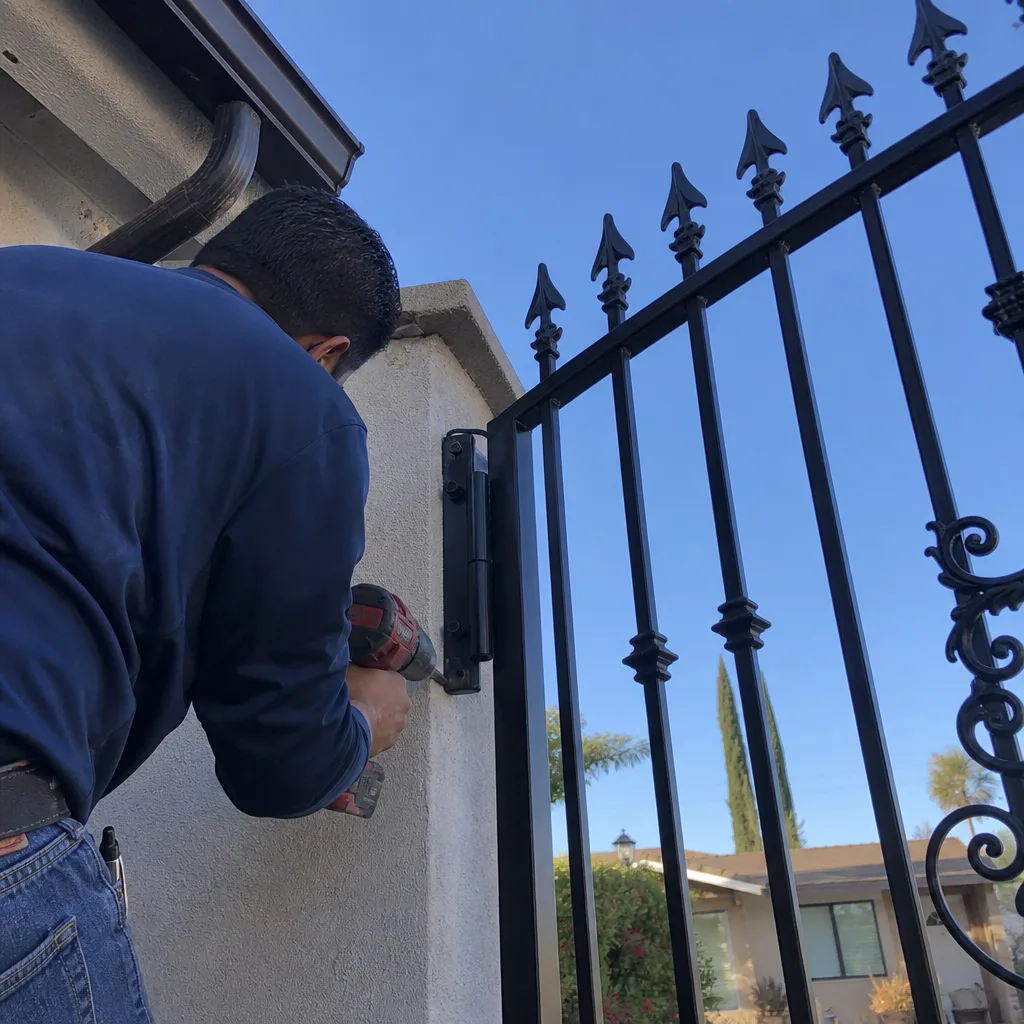
Los Angeles doesn’t have winter in the way most maintenance schedules assume. We have wind season, fog season, and heat season. Each stresses a gate differently, and a maintenance schedule tied to calendar quarters misses what’s actually happening to your equipment.
Santa Ana wind season (September through January): Santa Ana winds routinely gust to 40 or 50 mph, with stronger gusts in canyon areas like the Sepulveda Pass and Laurel Canyon. Wind loads on a solid gate panel are enormous. A gate that cycles fine in calm air can stall or whip in a Santa Ana. Before wind season, check all fasteners, verify the gate is level, and test the operator’s wind load response. If your gate is solid panel rather than open pickets, wind is your single biggest structural stressor. In our experience across Los Angeles, Santa Ana season produces more bent tracks and torn hinges than any other period.
Marine layer months (May through July): Coastal fog settles in overnight and burns off by midday. That daily moisture cycle condenses on metal surfaces and accelerates corrosion, especially within three miles of the coast. During these months, increase lubrication frequency and look closely for rust forming at welds and bolt holes. A light coat of corrosion inhibitor on exposed steel is cheap insurance.
Heat season (July through October): Valley temperatures above 100 degrees strain motors, capacitors, and batteries. Heat degrades capacitor dielectric, which causes erratic motor behavior: slow starts, humming without movement, intermittent failure. Heat also accelerates battery water loss in flooded lead-acid batteries. If your operator is in direct sun, consider a shade structure. Keeping the motor housing below 120 degrees extends component life measurably.
How to Keep a Maintenance Log That Saves You Money
The most expensive phrase in gate repair is “we don’t know its history.” When a technician arrives at a gate with no record of what was done previously, the diagnostic process starts from scratch. That means more time, more testing, and potentially replacing parts that were recently replaced. A maintenance log eliminates that.
What to record:
- Date and time of each inspection
- Measurements: hinge gaps, cycle time, battery voltage
- Observations: unusual sounds, rust spots, debris buildup
- Actions taken: lubrication, cleaning, tightening
- Parts replaced: brand, part number if visible, date
- Any technician visits: what was done, what was charged
You can do this in a notebook, a spreadsheet, or a notes app. What matters is consistency. The record itself has real value: when a technician can see that a Viking operator was installed in 2021, batteries were replaced in 2023, and a photo-eye was realigned in 2024, the diagnostic path narrows immediately. That turns a two-hour troubleshooting session into a 30-minute repair.
The documentation habit works the other direction too. When gate motor and opener service is performed at our shop, every visit produces a written record of what was found, what was adjusted, and what was installed. We leave that record with the homeowner and file it in our job history. That way, the next technician, whether it’s us or someone else, starts with evidence rather than guesswork.
The Three Items Most LA Homeowners Skip
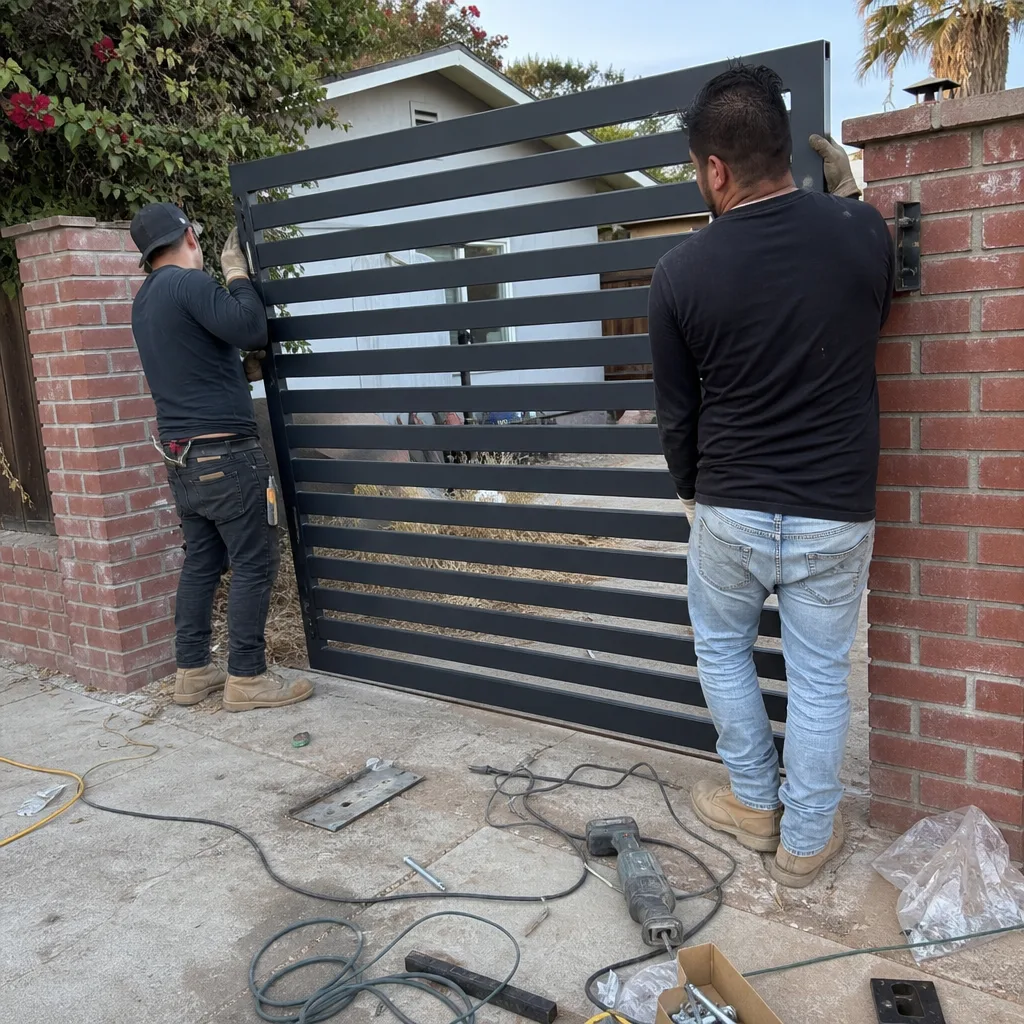
After servicing more than 22,000 gates since 2014, we can tell you exactly which maintenance items get skipped and which ones cause the most damage. Here are the three:
1. Hinge lubrication
It’s boring, it’s slightly messy, and nobody remembers to do it. Dry hinges wear fast. A hinge that’s lubricated every quarter lasts years longer than one that runs dry. The failure mode is gradual: the gate starts to sag, the motor compensates, the track wears unevenly, and by the time it’s obvious, the repair is structural rather than routine. Lubrication is the cheapest maintenance task in terms of cost per year of added service life.
2. Photo-eye alignment
A misaligned photo-eye causes the gate to refuse to close or to reverse mid-cycle. Most homeowners respond by holding down the override button or disconnecting the sensor, which disables a safety system. The correct response is a two-minute realignment. We see bypassed photo-eyes on a regular basis, and it’s always the same story: the homeowner didn’t know how to fix the alignment, so they worked around it. The fix is usually simpler than the workaround.
3. Battery voltage testing
Batteries sit in a metal box, silently dying. Nobody checks them until the gate fails during a power outage, which is precisely when the battery backup is needed. Testing takes 90 seconds with a $15 multimeter. The threshold is 12.4 volts. Below that, replace or investigate. In Los Angeles, where summer heat accelerates battery degradation, checking voltage in June and again in September catches most failures before the first winter power outage.
Common Mistakes to Avoid
- Lubricating the track on a slide gate. Tracks should be clean and dry. Grease on a track attracts dust and grit, which creates an abrasive paste that wears wheels and track simultaneously. Lubricate the wheels and bearings, not the rail.
- Ignoring a slow gate. A gate that opens slower than it did last month is communicating something. Load is increasing somewhere. The correct response is measurement and diagnosis, not waiting for it to stop.
- Using the wrong lubricant. WD-40 is a penetrant, not a lubricant. Using it on hinges strips existing grease and accelerates wear. Use white lithium grease or dry PTFE spray on hinge pins.
- Overtightening chain tension. A too-tight chain loads the motor output bearing and can trip the operator’s thermal overload. The 1/2 inch to 1 inch deflection rule exists for a reason.
- Disabling safety sensors instead of fixing them. Bypassing a photo-eye or edge sensor removes the primary injury prevention system. The fix is usually faster than the workaround.
- Skipping documentation. Every unrecorded maintenance action is a future diagnostic expense. Write it down. The two minutes of record-keeping returns hours of saved labor when a problem arises.
When to Call a Professional
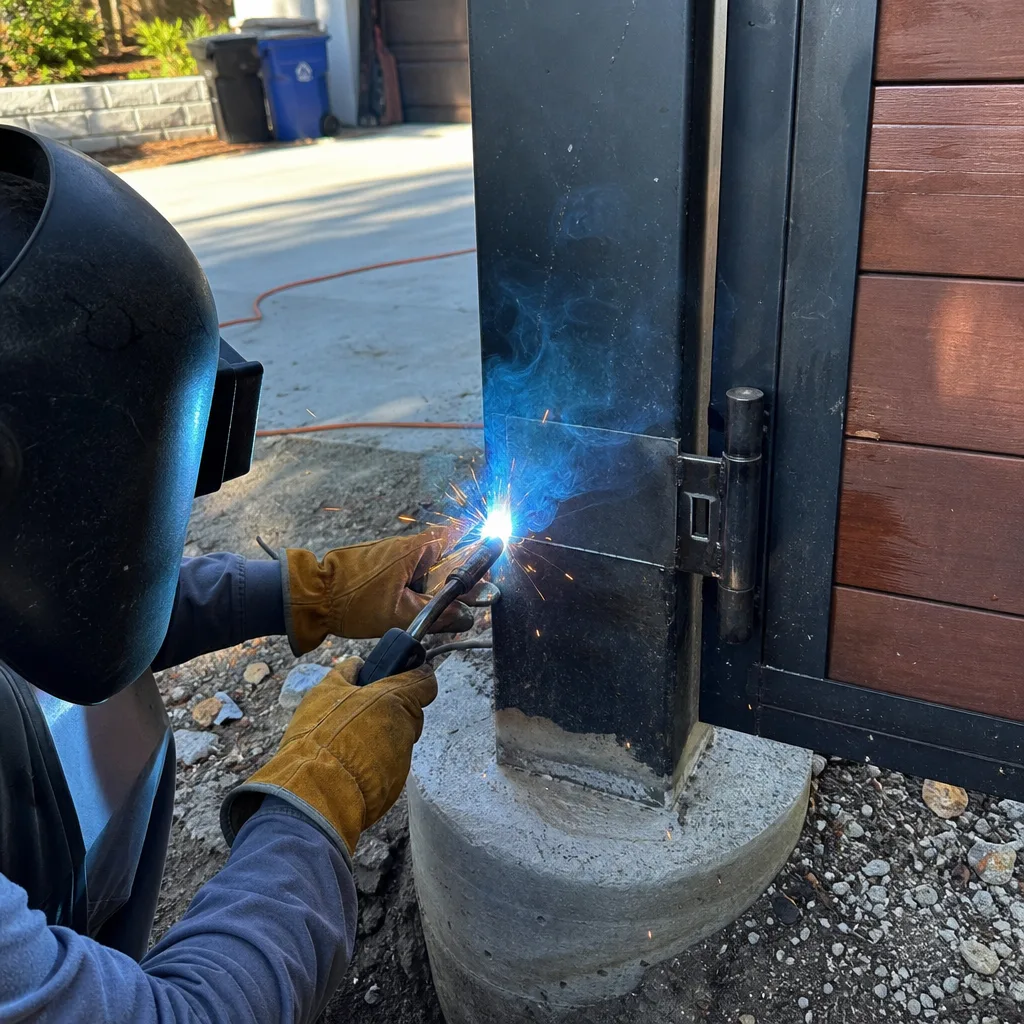
Call a professional when a measurement falls outside the tolerances listed above: hinge gap exceeding 1/8 inch, battery voltage below 12.4 volts, cycle time increasing by more than 3 seconds between checks. Also call when a safety system is not functioning correctly, when you hear grinding or popping from the motor, or when the gate has been hit by a vehicle, which can cause hidden frame damage that isn’t visible in a walkaround. Vance Gate Repair Los Angeles offers free estimates in Los Angeles. Call (213) 674-2473.
Frequently Asked Questions
Monthly visual checks and quarterly measurement checks are the baseline for Los Angeles gates. The monthly check is a five-minute walkaround. The quarterly check adds 15 minutes of measurements: hinge gaps, chain tension, battery voltage, and cycle time. Gates near the coast need more frequent lubrication during marine layer months due to salt air corrosion.
A professional maintenance visit in Los Angeles typically runs between $95 and $200, depending on gate type and what’s included. Lubrication, fastener tightening, safety system testing, and a written report are standard. Repairs found during maintenance are quoted separately, and the price is written before any additional work starts.
Yes, about half of this checklist is within reach of a homeowner with basic tools and a willingness to measure. Visual inspection, cleaning, lubrication, photo-eye alignment, and battery voltage testing are all homeowner-appropriate. Force setting adjustments, motor diagnostics, and structural repairs are not. When in doubt, the documentation you’ve kept will help a technician diagnose faster.
In the Los Angeles climate, a quality operator like a FAAC, BFT, or Viking typically lasts 8 to 12 years with proper maintenance. Valley heat and coastal corrosion shorten that range. Regular lubrication, clean tracks, and battery maintenance extend it. The operator’s service life is more determined by how the gate is maintained than by the motor brand.
A gate needs repair when it sags visibly, grinds during operation, reverses without obstruction, refuses to close, or trips its own circuit breaker. For a full breakdown of symptoms, see our Gate Repair Warning Signs: A Los Angeles Homeowner’s Reference Guide. Any measurement outside the tolerances in this guide, any new sound, or any change in cycle time is a signal to investigate. Catching a repair need early is the difference between a $200 fix and a $2,000 replacement.
Santa Ana winds generate sustained lateral pressure on the gate panel. A solid-panel gate acts like a sail. The motor draws more amperage to push against wind load, which can trip the overload protection. Gates with wind load features handle this better than basic operators. If your gate stalls only when winds exceed 30 mph, the fix may be a wind load setting adjustment rather than a new motor. Call (213) 674-2473 for an exact assessment.
The Bottom Line
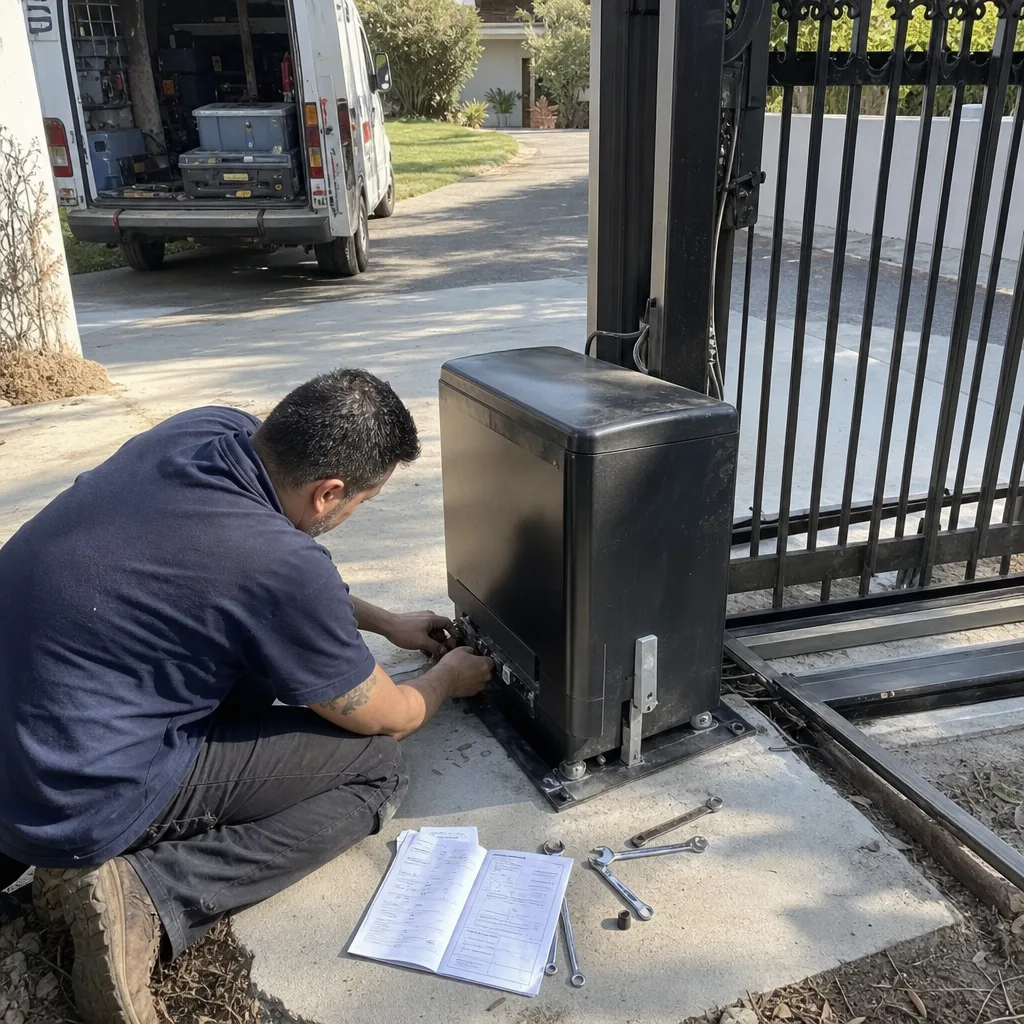
A maintenance checklist is only worth the specific numbers on it. “Check the hinges” produces nothing. “Measure the hinge gap and call when it exceeds 1/8 inch” produces an early repair that costs hundreds instead of thousands. Los Angeles gates cycle year-round, face Santa Ana wind loads, marine layer corrosion, and valley heat. The maintenance schedule that respects those stressors, records measurements, and flags when numbers cross thresholds is the one that keeps your gate running. Keep the log. Test the voltage. Watch the measurements. Call (213) 674-2473 when a number falls outside tolerance.
Written by Adrian Vance, Owner at Vance Gate Repair Los Angeles, serving Los Angeles since 2014.