
Last updated September 19, 2026
Free on-site gate assessment - hinges, posts, and your LiftMaster or Nice gate operator checked before anything is quoted
The assessment is free and the quote is the invoice.
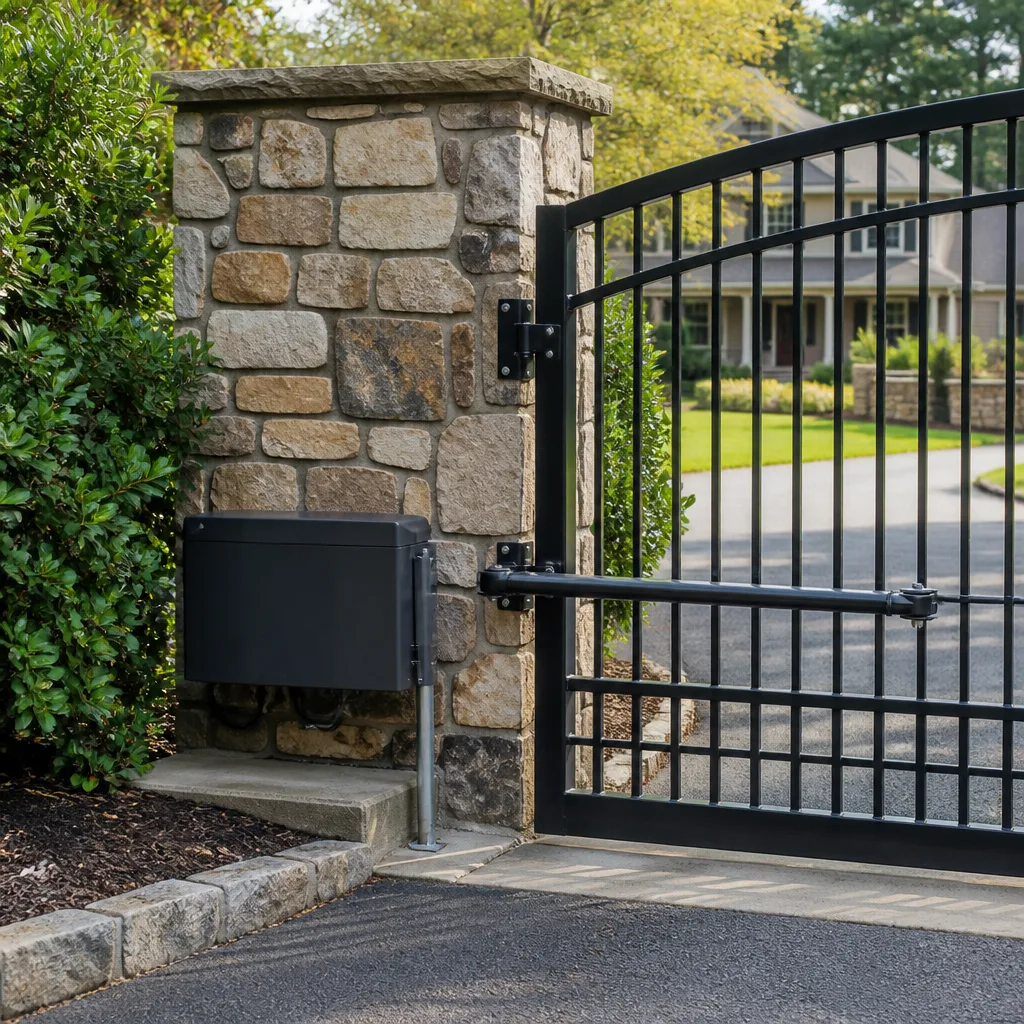
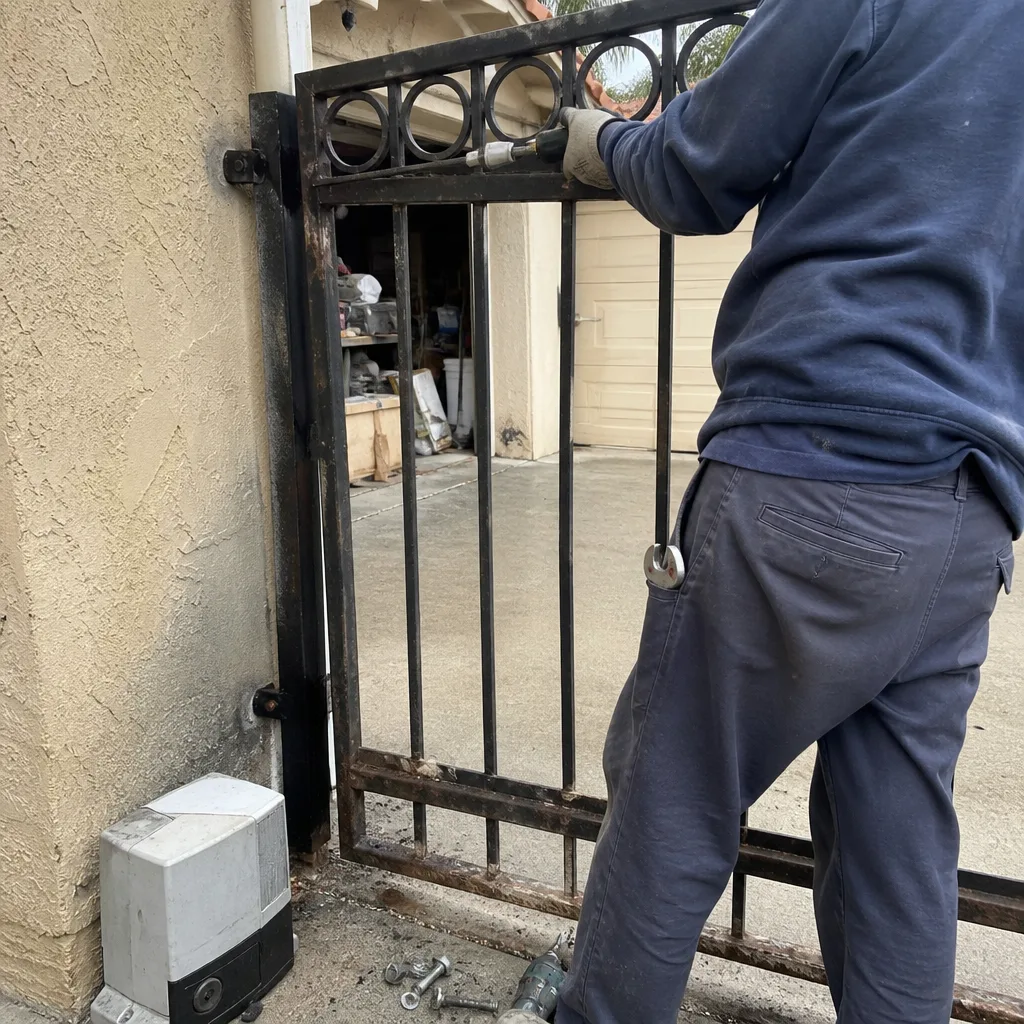 Before
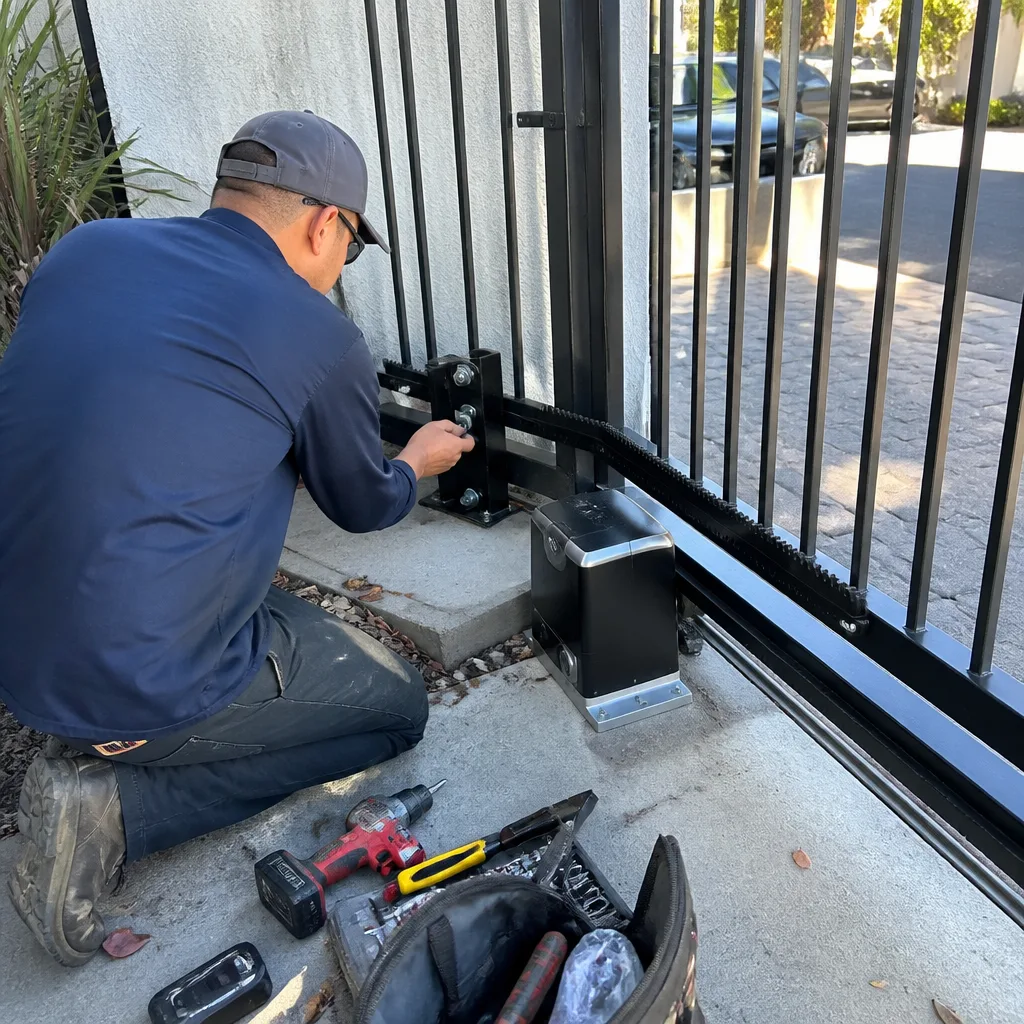 After
After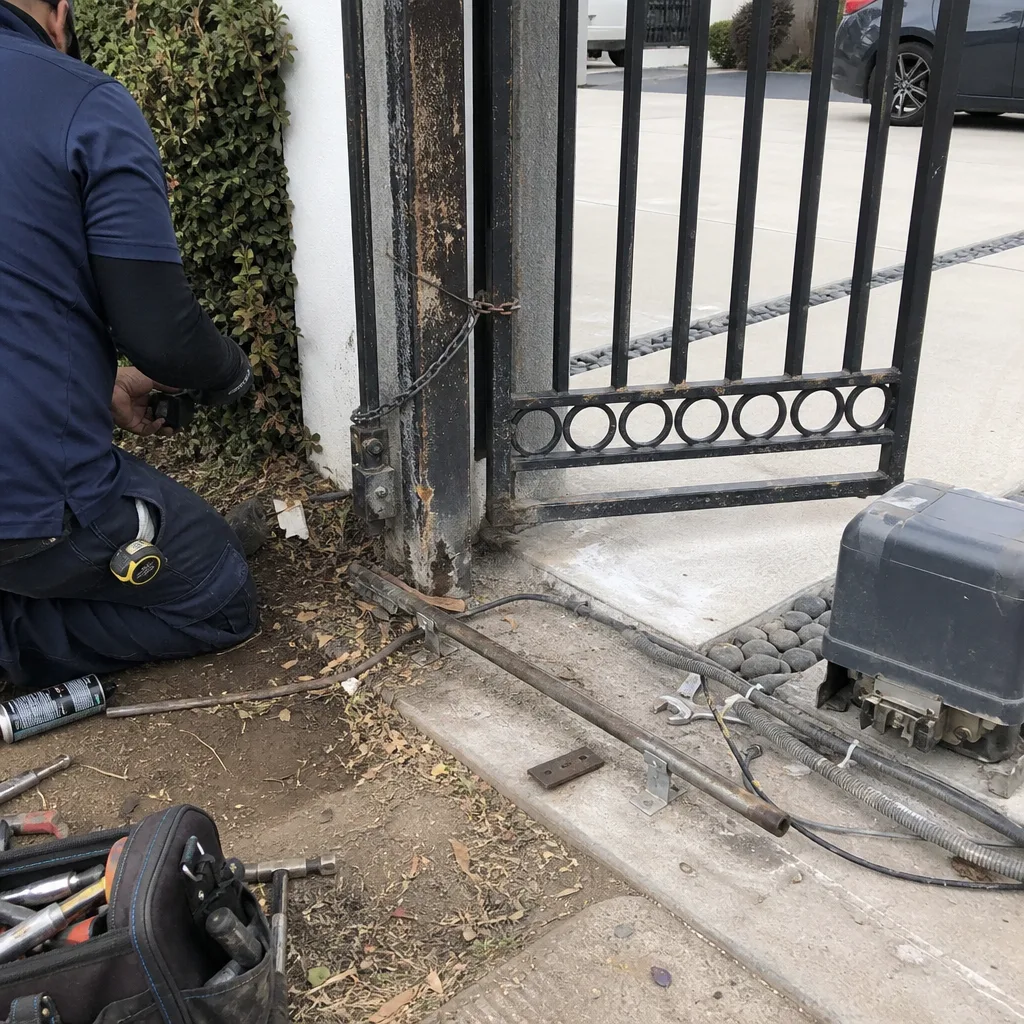 Before
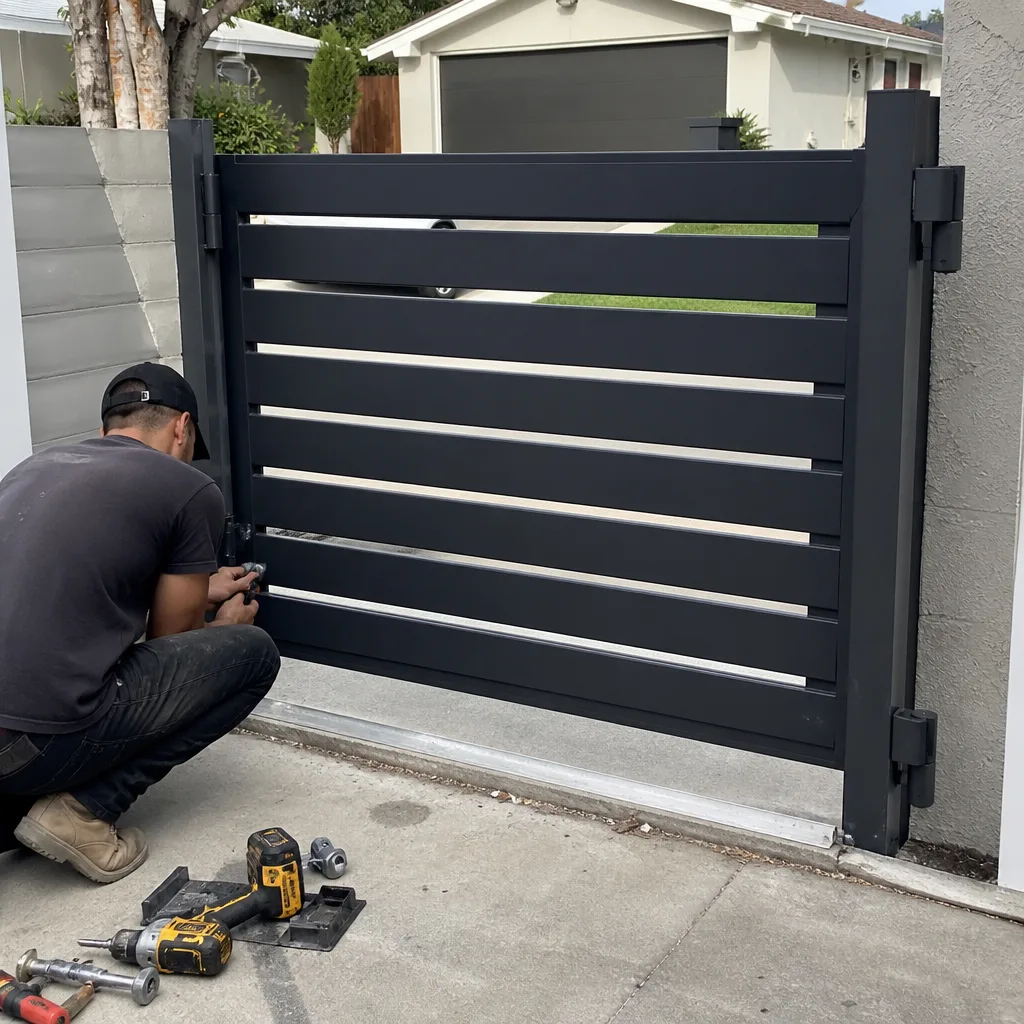 After
After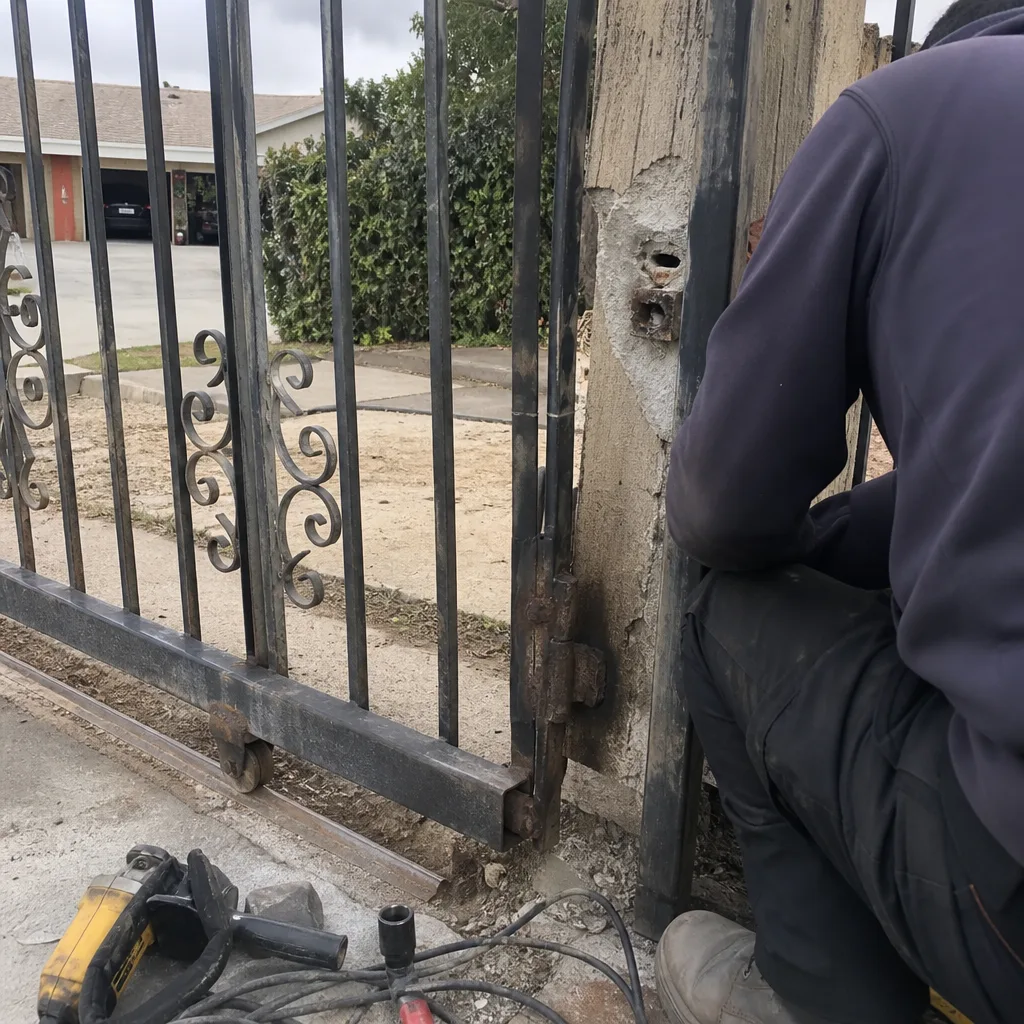 Before
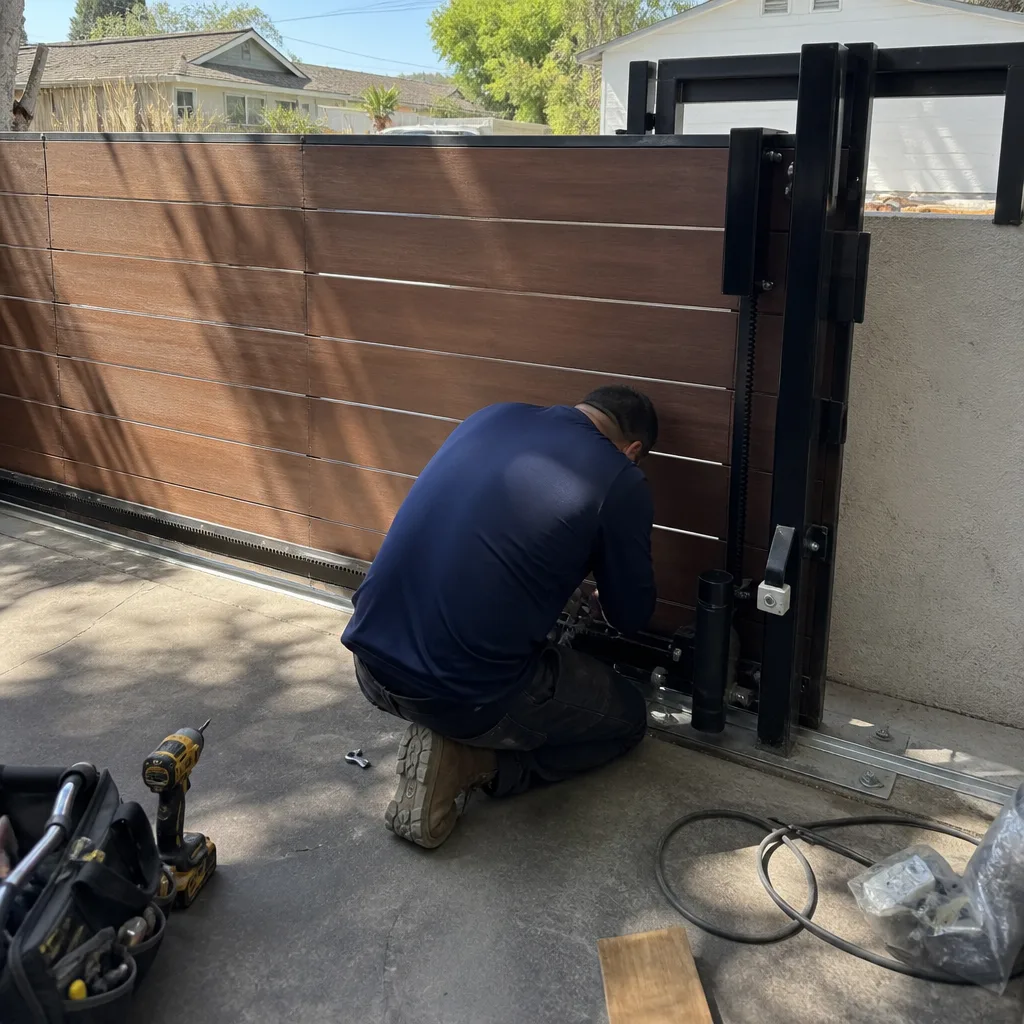 After
AfterGate Repair Permits, Codes & Inspections in CA: What You Need to Know
Here’s a fact most Los Angeles homeowners learn too late: a gate motor replacement is not always a simple swap. Under California electrical code, it can be a permitted alteration. Skip the permit and you’re not just risking a fine from a city inspector. You’re creating a title defect that surfaces during escrow, when a buyer’s inspector flags the unpermitted work, the lender hesitates, and a sale that was supposed to close in 30 days suddenly has no close date at all. This guide walks through exactly which gate repairs trigger permits in California, which ones don’t, what UL 325 requires, how Los Angeles city and county rules differ, and how to fix unpermitted work before it fixes you. For hands-on help, see our Gate Repair services.
Quick Answer
In California, most gate repairs that keep the existing motor, posts, and foundation in place do not require a permit. But a gate motor replacement that changes the electrical load, a new gate operator wired to a new circuit, or any installation that alters the gate’s foundation, setback, or height may trigger a building or electrical permit, depending on your jurisdiction in Los Angeles. When in doubt, call your local building department and ask about the specific wattage of the motor you’re installing, not just whether “gates” need permits.
Table of Contents
- When Does a Gate Repair Actually Require a Permit in California?
- UL 325 Entrapment Protection: What the Code Actually Says
- Los Angeles City vs. Los Angeles County: Where the Rules Split
- Retroactively Permitting Unpermitted Gate Work Before a Sale
- What Documentation to Keep After Any Gate Work
- Like-for-Like Swaps: What Genuinely Does Not Need a Permit
- What Gate Permits and Inspections Cost in Los Angeles
- Common Mistakes to Avoid
- When to Call a Professional
- Frequently Asked Questions
- The Bottom Line
BeforeAfterWhen Does a Gate Repair Actually Require a Permit in California?
The short version: the permit trigger is not the gate itself. It’s what the gate touches. California Building Code (CBC) and California Electrical Code (CEC) don’t care that you own a driveway gate. They care whether the work modifies a structure, changes an electrical load, or creates a new hazard. In practice, our technicians in Vance Gate Repair Los Angeles home service a lot of properties where the homeowner assumes a motor swap is just a motor swap. Sometimes it is. Sometimes it is not.
Here’s what actually trips the permit threshold in most California jurisdictions:
- New electrical circuit or subpanel tap. If the new gate motor requires a dedicated circuit that did not exist before, the electrical work is permit-required. A motor that plugs into an existing, code-compliant outlet may not be.
- Motor wattage jump. Replacing a 1/2-horsepower operator with a 1-horsepower operator changes the load calculation. Some jurisdictions treat this as an alteration, not a like-for-like replacement.
- Foundation or post changes. If a post is reset in concrete, if the gate’s footing is enlarged, or if the gate’s swing geometry changes, you’re in structural permit territory.
- Height, setback, or pedestrian access changes. A gate that goes from 5 feet to 7 feet, or a gate that moves closer to the property line, can require zoning review.
- New gate installation. A brand-new driveway gate with an operator almost always requires a permit in Los Angeles. The electrical work, the foundation, and the safety-edge compliance are all inspectable items.
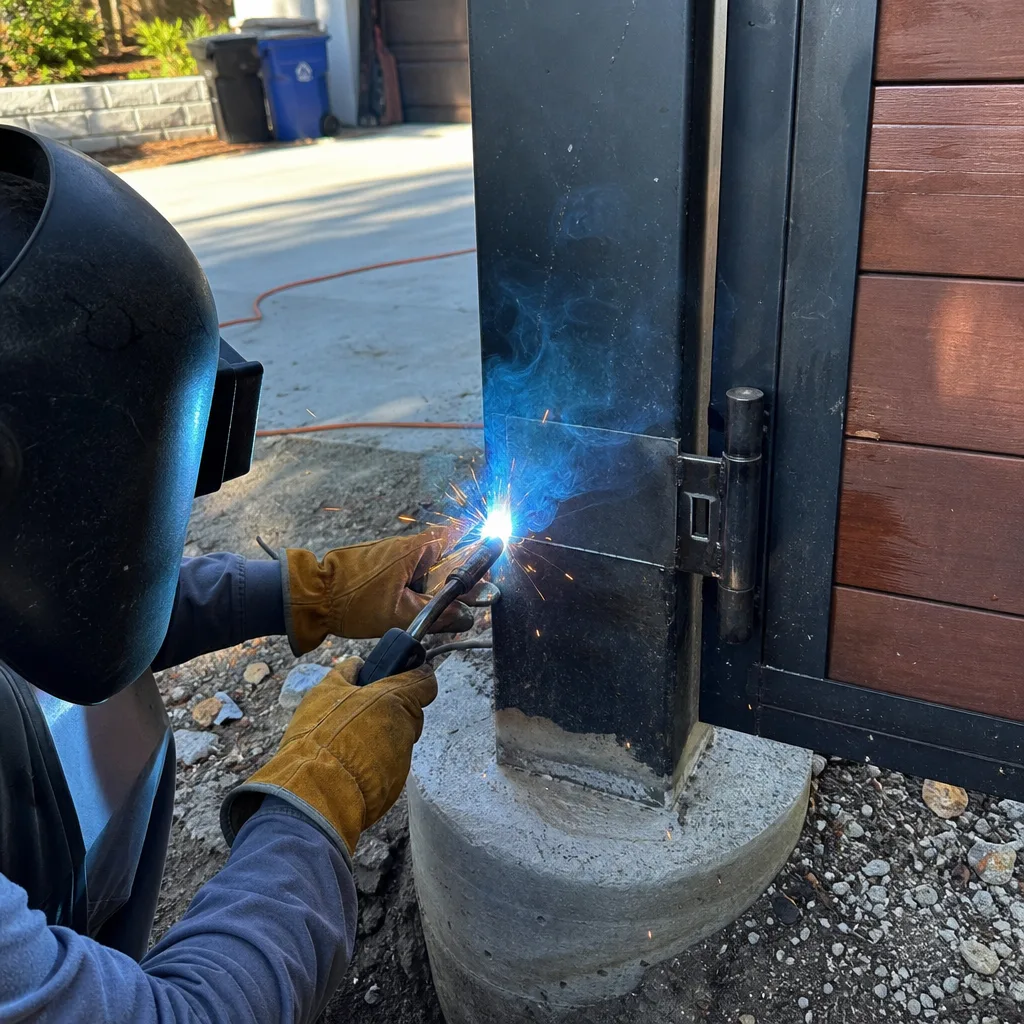
What does not typically require a permit: replacing a broken hinge, welding a cracked rail, swapping a photo-eye that failed, replacing a control board with the same spec, or adjusting a limit switch. These are repairs, not alterations. The distinction matters because a repair restores the gate to its permitted condition. An alteration changes it.
If you’re not sure which category your job falls into, call your local building department in Los Angeles and describe the work in physical terms: “replacing a 1/2 HP motor with the same 1/2 HP model on the same post” or “installing a new 1 HP operator with a new circuit from the panel.” The second sentence gets flagged. The first one usually does not.
UL 325 Entrapment Protection: What the Code Actually Says
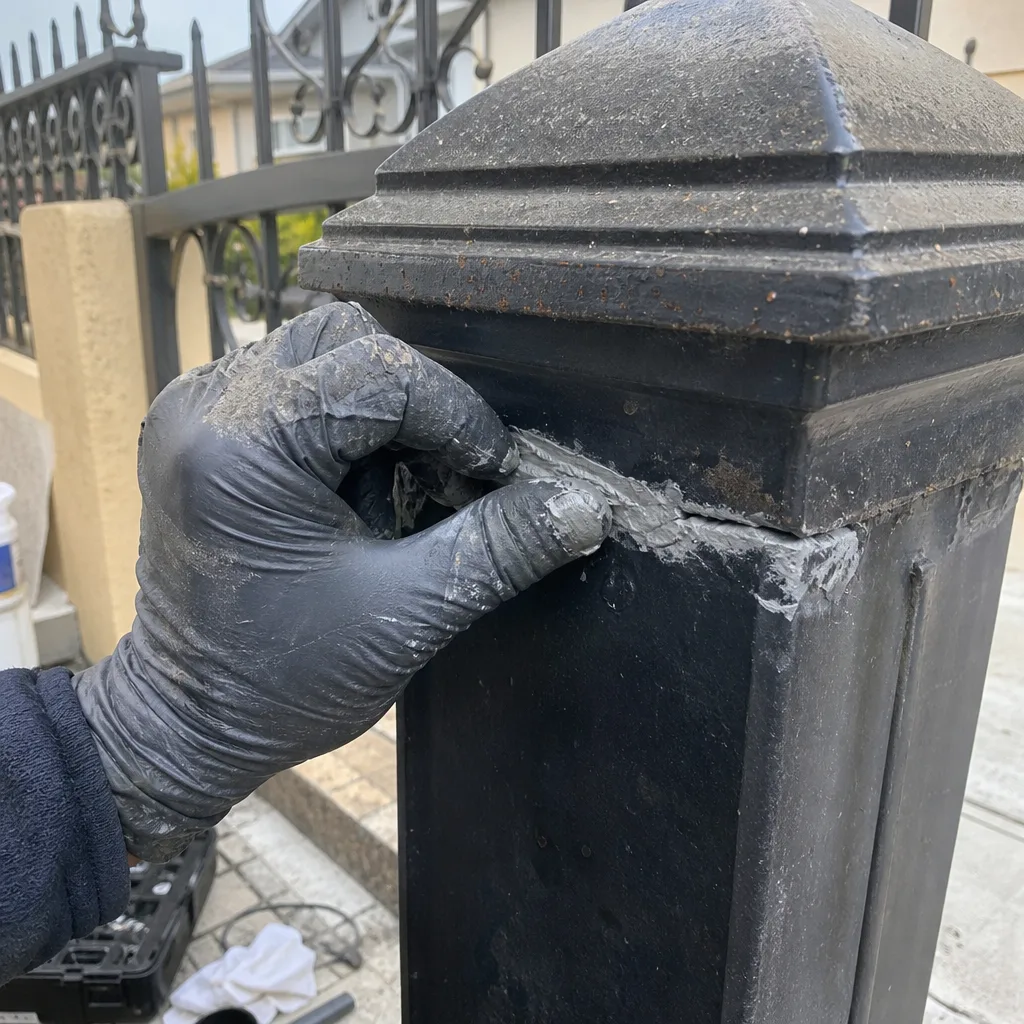
UL 325 is the safety standard that governs automatic gate operators in the United States. California adopts it through the building code, which means every gate operator installed or substantially modified in Los Angeles must meet its entrapment protection requirements. A photo-eye (the infrared beam that stops the gate if something crosses the path) is the most visible part of UL 325, but the standard covers more than that.
Under UL 325, every automatic gate operator needs:
- Two independent entrapment protection devices. Typically a photo-eye across the gate opening plus a reversing mechanism built into the operator that detects resistance and reverses direction.
- A secondary entrapment device installed in the correct position. On a swing gate, photo-eyes go on the inside and outside of the swing path. On a slide gate, they straddle the opening and the trailing edge.
- A manual disconnect. Every operator must have a way to disengage the motor so the gate can be moved by hand in an emergency or power outage.
- Warning signage. The familiar “Automatic Gate” warning signs and the “Pedestrians: Use Separate Walkway” sign where applicable are code items, not suggestions.
Here’s the detail most Los Angeles homeowners miss: UL 325 compliance applies to operator replacements, not just new installs. If you replace an old Mighty Mule operator with a new LiftMaster unit, the new installation must meet current UL 325 requirements even if the old one did not. That often means adding a photo-eye where the old gate had none, which means running new low-voltage wire, which is exactly the kind of work that can push a simple “motor swap” into permit territory.
In our experience, when a homeowner tells us a previous installer “didn’t bother” with photo-eyes, what they’re describing is a noncompliant installation. It worked. It opened and closed. But it would not have passed inspection, and the entrapment risk was real. A gate that reverses only on motor resistance is a gate that can pin a child, a dog, or an adult against a post before the motor stalls. UL 325 exists because that failure mode killed people.
The practical takeaway: if your gate operator is being replaced in California, ask the technician to confirm in writing that the installation will meet current UL 325 entrapment protection requirements. If they hesitate, call someone else. For related reading, see How to Hire a Gate Repair Contractor in Los Angeles: A Step-by-Step Guide.
Los Angeles City vs. Los Angeles County: Where the Rules Split
Los Angeles is not one jurisdiction. It’s a patchwork. The City of Los Angeles Department of Building and Safety (LADBS) issues its own permits and enforces its own interpretations. Los Angeles County, through the Department of Regional Planning and local building offices, handles unincorporated areas like parts of the San Fernando Valley, Altadena, and East Los Angeles. What passes in one may not pass in the other.
The practical differences that affect gate work:
- Electrical permit thresholds. City of LA is generally strict about new circuits and motor load changes. LA County unincorporated areas follow county code, which in some cases allows minor electrical work without a separate electrical permit if it falls under a broader building permit.
- Setback and height enforcement. Some LA County unincorporated areas enforce gate height and setback rules more aggressively than City of LA, particularly in hillside zones where a gate can obstruct a fire department access road or a neighbor’s sightline.
- Plan check requirements. In the City of Los Angeles, a new gate with a new operator and foundation almost always requires a plan check. In some LA County areas, over-the-counter permits are possible for straightforward gate installations.
- Inspection scheduling. LADBS inspections are scheduled through the online portal and often run one to two weeks out. LA County inspection timelines vary by district but can move faster in sparsely populated areas.
Before you start any gate work in Gate Repair in Los Angeles, call the building department and ask one question: “Am I in the City of Los Angeles or unincorporated LA County for permitting purposes?” Many homeowners don’t actually know the answer. They have a Los Angeles mailing address, a Los Angeles ZIP code, but they’re not in the city at all. The permit path changes based on that answer.
One more split worth knowing: some Los Angeles neighborhoods fall under specific overlays. Historic Preservation Overlay Zones (HPOZs) like Angelino Heights or Hancock Park can impose additional review on anything visible from the street, including driveway gates. If your neighborhood has a history plaque on the street sign, check with the HPOZ board before you replace a gate that faces the sidewalk.
Retroactively Permitting Unpermitted Gate Work Before a Sale
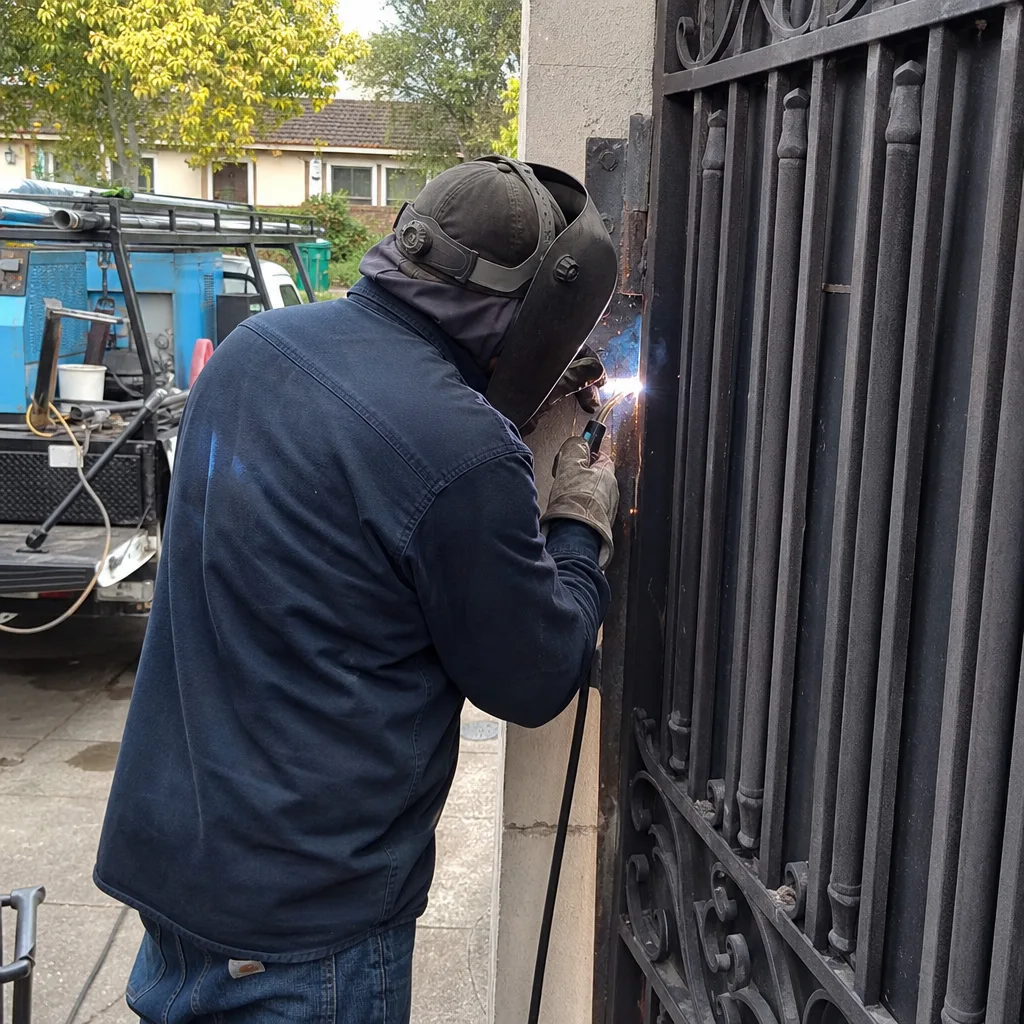
The scenario plays out like this: you’re selling a house in Los Angeles. The buyer’s inspector looks at the driveway gate, notices a new operator, and asks for the permit. You don’t have one. The buyer’s lender asks for a permit record. There isn’t one. Now your sale is contingent on resolving a paperwork problem you didn’t know you had. Learn the warning signs early with Gate Repair Warning Signs: A Los Angeles Homeowner’s Reference Guide.
Here’s the good news: most unpermitted gate work can be retroactively permitted. It’s not fast and it’s not free, but it’s a known process. Here’s how it works in practice:
- Stop and document. Before anything else, have a licensed electrician or gate professional photograph the installation: the motor, the wiring, the photo-eyes, the foundation, the operator brand and model. This documentation becomes the baseline for everything that follows.
- Determine what code era applies. The building department will review the work against the code in effect when the work was done, not necessarily current code. This can work in your favor if the installation was compliant with the earlier code.
- File for a retroactive permit. In the City of Los Angeles, this is typically a “Permit for Work Commenced Without Permit” or similar process through LADBS. LA County has an analogous path. You’ll need photos, a scope of work description, and often a plan drawing even if it’s simple.
- Schedule the inspection. An inspector will come out and check the installation against the applicable code. Common failure points on retroactive gate inspections: missing photo-eyes, missing warning signs, undersized wiring, no manual disconnect, ground faults.
- Correct the deficiencies. If the inspector flags items, you fix them and call for re-inspection. In our experience, the most common retrofit fix on older gate operators is adding UL 325 entrapment protection that was never installed in the first place.
- Get the sign-off. Once the inspector signs off, the permit is closed and the record is permanent. That record travels with the property and clears the escrow issue.
Realistic timelines in Los Angeles run two to six weeks from filing to sign-off, depending on inspection backlogs and how many deficiencies need correcting. Realistic costs run from $300 to $1,500 in city fees plus whatever repair work the inspection forces. That’s a fraction of what a failed sale costs.
If you know you have unpermitted gate work and you’re not selling yet, handle it now. The process moves at your pace, not the buyer’s. If you’re already in escrow, tell your agent immediately and get a gate professional on site the same week.
What Documentation to Keep After Any Gate Work
Most homeowners get a gate repaired, pay the invoice, and never think about the paperwork again. Then they sell the house and the buyer’s escrow officer asks for documents that should have been filed in a drawer a decade ago. The rule we tell every customer: the record should outlive your ownership.
After any gate work, permitted or not, keep the following:
- The permit record and inspection sign-off if a permit was pulled. This is the single most valuable document at resale.
- The written scope of work and price. This proves what was done and what was charged, which matters when a buyer’s inspector questions whether the gate matches the home’s disclosed improvements.
- The operator model and serial number. A LiftMaster operator sold in 2019 has specific code compliance characteristics. If a UL 325 question comes up later, the model number is the fastest way to answer it.
- Photos of the completed installation. Wide shots of the gate, close shots of the photo-eyes, the control board, the manual disconnect, and the wiring junction. A photo file is the strongest evidence of code compliance you can hold.
- Any repair notes from the technician. What was found, what was adjusted, what was replaced. The more specific, the better.
We file this documentation on every job we complete in Los Angeles. The homeowner gets a photo log of every adjustment and a written record of the part numbers installed. If a buyer’s inspector asks a question five years later, the answer is already in the file. If you’re working with another contractor, ask for the same standard before the work starts. You shouldn’t have to reconstruct the history of your own gate from memory.
Like-for-Like Swaps: What Genuinely Does Not Need a Permit
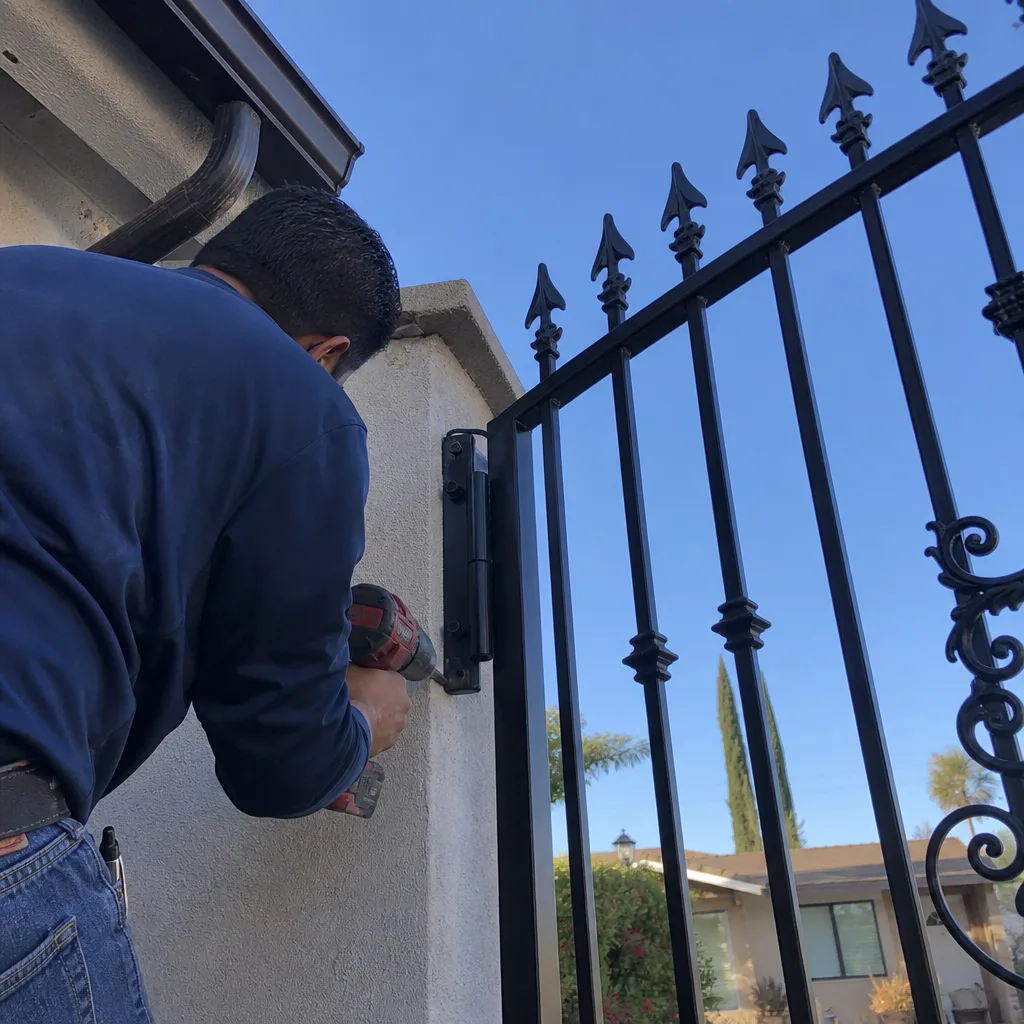
We don’t want to create the impression that every gate repair in California requires a permit. Most don’t. The phrase that matters is “like-for-like.” When a technician replaces a broken component with an equivalent component and changes nothing about the system’s operating parameters, that’s a repair, not an alteration.
Here’s what typically falls into the no-permit category:
- Replacing a failed photo-eye with a compatible unit of the same voltage and type.
- Swapping a control board when the board is the same model or a direct factory equivalent.
- Replacing a broken hinge, bracket, or wheel with the same size and load rating.
- Welding a cracked gate rail or post plate when the repair restores the original structure.
- Replacing the battery in a solar-powered operator or fixing a loose wire connection.
- Adjusting a limit switch or force setting on an existing motor.
The line gets crossed when the swap is not actually like-for-like. Installing a more powerful motor. Adding a photo-eye where none was installed before, which means new wiring. Replacing a 110-volt operator with a 24-volt system that needs a different transformer. Changing a swing gate to a slide gate. Any of those changes the installation’s code profile, and in Los Angeles that’s when the permit question starts to matter.
We tell customers the easiest way to think about it: if the parts you’re removing and the parts you’re installing share a manufacturer and a spec sheet, you’re repairing. If the spec sheet changes, you might be altering. When in doubt, ask the permitting authority, not the gate company.
What Gate Permits and Inspections Cost in Los Angeles
Permit fees are not the expensive part. The real cost of a gate permit in Los Angeles is the corrective work the inspection may force. But let’s start with the fee schedule, because the numbers are surprisingly low and most homeowners don’t know that.
Here’s what you can typically expect to pay in the City of Los Angeles:
- Electrical permit alone for a new gate circuit: $85 to $250, depending on the scope and the plan check requirement.
- Building permit for a new gate with foundation work: $200 to $600, plus plan check fees if the gate exceeds standard heights or is in a hillside zone.
- Combined building and electrical permit for a full new gate installation with operator: $300 to $900.
- Retroactive permit for unpermitted work: usually the same fee schedule plus possible penalty fees in some jurisdictions, though Los Angeles generally charges standard rates for retroactive permits.
- Inspection re-visit fees: $100 to $200 per visit if the inspector comes back and finds uncorrected deficiencies.
The numbers above are ranges based on what we’ve seen on jobs in Los Angeles. They are not quotes, and they vary by district. What they tell you is this: the permit itself is not the barrier. The barrier is the compliance work. If a retroactive inspection flags a missing photo-eye, a missing manual disconnect, and undersized wire, the repair bill can run from $500 to $2,000 depending on the gate and the wiring run. That’s the cost most sellers don’t see coming.
The smartest money you can spend before pulling a permit is on a professional inspection that finds the deficiencies before the city inspector does. A good gate technician can tell you in an hour whether your installation will pass. That’s $100 to $200 well spent compared to a failed inspection and a re-visit fee.
Common Mistakes to Avoid
- Assuming “gates don’t need permits.” Gates themselves may not, but the electrical work, foundation work, and safety systems attached to them often do. In Los Angeles, the permit question is about the work, not the object.
- Replacing a motor and calling it a repair when it’s an upgrade. A higher-horsepower operator changes the electrical load and can trip a permit requirement. The tell is on the nameplate: if the amps or horsepower went up, it’s not like-for-like.
- Skipping UL 325 photo-eyes on an older gate. Old installations sometimes had none. Swapping the operator without adding the entrapment protection leaves a noncompliant, hazardous installation that will not pass a retroactive inspection.
- Treating City of LA and LA County as the same thing. They’re not. The path differs, the fees differ, and the enforcement differs. Check your actual jurisdiction before you file anything.
- Throwing away the paperwork. The invoice, the permit record, the operator model, the photos. These documents are worth real money at resale and cost nothing to keep.
- Waiting until escrow to resolve unpermitted work. Once a buyer’s lender is asking for a permit that doesn’t exist, the seller has lost all leverage on timing. Handle it now when the schedule is yours.
- Hiring on price alone for permit-critical work. The cheapest gate technician may be the one who pulls no permit, installs no photo-eyes, and leaves you with a title problem. What you save today, you spend triple at resale.
When to Call a Professional
If you’re replacing a gate operator in Los Angeles and you’re not sure whether the new motor changes the electrical load, call a professional before the work starts. If you’re selling a home and the buyer’s inspector flagged the gate, call a professional the same day. If you inherited a gate with a nonfunctional safety system, no documentation, and a motor that’s older than your mortgage, call a professional before you touch anything. These are the situations where a wrong guess becomes an escrow problem or an entrapment hazard. Gate Motor & Opener in Los Angeles work is where we see the most permit confusion, because the line between repair and alteration sits right at the motor swap. Vance Gate Repair Los Angeles offers free estimates in Los Angeles - call (213) 674-2473 for a documented assessment that tells you exactly where your gate stands on permits, code, and inspection readiness.
Frequently Asked Questions
Most repairs do not, but a gate motor replacement that changes the electrical load or adds new wiring often does. The distinction is between a like-for-like repair, which restores the gate to its previous condition, and an alteration, which changes the gate’s operating parameters. When in doubt, call your local building department and describe the specific work in physical terms. Call (213) 674-2473 for help determining whether your gate job falls into permit territory.
A full new gate installation with an operator and foundation work typically requires $300 to $900 in combined building and electrical permit fees in the City of Los Angeles, with variation by district and project scope. The larger cost is usually the compliance work: UL 325 entrapment protection, proper wiring, and structural details that the inspection will verify. For an exact quote on a documented, code-compliant installation, call (213) 674-2473.
UL 325 is the national safety standard for automatic gate operators, adopted in California through the building code, and it requires two independent entrapment protection devices, a manual disconnect, and warning signage on every automatic gate. It applies to new installations and to operator replacements, even when the previous gate was installed before the current standard. A gate without compliant entrapment protection is both a safety hazard and a code violation that will surface during any inspection or property sale.
Yes, but only after resolving the permit issue. Most buyers’ lenders will require a permit record for an installed gate operator, and the seller typically handles this through a retroactive permit process that takes two to six weeks and costs $300 to $1,500 in fees plus any corrective work the inspection requires. Starting the process before listing is faster and cheaper than doing it under escrow pressure. Call (213) 674-2473 for a pre-sale gate inspection.
Check your most recent property tax bill or call your local building department and ask directly. Many addresses with a Los Angeles mailing address are actually in unincorporated LA County, and the permit requirements and fee schedules differ between the two jurisdictions. A few minutes on the phone with the right department saves weeks of filing mistakes.
Keep the permit record and inspection sign-off, the written scope of work and price, the operator model and serial number, photos of the completed installation, and any technician notes describing what was found and what was replaced. This packet is the difference between a smooth escrow and a title problem. We provide this documentation on every job we complete in Los Angeles.
The Bottom Line
California gate work splits into two worlds: repairs that restore and alterations that change. The first rarely needs a permit. The second often does, and the trigger is usually the motor, the wiring, or the foundation, not the gate itself. In Los Angeles, the difference between City of LA and County jurisdictions adds another layer, and the UL 325 safety requirements apply whether or not anyone asked for a permit in the first place. The homeowners who get hurt are the ones who find out in escrow. The homeowners who come out ahead are the ones who document everything, ask the right question at the building department, and fix compliance issues before a sale forces the timeline. For more guides & resources, visit our blog. That’s the whole game: know which world you’re in, and keep the paper.
Contact Vance Gate Repair Los Angeles
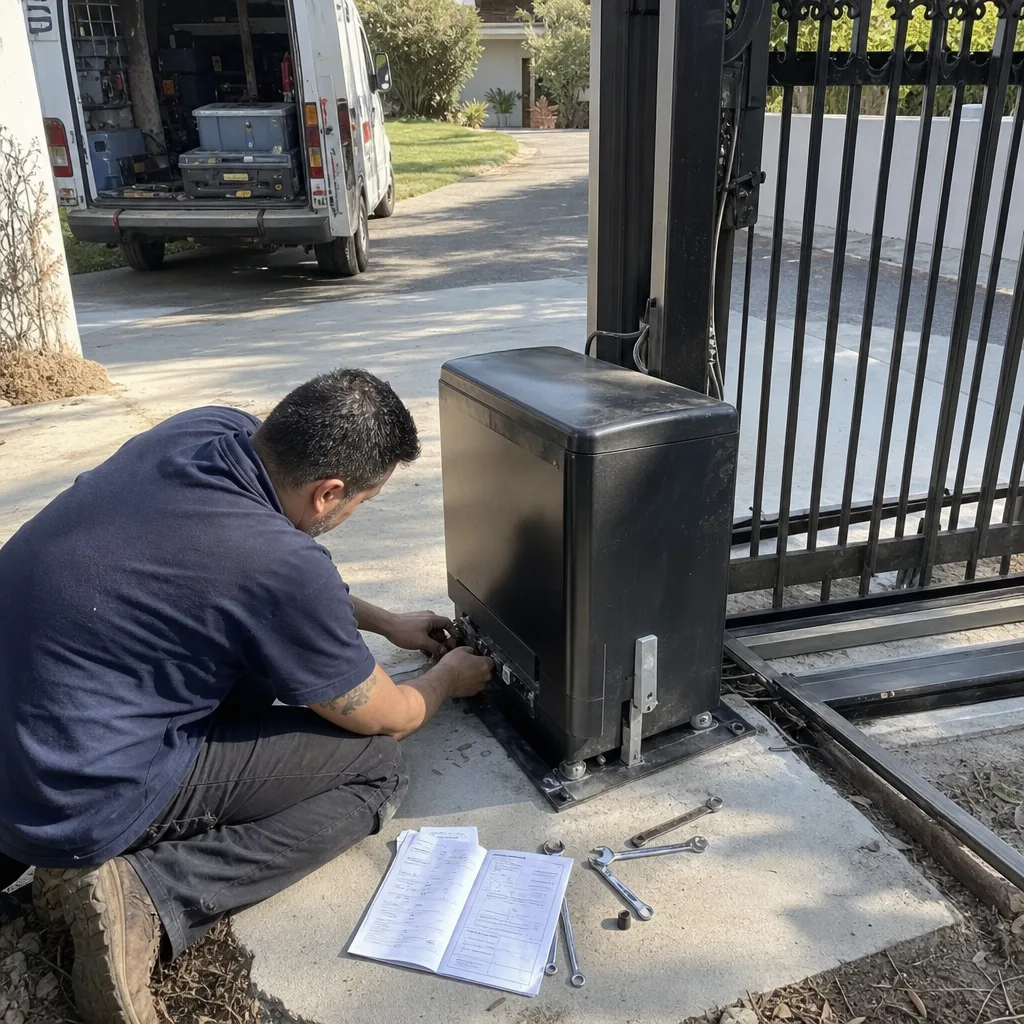
If you have a gate repair, replacement, or permit question in Los Angeles, we’re here to help. We document every job, price in writing before any work starts, and stand behind every repair with the 365-Day Done Right Promise. Gate Installation in Los Angeles customers get the same commercial-grade documentation we bring to every residential gate. Call (213) 674-2473 for a free estimate, and a live person will answer.
Written by Adrian Vance, Owner at Vance Gate Repair Los Angeles, serving Los Angeles since 2014.