
Last updated September 19, 2026
Free on-site gate assessment - hinges, posts, and your LiftMaster or Nice gate operator checked before anything is quoted
The assessment is free and the quote is the invoice.

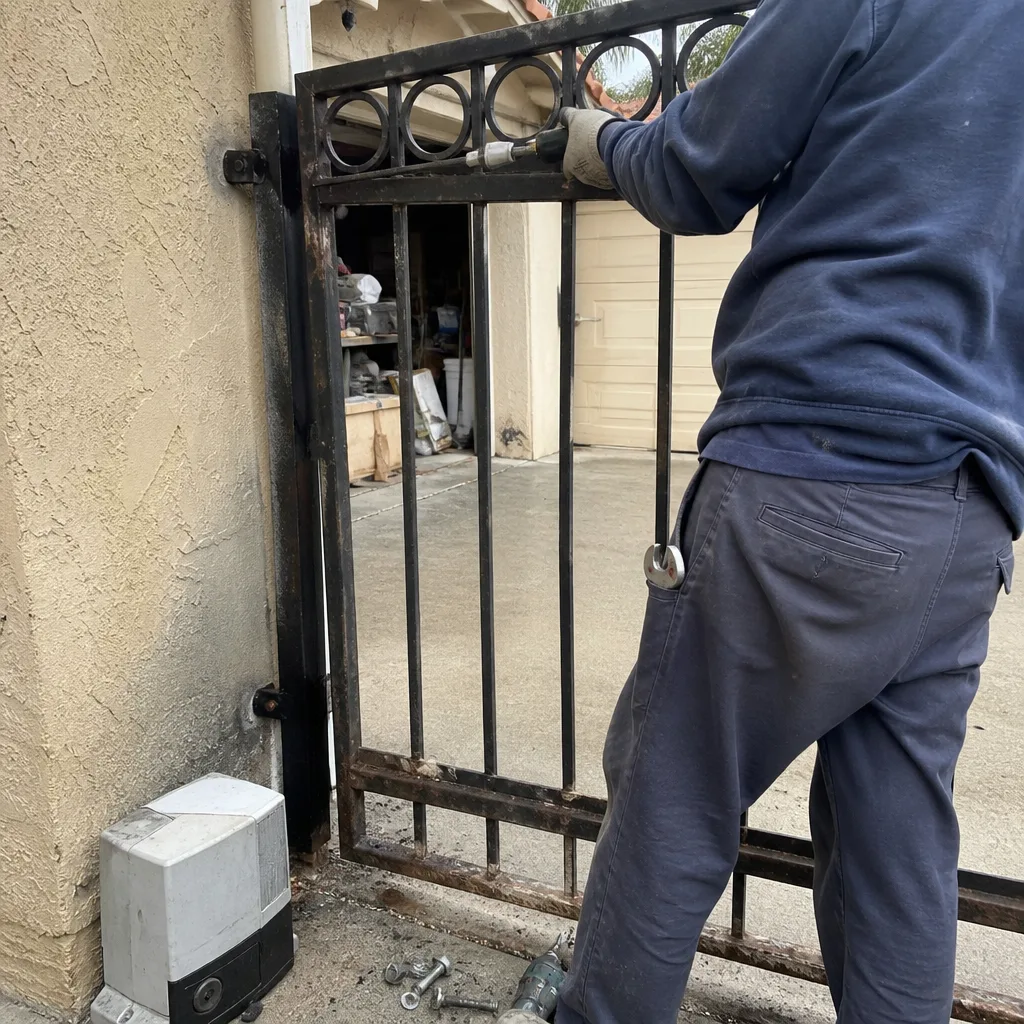 Before
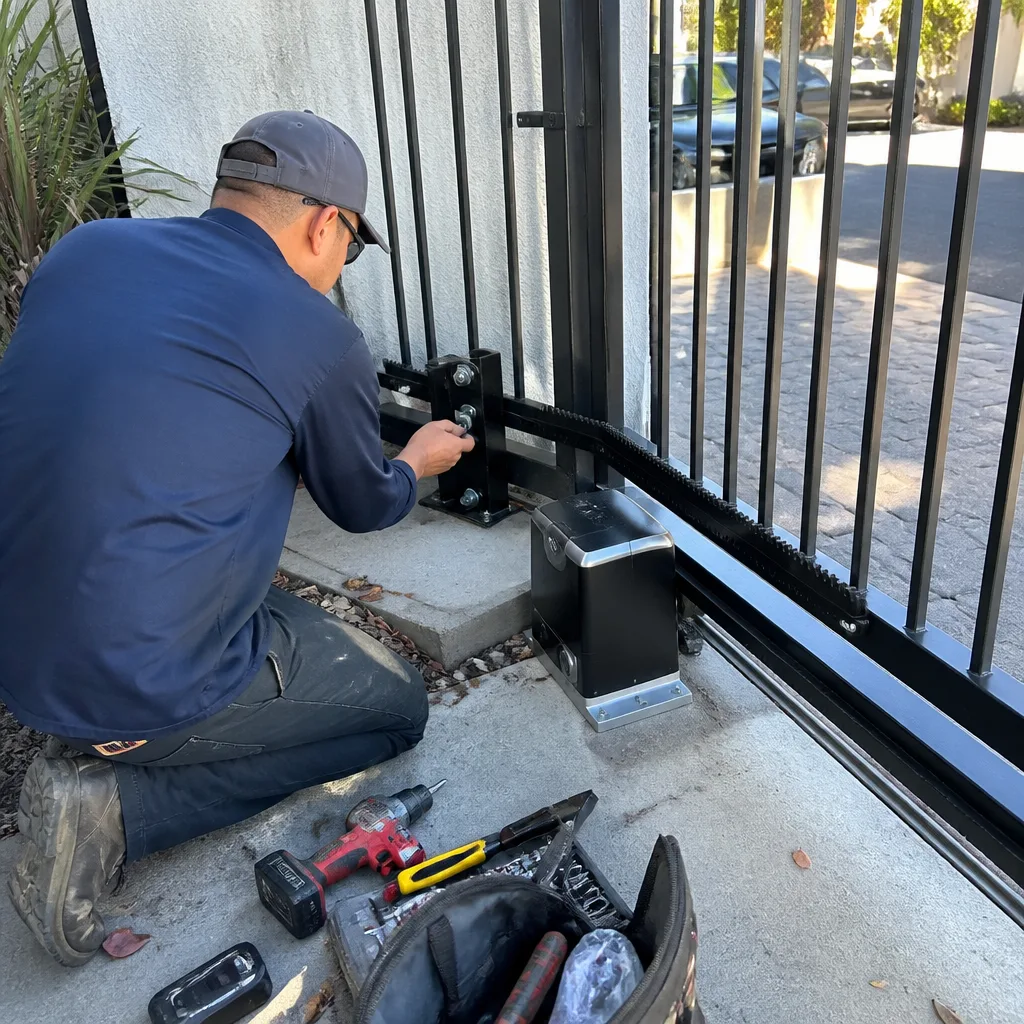 After
After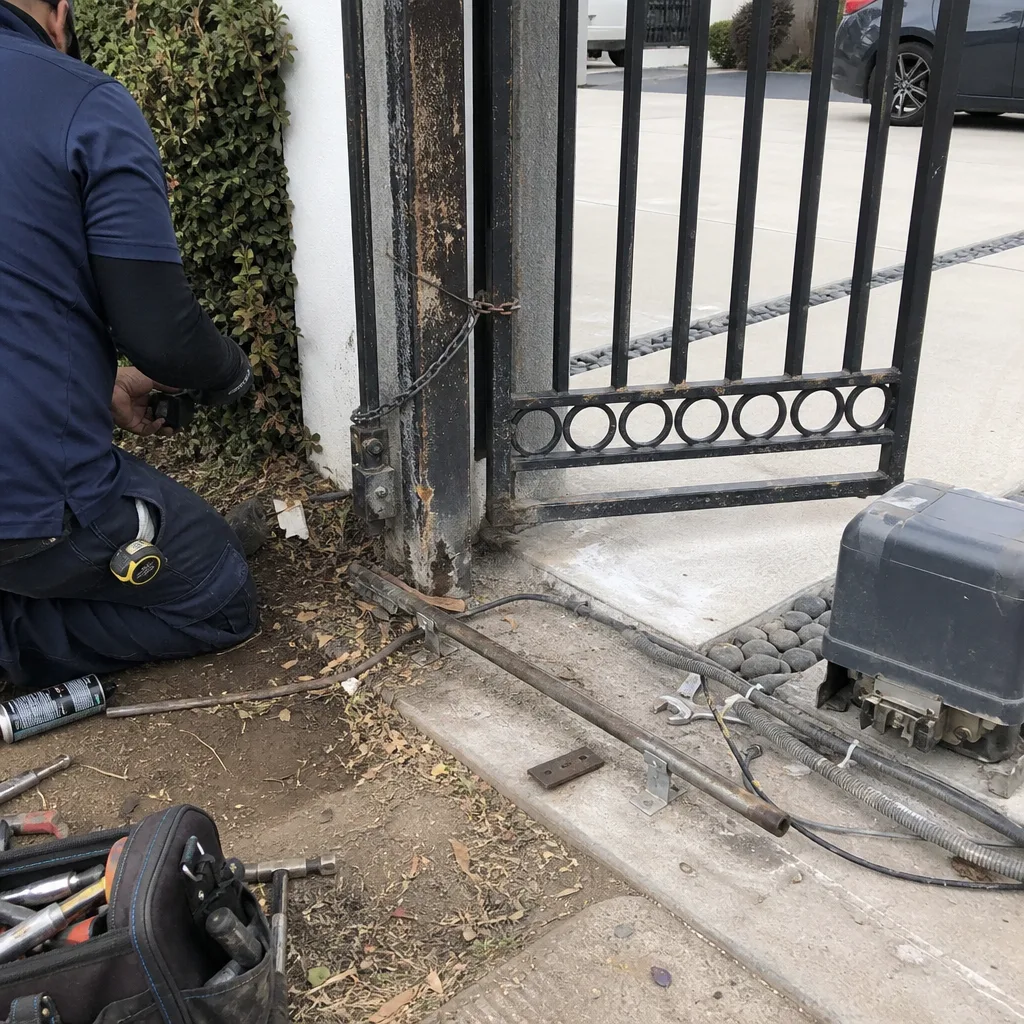 Before
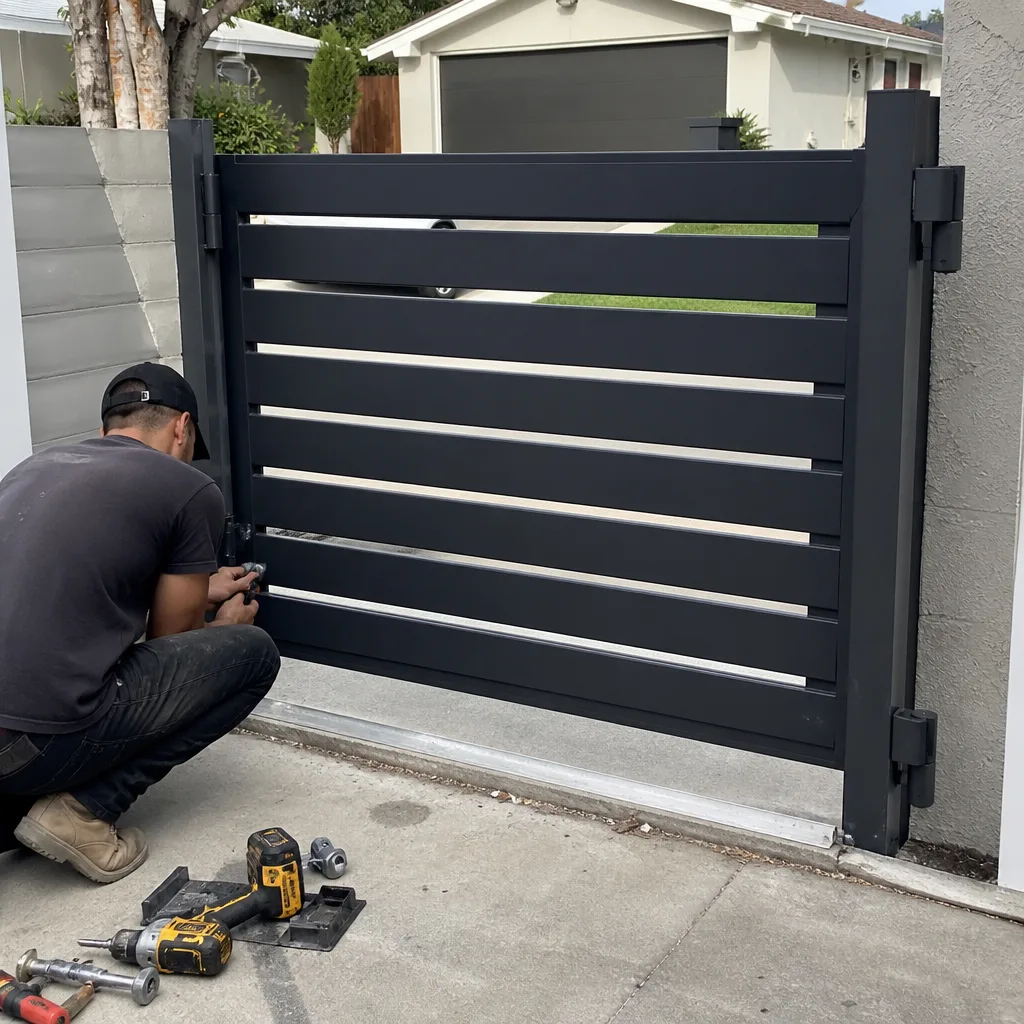 After
After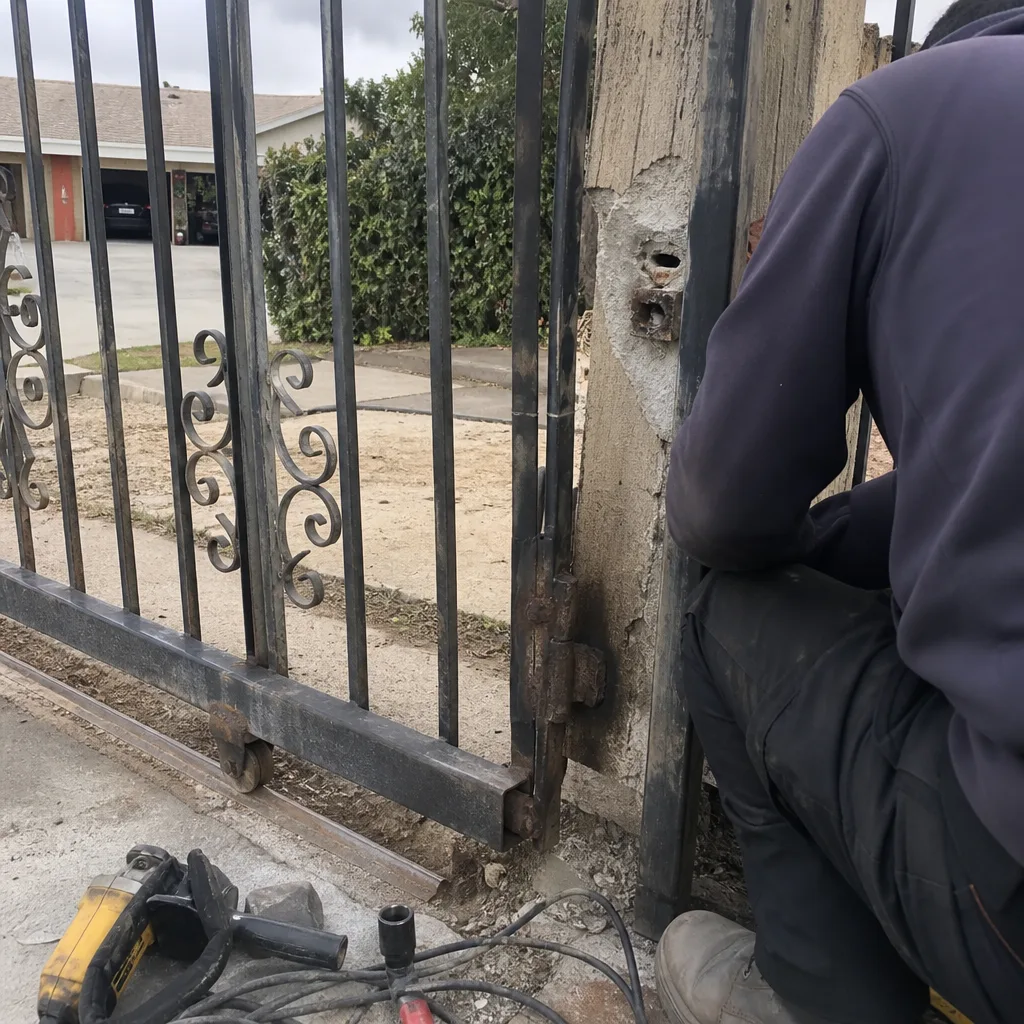 Before
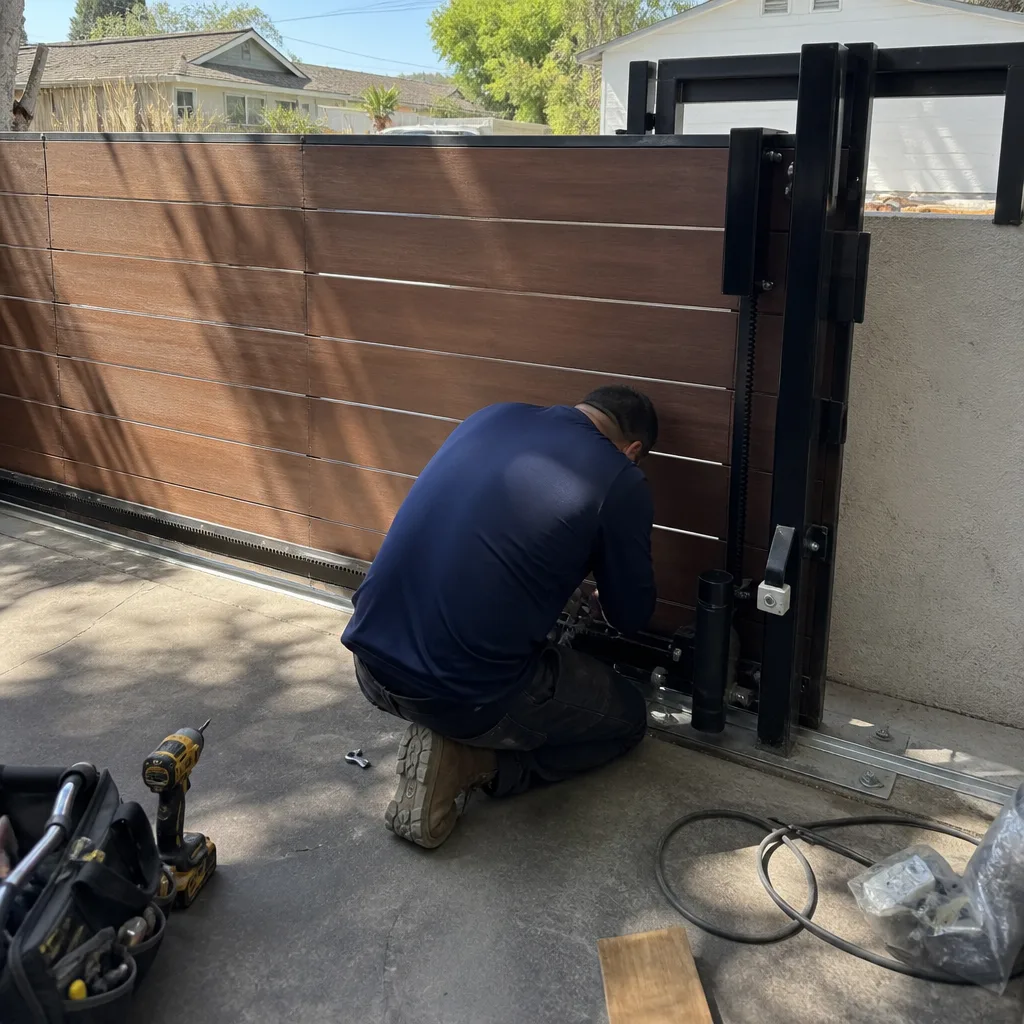 After
AfterGate Repair Warning Signs: A Los Angeles Homeowner’s Reference Guide
A gate that takes two seconds longer to open than it did six months ago has already told you something specific about its drive system. Most homeowners in Los Angeles never hear it, because no one told them what baseline to compare against. This guide changes that. You’ll learn how to establish your gate’s normal behavior, read the warning signs that matter, and know which ones demand a same-week Gate Repair call versus which can wait for a scheduled visit. This is how a technician thinks about gate failure before it happens.
Quick Answer
Gate repair warning signs in Los Angeles fall into three categories: operator strain (slow movement, grinding, repeated reversals), structural misalignment (sagging, dragging, gap changes), and electrical fault (intermittent operation, photo-eye failures, breaker trips). The earliest indicator is almost always a measurable change in cycle time or sound, not a complete stoppage. Track your gate’s baseline for two weeks, and you’ll catch most failures weeks before they strand you outside your driveway.
Table of Contents
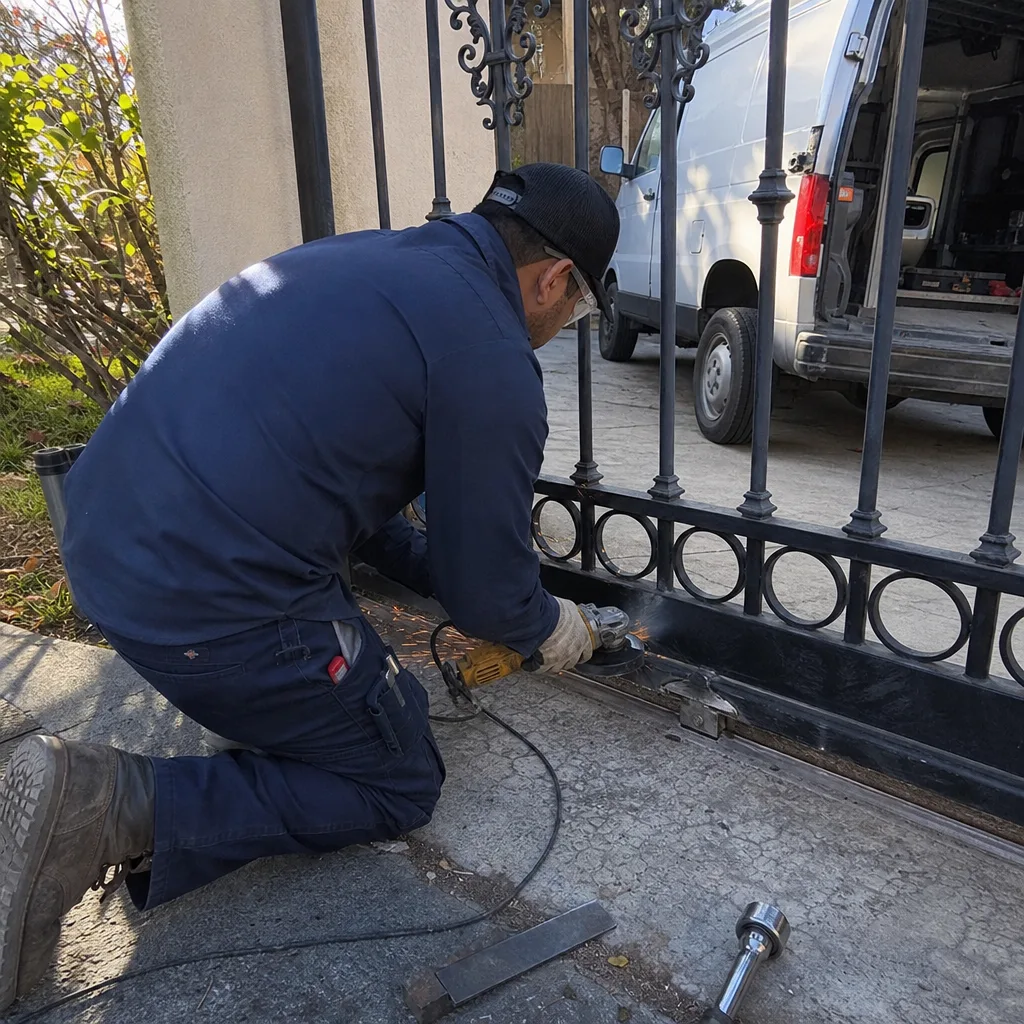
- Establishing Your Gate’s Baseline: The Measurements That Matter
- Operator Strain: When the Motor Is Working Too Hard
- Structural Misalignment: What Sagging and Dragging Actually Mean
- Electrical Faults: Intermittent Behavior and Photo-Eye Failures
- Los Angeles-Specific Warning Signs: Rust, Stucco, and Water Intrusion
- Urgency Levels: Weeks to Schedule vs. Same-Week Safety Risk
- Documenting the Problem: What to Photograph and Measure
- Brand-Specific Warning Signs: LiftMaster, FAAC, Mighty Mule, and Elite
- Common Mistakes to Avoid
- When to Call a Professional
- Frequently Asked Questions
- The Bottom Line
BeforeAfterEstablishing Your Gate’s Baseline: The Measurements That Matter
Every gate has a personality. How long it takes to open. What the motor sounds like at full travel. Where the gate sits when closed. How much play exists at the hinge. Most homeowners never record these details, which means they only notice a problem when the gate stops working entirely. That’s the expensive way to own a gate.
The fix is simple and takes about ten minutes. You’re not servicing anything. You’re creating a reference point. Here’s what to record:
- Cycle time. Use your phone’s stopwatch. Time the full open and the full close separately. Write both numbers down. A single-swing gate in Los Angeles typically opens in 12 to 18 seconds. A slide gate runs 15 to 25 seconds depending on length. Your number is your number. What matters is deviation from it.
- Sound signature. Stand three feet from the motor housing while the gate runs. Note what you hear: a smooth hum, a rhythmic grind, a rattle at a specific point in travel. Record a ten-second video with audio. This becomes your comparison file.
- Gap measurements. With the gate closed, measure the gap between the gate edge and the post at three heights: 12 inches off the ground, mid-height, and 12 inches from the top. Use a tape measure. Write the numbers. Also measure the gap under the gate at both ends.
- Reversal behavior. Note how far the gate travels before it slows down near the end of its travel. A healthy gate decelerates in the final 10 to 15 percent of travel. If it slams at full speed into the stops, that’s a separate problem to investigate.
Recheck your baseline every three months. A gate that takes two seconds longer than baseline on a consistent basis is telling you that something is changing: bearing wear, hinge resistance, a motor working against increasing friction. In Los Angeles, where gates cycle dozens of times daily in busy households, that two-second drift can mean the difference between a $200 hinge adjustment and a $1,400 motor replacement six months later. We’ve been doing gate repair in Los Angeles since 2014, and the homeowners who catch problems early are almost always the ones who kept a simple baseline log.
Operator Strain: When the Motor Is Working Too Hard
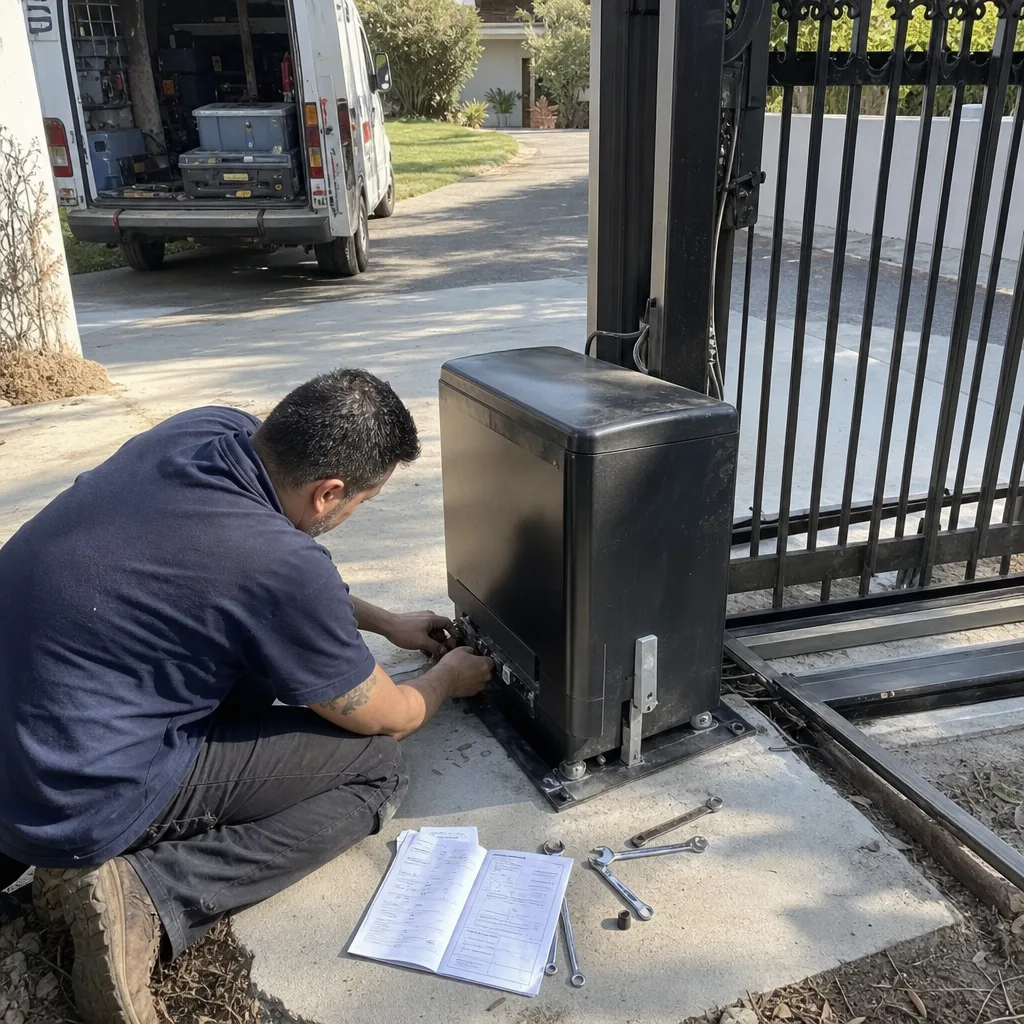
Motors don’t fail spontaneously. They wear out under sustained resistance. A gate motor that’s fighting a stiff hinge, a misaligned track, or a warped leaf will draw more current, run hotter, and die years before one that’s properly adjusted. The warning signs of operator strain are specific and measurable.
Slow or uneven travel speed. A swing gate that opens normally but closes noticeably slower is usually fighting gravity on a slightly misaligned hinge. A slide gate that slows at a specific point in travel has a track issue or a roller that’s binding. Compare the current cycle time to your baseline. More than a two-second deviation on a swing gate, or four seconds on a slide gate, warrants investigation.
Repeated reversals. If the gate starts to close, then reverses back open without anything in the path, the operator is reading excess resistance as an obstruction. Common causes include a stiff hinge, debris in the track, or a slipping drive belt. Don’t ignore this. Each reversal cycle doubles the motor’s workload for that operation and accelerates internal wear.
Heat. After the gate runs, place your hand near the motor housing. Warm is normal. Hot enough that you can’t hold your hand there for more than a few seconds means the motor is working too hard. In Los Angeles summers, ambient temperatures above 90 degrees compound this: a motor already running hot from mechanical strain will exceed its thermal rating faster and shut down on its internal thermal protection. That’s the “gate works fine in the morning, dead by 3 p.m.” pattern we see in the San Fernando Valley and the foothills.
Hum or buzz without movement. A motor that hums but doesn’t turn is drawing locked-rotor current. This is an emergency situation for the motor. Cut power to the operator immediately and call a technician. The humming indicates the start capacitor has failed or the rotor is jammed. Every minute of humming is heat building in the windings.
If you’re seeing any of these signs, knowing how to hire the right contractor matters because the repair path depends on what the motor is connected to. We service nine major automation brands on the property rather than steering you toward replacement, so the diagnosis matters more than the brand name. A LiftMaster swing operator straining against a stiff hinge needs the hinge addressed first, not the motor replaced. That’s the difference between a $180 hinge repair and a $1,200 motor swap that would’ve failed the same way within a year.
Structural Misalignment: What Sagging and Dragging Actually Mean
Structural problems announce themselves through geometry. A gate that sags, drags, or no longer latches cleanly has a frame, hinge, or post issue, and those issues follow predictable patterns. Reading the pattern tells you the repair path and the urgency.
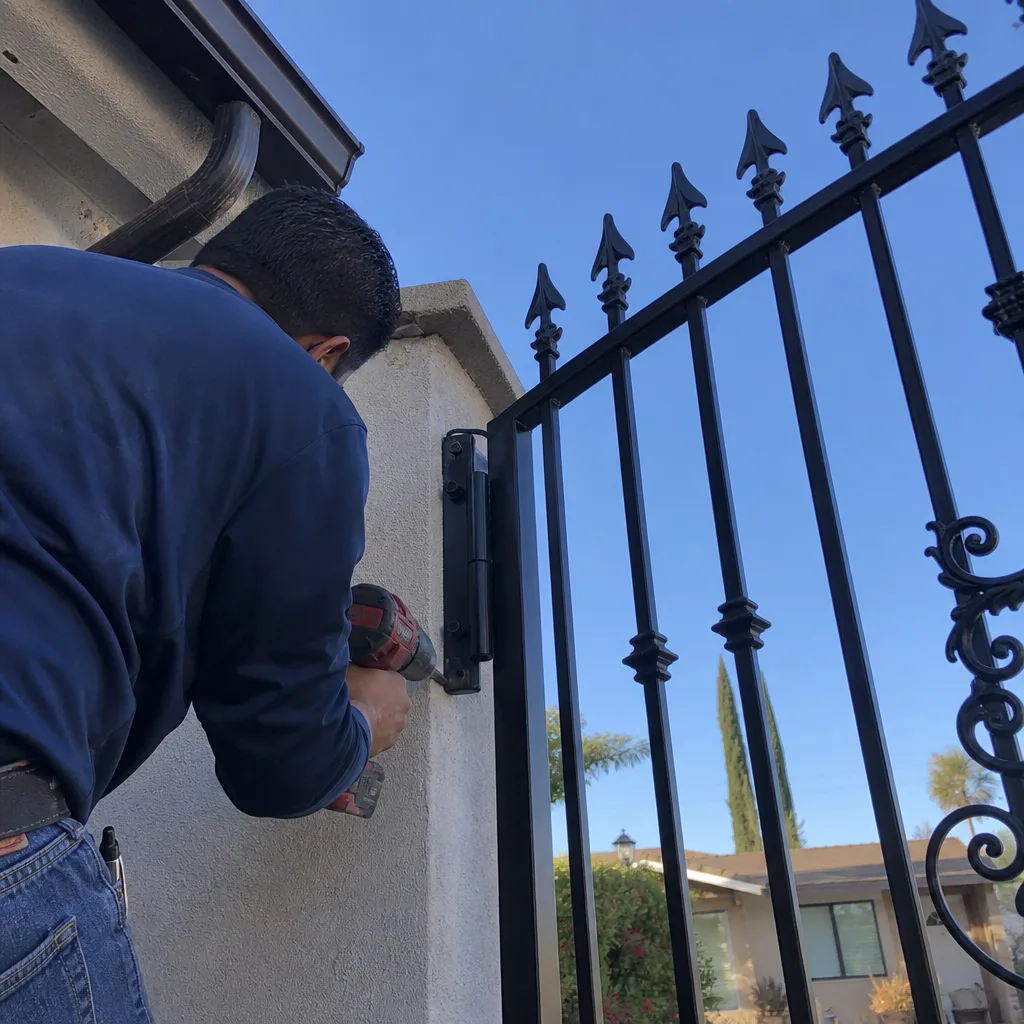
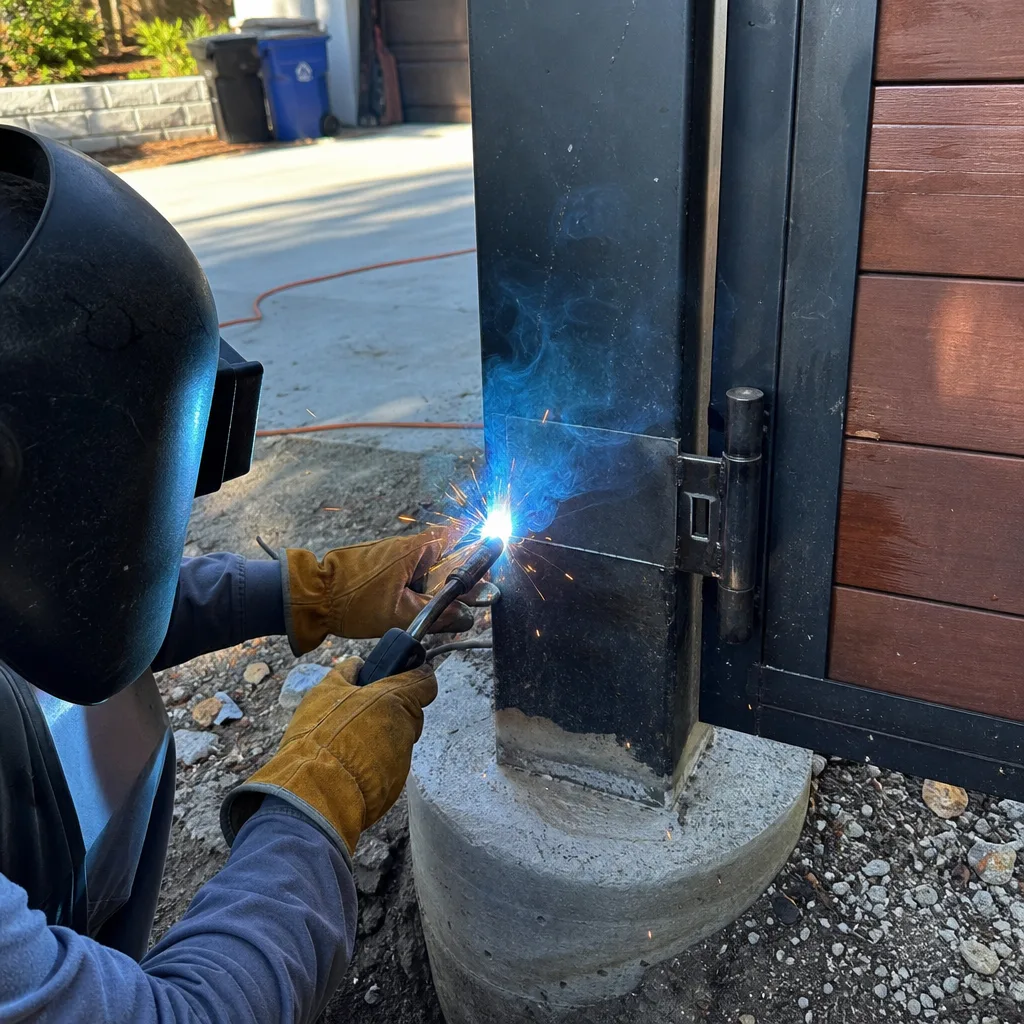
A visible sag at the latch side. The gate is low on the latch end, high on the hinge end. On a steel tube gate, this usually means the hinge welds are fatiguing or the post has shifted. On a wood gate, the frame joints are loosening. The fix is nearly always mechanical: re-welding the hinge, shimming the frame, or resetting the post. What it is not is a motor problem, and no amount of operator adjustment will fix it. If you ignore a sagging gate, the misalignment transfers force into the motor every cycle, accelerating operator wear.
Drag marks on the driveway or threshold. A swing gate that scrapes the concrete is telling you the leaf has dropped. A slide gate that drags is usually riding on worn rollers or has a bent track section. Look at the drag mark itself: a consistent, even scrape across the full arc suggests uniform settling or hinge wear. An intermittent scrape that appears only in one section of travel suggests a localized deformation, often a vehicle impact that bent the frame slightly.
Gap changes at the closed position. This is where your baseline measurements pay off. If the gap between the gate edge and the post has grown by a quarter-inch at the top but is unchanged at the bottom, the post itself is leaning. Stucco-column gate posts, common throughout Los Angeles residential construction, mask this because the stucco hides the steel post inside. You can’t see the lean until the gate stops latching, at which point the post has already moved enough to matter. We find this pattern regularly in older neighborhoods like Mar Vista and Westchester, where 50-year-old posts have been quietly leaning for years.
Latch misalignment. The gate used to click into the keeper. Now it catches, or slides past, or needs a nudge. Latch problems are often the first visible symptom of post movement, because the latch is the most precise alignment point in the whole system. A quarter-inch of post lean is enough to move the latch out of position.
Here’s the order of operations for structural diagnosis, and it’s the same process we follow on every gate installation in Los Angeles: check the posts first, then the hinges, then the frame, then the latch. Foundation issues cause everything above them. Fixing the latch without fixing the post means you’ll re-align the latch again in six months.
Electrical Faults: Intermittent Behavior and Photo-Eye Failures
Electrical problems present differently than mechanical ones. They’re intermittent. They respond to weather. They involve safety systems that homeowners don’t think about until something goes wrong. And in Los Angeles, where gates are frequently tied into intercom, keypad, and vehicle sensor systems, the electrical side of gate repair and seasonal care is often more complex than the mechanical side.
Intermittent operation. The gate works fine all week, then fails to respond on Tuesday morning. No pattern, no consistency. Intermittent failures are the hardest to diagnose because they’re not reproducible on demand. Common causes include a corroding wire connection in an underground junction box, a power surge that damaged a relay, or a failing capacitor that works when cool and quits when hot. The telling detail is usually the weather: failures that cluster on damp mornings or after rain point to water intrusion in a splice or a conduit. Failures that cluster on hot afternoons point to thermal protection in the motor or a heat-sensitive component on the control board.
Photo-eye issues. A photo-eye is the infrared beam that stops the gate if something crosses the path while the gate is moving. It’s a safety device, mandated by code, and it fails in predictable ways. A misaligned beam causes the gate to refuse to close, or to close and immediately reverse. A dirty lens causes false obstruction readings. A failed transmitter causes the gate to operate in a degraded mode on some systems, or not at all on others. If your gate refuses to close but opens fine, the photo-eye is the first thing to check. Not because it’s always the photo-eye, but because it’s the highest-frequency failure point among all electrical gate components, and it’s the easiest to verify: look for the small LED indicator on the receiver. Solid green typically means aligned and clean. Blinking or red typically means blocked or misaligned. Check your manual for your system’s specific indicator scheme.
Breaker trips. A gate operator on a dedicated 15-amp circuit should never trip the breaker under normal operation. If it does, the motor is drawing too much current. That’s either a failing capacitor, a binding load, or a motor in the early stages of failure. A gate that intermittently trips the breaker is a fire-safety issue as much as a gate repair issue. The circuit is doing its job; don’t defeat it by moving the gate to a larger breaker. Fix the current draw instead.
Backup battery failure. Many Los Angeles homeowners have solar or battery backed gate operators, a trend that accelerated during the rolling blackout years. A battery that no longer holds charge will show the same symptoms as a power failure: the gate works on line voltage, dies instantly when power cuts, and does not complete its programmed open-on-power-failure cycle. Batteries in gate operators typically last two to four years in Los Angeles heat, and heat is the primary accelerator of battery aging. A battery that’s over three years old and behaving inconsistently is due for replacement.
Electrical safety caveat: gate operator control boards carry line voltage and capacitor-stored energy. A capacitor can hold a charge long after power is disconnected. If you’re not trained in electrical work, do not open the operator housing. The diagnosis stops at “the breaker trips consistently” or “the gate is intermittent” and the next call is to a professional. For more detail on the electrical side, see our gate motor and opener service in Los Angeles.
Los Angeles-Specific Warning Signs: Rust, Stucco, and Water Intrusion
Los Angeles is not a rust-belt climate, but it’s also not dry the way people assume. Coastal fog, irrigation overspray, and the marine layer create localized corrosion patterns that are specific to how Los Angeles homes are built. Reading those patterns tells you where the water is coming from before the structural damage is visible.
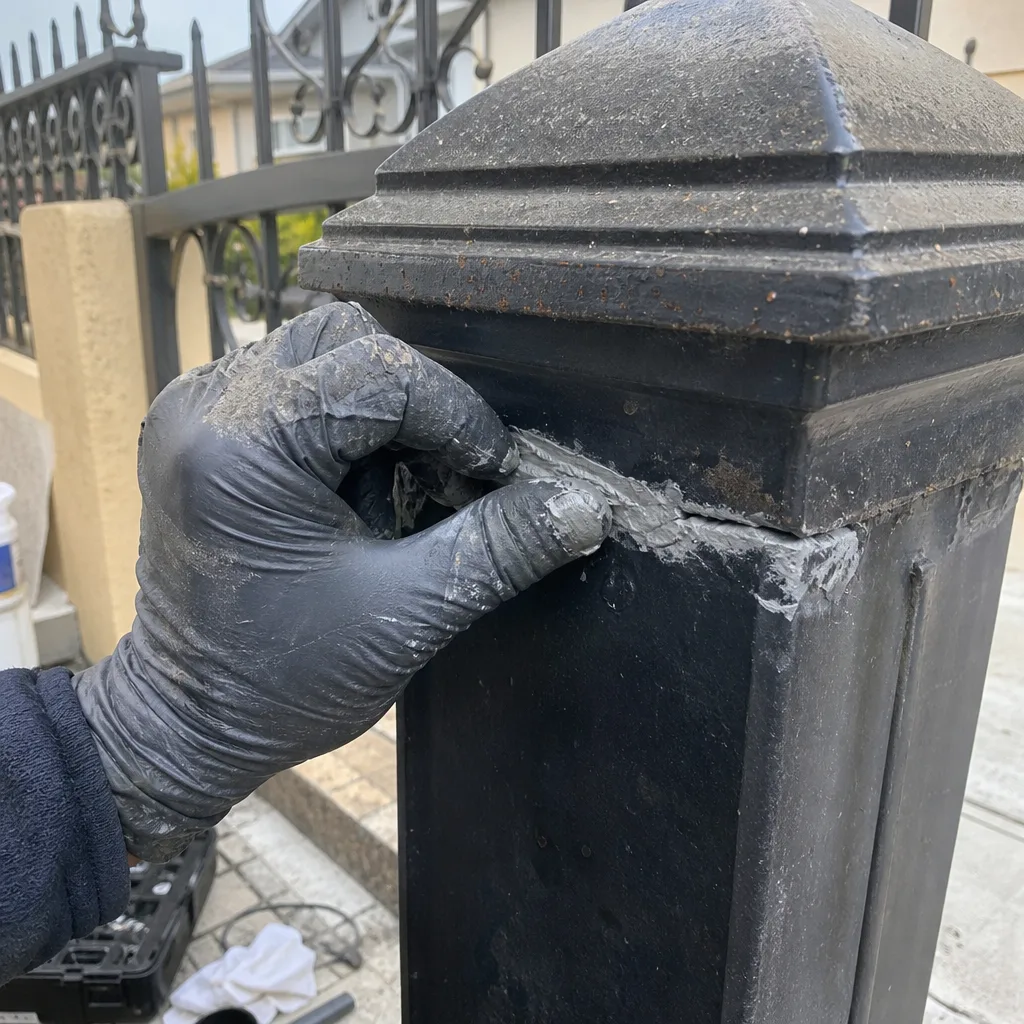
Rust at the base of a stucco-column post. Stucco columns are common on Los Angeles driveways, and they have a specific failure mode: water penetrates through cracks in the stucco, runs down the inside of the column, and pools at the base where the steel post is welded to the embed plate. The rust you see at the base is the symptom. The water source is usually a cracked cap on top of the column, a failed seal at the gate operator mounting bracket, or irrigation spray hitting the column from a nearby sprinkler head. Fix the rust without fixing the water source, and you’ll redo it in two years. The water source is the repair.
Orange staining at the hinge line. Rust weep lines running down from the hinge plate indicate that water is moving through the hinge barrel and carrying corrosion product with it. On a black metal gate, this is obvious. On a wood gate, look for staining on the wood adjacent to the hinge. This pattern is common within ten miles of the coast, where salt-laden fog condenses on metal surfaces overnight. Hinges that show this pattern are usually still serviceable, but they’re running dry. The fix is lubrication and, if the corrosion is advanced, hinge replacement before the leaf drops.
White crust at the bottom rail. On aluminum gates, corrosion appears as white or gray powdery deposits rather than orange rust. This is galvanic corrosion, and it happens when aluminum is in contact with a dissimilar metal, typically steel fasteners or steel mounting brackets, in the presence of moisture. Los Angeles’s coastal humidity is enough to sustain it. Left untreated, galvanic corrosion will eat through an aluminum frame rail from the inside. The user sees a gate that looks fine on the outside and collapses when the internal wall finally fails.
Stucco spider cracks radiating from the operator mount. When a gate operator is mounted to a stucco column without adequate backing, or when the operator is fighting a misaligned gate, the repeated force transfers into the column and cracks the stucco. The classic pattern is a starburst of hairline cracks around the mounting plate. It means the operator, the gate, or both are out of alignment and transmitting force where it doesn’t belong. This is a structural warning sign that most homeowners miss, and it appears in neighborhoods across Los Angeles where stucco construction dominates.
Irrigation damage. A sprinkler head that sprays the gate or the operator housing every morning at 6 a.m. is doing slow, cumulative damage. In Los Angeles, where automated irrigation is standard, sprinkler overspray is one of the most common causes of gate operator corrosion we see. The fix is simple: redirect the sprinkler head. The damage it prevents is not, because a water-damaged operator usually means a new control board, and control boards on premium operators run $300 to $700.
Urgency Levels: Weeks to Schedule vs. Same-Week Safety Risk
Not every warning sign demands immediate action. Some give you weeks of lead time. Others are safety-critical and should be addressed the same week, whether or not the gate still opens and closes. Knowing the difference prevents both overreaction and dangerous complacency.
Low urgency: schedule within a few weeks. These are mechanical and electrical signs that indicate a problem is developing but the gate remains safe to operate. A slight increase in cycle time, a minor squeak at one point in travel, a latch that’s getting finicky, a gap that’s grown by an eighth of an inch. These are trend indicators. Watch them, document them, and schedule a repair when convenient. The risk of ignoring them isn’t immediate danger; it’s that the repair becomes more expensive the longer you wait.
Medium urgency: schedule within the same week. These are signs that indicate a component is actively failing and will likely stop working within days to weeks. A motor that hums but still turns, a gate that reverses repeatedly on one leg of travel, a breaker that has tripped twice in one month, a photo-eye that is intermittently refusing to close. These are not emergencies, but they’re not waiting for your next planned maintenance either. In our experience, medium-urgency signs that are ignored become emergencies within ten days about half the time.
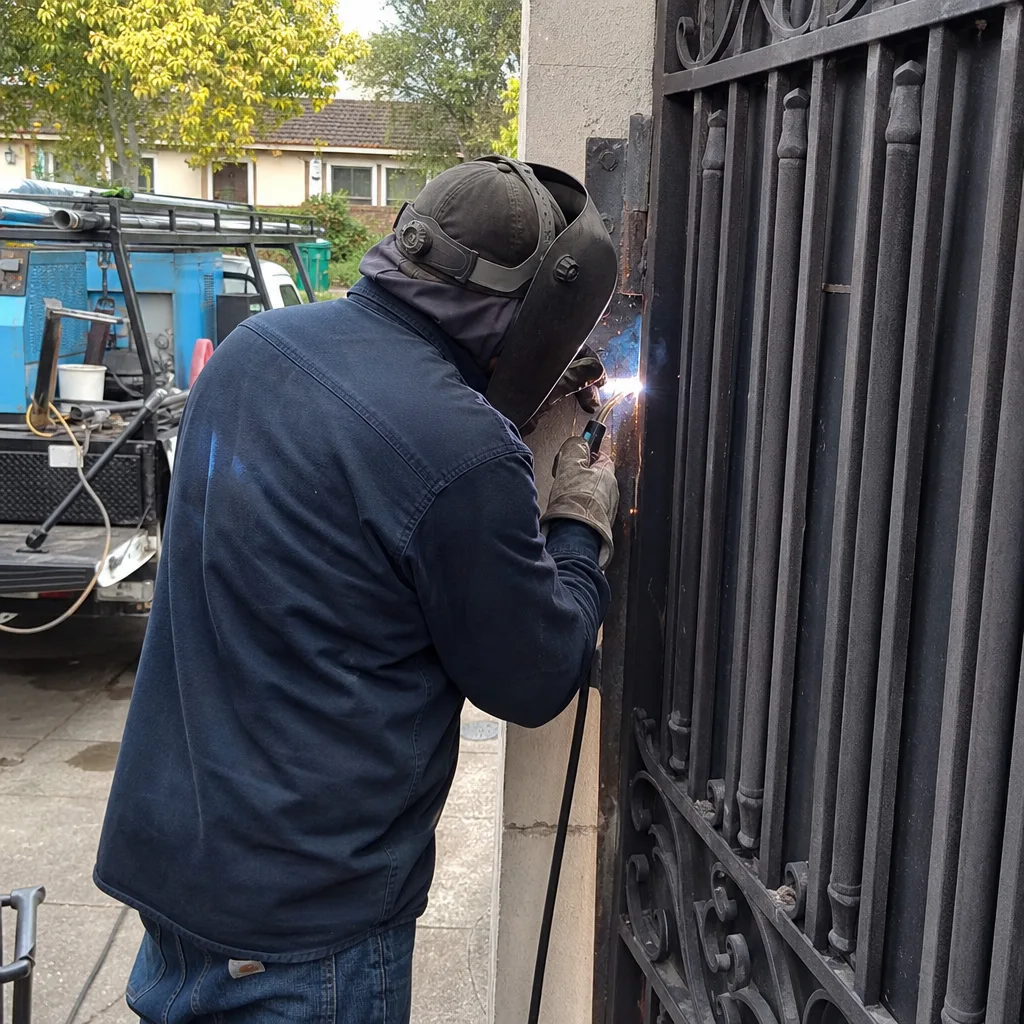
High urgency: same-week safety issue. These involve the gate’s safety systems or structural integrity. A photo-eye that is disabled, bypassed, or consistently non-functional means the gate will not reverse when something enters the path. The entrapment hazard is real, and in Los Angeles, where driveways face sidewalks and children pass directly in front of gates daily, this is a safety liability, not a maintenance item. A gate that has visibly dropped at the hinge and is now dragging hard enough to strain the motor is at risk of hinge failure, which can send a gate leaf into a vehicle or a person. A gate operator that is visibly smoking or emitting a burning smell is a fire hazard. All of these require same-week professional attention.
The gate that works fine but worries you. Some homeowners have a gate that operates normally but hasn’t been serviced in years. That’s not a warning sign. That’s overdue maintenance. A gate is a mechanical system with moving parts, and like any mechanical system, it benefits from periodic inspection. We recommend a maintenance visit every 18 to 24 months for most residential gates in Los Angeles, more frequently for gates that see heavy daily cycling.
When a gate’s reversing system is compromised, the safety risk extends beyond the property line. The gate doesn’t know the difference between a car, a bicycle, and a child on the sidewalk. That’s why reversing system failures are always high urgency, and it’s why building codes mandate photo-eyes and reversing edges on all automatic gates. The code exists because the failure mode is dangerous.
Documenting the Problem: What to Photograph and Measure
Before you call a gate repair company, gather evidence. Our more guides & resources can help you prepare. It takes five minutes, and it changes the conversation from “something’s wrong with my gate” to “here’s what I’m seeing and here’s what I measured.” That distinction matters. It lets a technician assess remotely whether the visit is urgent, and it prevents a technician from re-diagnosing a problem you’ve already documented.
Here’s what to record, in order:
- Video with audio, full cycle. Film the gate opening and closing from a fixed position. The microphone picks up sounds you’ve stopped noticing: a grind, a rattle, a hesitating start. Ten seconds of video replaces 200 words of description.
- Close-up of the problem area. If you see rust, photograph it from two angles. If the latch doesn’t line up, photograph the misalignment with the gate both open and closed. If there’s a drag mark, photograph it with a tape measure laid alongside for scale.
- Your baseline log. If you’ve been tracking cycle time, sound signature, and gap measurements, share the numbers. “The gate was 14 seconds to open in March and now it’s 17” is diagnostic information. It tells the technician that the problem is progressive and gives a rough rate of change.
- The operator label. Photograph the identification label on the motor. The brand, model number, and serial number tell a technician which parts are likely involved and whether the operator is still supported. LiftMaster and FAAC operators, for example, have very different control board designs, and knowing the model before arrival saves a diagnostic visit.
- The breaker panel. If the gate breaker has tripped, photograph the panel with the breaker position visible. Note whether the gate is on a dedicated breaker or shared with other loads. Shared circuits are a common cause of nuisance trips in older Los Angeles homes.
This documentation habit is the same one that governs how we work: before we leave a job, you get a written record of what was found, what was adjusted, and what was replaced. It’s the same principle applied to the front end of the diagnosis. A homeowner who documents symptoms well gets a faster, more accurate diagnosis, and that means a smaller repair bill in most cases. Under our operating standard, every visit includes a documented photo record at no additional charge, so the evidence trail continues through the repair itself.
Brand-Specific Warning Signs: LiftMaster, FAAC, Mighty Mule, and Elite
Different operators fail differently. Knowing your brand gives you a head start on interpreting what you’re seeing, because certain failure patterns are characteristic of certain designs. We work on all major gate automation brands, and these are the patterns we see across Los Angeles driveways.
LiftMaster swing and slide operators. LiftMaster is the most common brand on Los Angeles residential gates, and for good reason: the hardware is robust and parts remain available long after the model is discontinued. The characteristic warning signs on LiftMaster operators are slow start followed by normal travel (indicating a capacitor that’s losing its ability to deliver startup current), and repeated open-then-stop behavior on close (often a travel limit module that’s drifted). LiftMaster’s control boards are also sensitive to power surges, which are common in neighborhoods with overhead utility lines. A whole-house surge protector is worthwhile if you have a modern LiftMaster operator, because the board is the most expensive component to replace.
FAAC hydraulic and electromechanical operators. FAAC is a premium brand, often specified on estate properties in the hills. Hydraulic FAAC units have a specific warning sign: a gate that moves smoothly but makes a gurgling or sucking sound during travel, which indicates low hydraulic fluid or an air bubble in the system. Electromechanical FAAC units share the capacitor and limit-switch issues common to most brands, but their limit switches are more adjustable and therefore more likely to drift out of adjustment over time. A FAAC gate that overshoots its stop position and bounces back slightly is telling you the limit switch needs attention.
Mighty Mule. Mighty Mule is the most common DIY-installed operator on the market, which means two things for the homeowner: the installation quality varies enormously, and the system may not have been configured with safety edges and photo-eyes at all if it was a DIY project. The characteristic warning sign on Mighty Mule systems is erratic remote range, which is often a failing receiver on the control board rather than a remote battery issue. The second characteristic sign is a gate that stops mid-travel without reversing, which usually indicates a low battery condition in the operator’s internal battery on solar models. Solar Mighty Mule installations are common in the Los Angeles foothills where running conduit to the gate is impractical.
Elite swing and slide operators. Elite is a commercial-leaning brand that appears on larger residential gates and light commercial properties. The characteristic warning sign on Elite slide operators is a gate that starts, jerks, then stops, leaving the gate partially open. This is typically a failing run capacitor or a drive belt that’s slipped. Elite swing operators from the SL series have an internal chain drive that stretches slightly over a few years of use, producing a rattling sound at mid-travel that disappears at the ends. It’s a simple tension adjustment if caught early, and a chain replacement if ignored.
The important point across all brands: the operator is rarely the only component involved in a gate problem. The operator responds to the gate it’s driving. A LiftMaster motor that’s running hot because a hinge is stiff is not a LiftMaster problem. It’s a hinge problem with a LiftMaster symptom. That’s why we service all nine major brands rather than steering toward any single one: the right repair is the one that addresses the actual cause, not the one that matches the logo on your existing motor. You can see the full range of what we work on at the Vance Gate Repair Los Angeles home page.
Common Mistakes to Avoid
- Lubricating a dirty hinge. Spray lubricant on a hinge that hasn’t been cleaned first creates a grinding paste that accelerates wear. Clean the hinge with a degreaser, wipe it dry, then lubricate. Or skip the DIY and let a tech do it during a maintenance visit. This mistake is common on coastal Los Angeles properties where airborne grit accumulates fast.
- Adjusting the force setting instead of fixing the drag. On many operators, you can increase the force setting so the gate pushes through resistance. This works, right up until the motor burns out from working against a load it was never designed to handle. Fix the drag first. The force setting is a diagnostic indicator, not a repair tool.
- Ignoring a photo-eye that’s been bypassed. Many DIY installers bypass the photo-eye when they can’t get it aligned, then leave it that way. The gate works, which feels like a win. It’s not. A gate without a functioning photo-eye will not reverse when a child steps into the path. This is the single most dangerous condition on a residential gate, and we find it regularly on Los Angeles properties with DIY or cut-rate installations.
- Replacing the motor before checking the mechanical load. The motor is usually the symptom, not the cause. If a gate is binding, sagging, or dragging, a new motor will fail the same way the old one did. Diagnose the mechanical side first. You’ll sometimes find that the motor was fine and the hinge was the whole problem.
- Ignoring the sprinkler head. It feels like a landscaping issue, not a gate issue. But a sprinkler head spraying the operator housing is the most common cause of water damage we see on Los Angeles gate electronics. Redirecting the head costs nothing and saves hundreds of dollars in premature board failure.
- Calling an electrician for a mechanical problem. Electricians are trained in building wiring, and a gate operator is an electromechanical system with a control board, limit switches, and a drive mechanism. The right professional for a gate problem is a gate specialist. We’ve been called to Los Angeles homes where an electrician replaced a breaker twice before anyone looked at the gate motor that was drawing the excess current in the first place.
- Waiting until the gate stops working entirely. The most expensive gate repairs we do are the ones where every warning sign was present for months. A motor that dies under load often damages the control board on its way out. A hinge that fails completely can drop a gate leaf onto a car or a person. Warning signs exist precisely so you don’t wait for the failure.
When to Call a Professional
Call a gate specialist when you see any medium or high urgency warning sign: a recurring breaker trip, a photo-eye that’s misaligned or bypassed, a gate that’s dragging or sagging, a motor that runs hot, or a reversing system that isn’t reversing. Also call when your baseline measurements show a consistent drift in cycle time or sound. You don’t need to have a diagnosis; you need to have observations. A documented symptom list makes the first visit faster and more productive. Gate repair in Los Angeles is what we do every day, and every job starts with a written price before any work begins. Vance Gate Repair Los Angeles offers free estimates in Los Angeles, and our technicians arrive with the name and photo you were given when you booked. Call (213) 674-2473 and a live person answers, any hour, any day.
Frequently Asked Questions
In most cases, repair is the right call. Gates fail in predictable ways: hinges wear, limits drift, capacitors age, safety systems go out of alignment. All of these are repairable. Replacement typically makes sense only when the steel is structurally compromised (rust through the frame rails, post failure, or impact damage that twisted the leaf beyond straightening) or the operator is so old that parts are no longer manufactured. A reputable technician will show you the condition that leads to a replacement recommendation, with photos, rather than telling you it’s time without evidence. The gate that’s slow, noisy, or intermittent is almost always repairable.
Gate repair pricing in Los Angeles varies by problem type. Hinge repair and alignment typically runs $150 to $400 depending on the gate weight and hinge style. Photo-eye replacement or realignment runs $120 to $300. Circuit board replacement runs $300 to $800 depending on the operator brand. Motor replacement on a swing gate typically runs $800 to $1,800 including labor, and slide gate motor replacement runs $1,000 to $2,200. These are the ranges we quote from our Los Angeles service area; your exact price is always quoted in writing before work starts. Call (213) 674-2473 with your symptoms and we’ll give you a written quote, no obligation.
Intermittent gate failure has three primary causes: a corroding wire connection that makes contact inconsistently, a motor capacitor that works when cool and fails when hot, or a power supply issue affecting the control board. Los Angeles-specific factors include marine-layer moisture accelerating corrosion in underground splices, and summer heat triggering thermal shutdown in overworked motors. The diagnostic process starts with documenting when the failures occur and what the weather was doing at the time. That pattern data is more useful than a list of symptoms, because it points toward the failure mechanism. Call (213) 674-2473 with your failure log and we’ll help you determine whether it’s urgent or scheduled.
A gate that opens normally but refuses to close is almost always a safety system issue, not a motor problem. The most common cause is a misaligned or obstructed photo-eye, which tells the control board that something is in the path and blocks closure. The second most common cause is a failed edge sensor, which does the same thing through a different component. Less common causes include a limit switch that’s drifted past its close position, or a control board fault. Check your photo-eye first by looking for the LED indicator on the receiver; if it’s blinking or red, the beam is blocked or misaligned. This is a repair you should schedule promptly, because the gate’s safety reversing function may be compromised.
Some maintenance tasks are appropriate for homeowners: cleaning debris from a slide gate track, checking photo-eye alignment, lubricating hinges that have been cleaned properly, and tightening visible bolts. Repair tasks involving high-tension springs, gate operator internals, control boards, or capacitors should be left to a trained technician. Gate operator capacitors store electrical charge even with power disconnected, and a high-tension spring under load can release abruptly. The line between maintenance and repair is where the risk level changes. We’re glad to talk through which side of that line any specific task falls on during a service call.
If your gate is stuck open, you have a security exposure, and if it’s stuck closed, you may not be able to get your car in or out. Both situations warrant a same-day call in Los Angeles, where driveway gates are part of a home’s perimeter security. Before you call, check the obvious: is the operator plugged in and the breaker on? Is the photo-eye visibly misaligned? Is there debris in the track? If none of those obvious causes apply, call (213) 674-2473. A live person answers 24/7, and we’ll talk through the symptoms with you and get a technician scheduled. With more than 22,000 gates repaired and installed since 2014, we’ve seen the failure pattern you’re experiencing, and we document every job with a written price before the work starts.
The Bottom Line
A gate’s warning signs are measurable and interpretable, and the earlier you read them, the smaller the repair. Establish your baseline, document deviations, and act on the urgency level those deviations indicate. A photo-eye that fails is a same-week safety issue. A hinge that’s starting to dry out is a few-weeks maintenance item. A motor that’s running hot is a medium-urgency repair that becomes an emergency if you wait. The gate is a mechanical system with a finite service life, and every component in it gives you advance notice before it fails. Track it, document it, and call when the numbers move. That’s how a well-maintained Los Angeles gate runs for 15 or 20 years instead of dying at 8, and it’s how you avoid the call where a technician tells you the motor burned out because the hinge was never fixed. You catch those things early, or you pay for them late.
Written by Adrian Vance, Owner at Vance Gate Repair Los Angeles, serving Los Angeles since 2014.