
Last updated September 19, 2026
Free on-site gate assessment - hinges, posts, and your LiftMaster or Nice gate operator checked before anything is quoted
The assessment is free and the quote is the invoice.

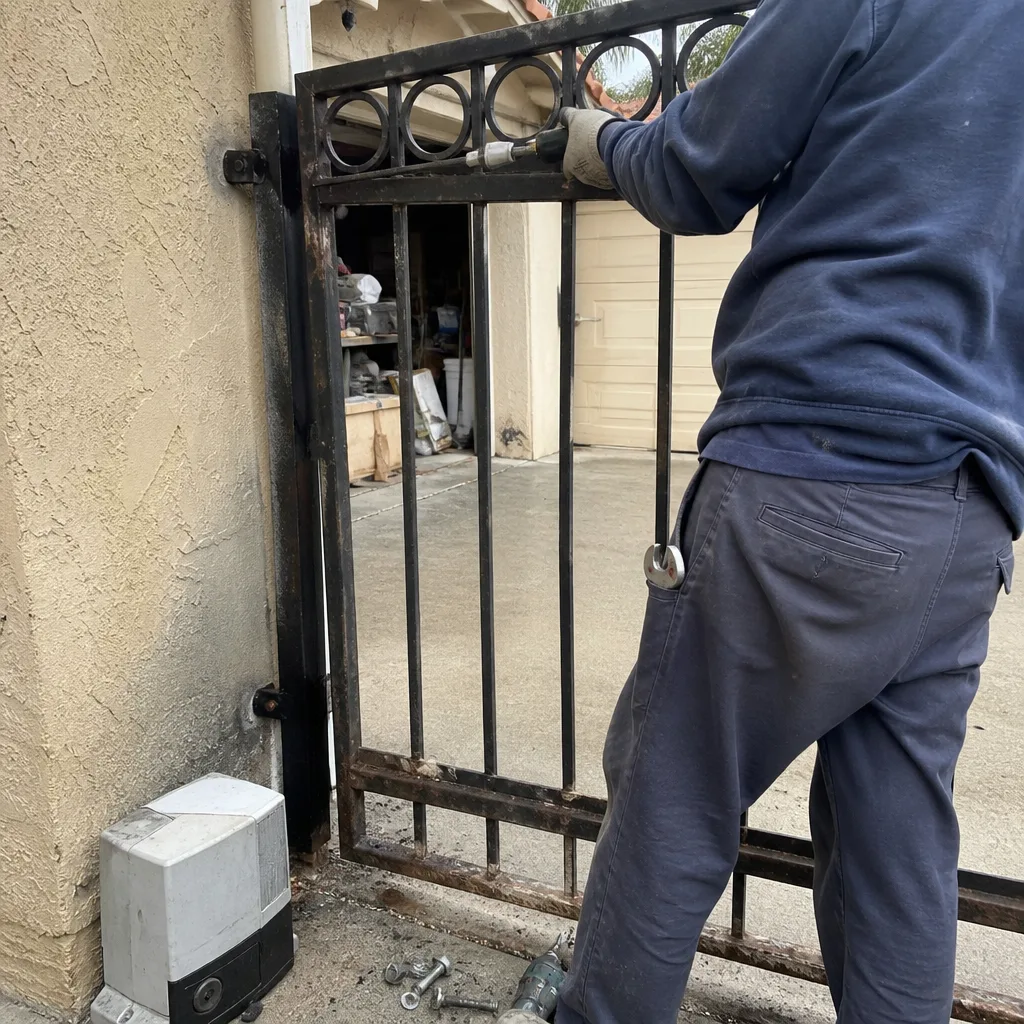 Before
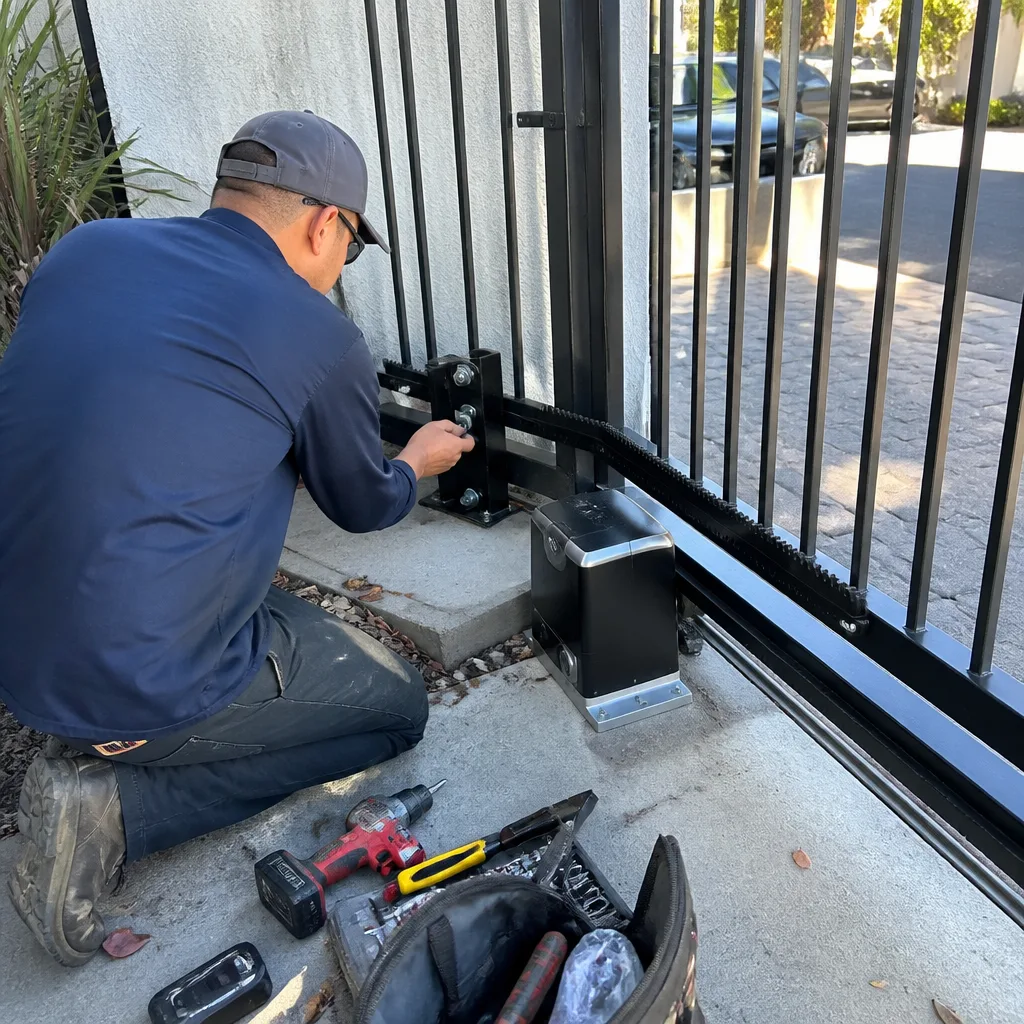 After
After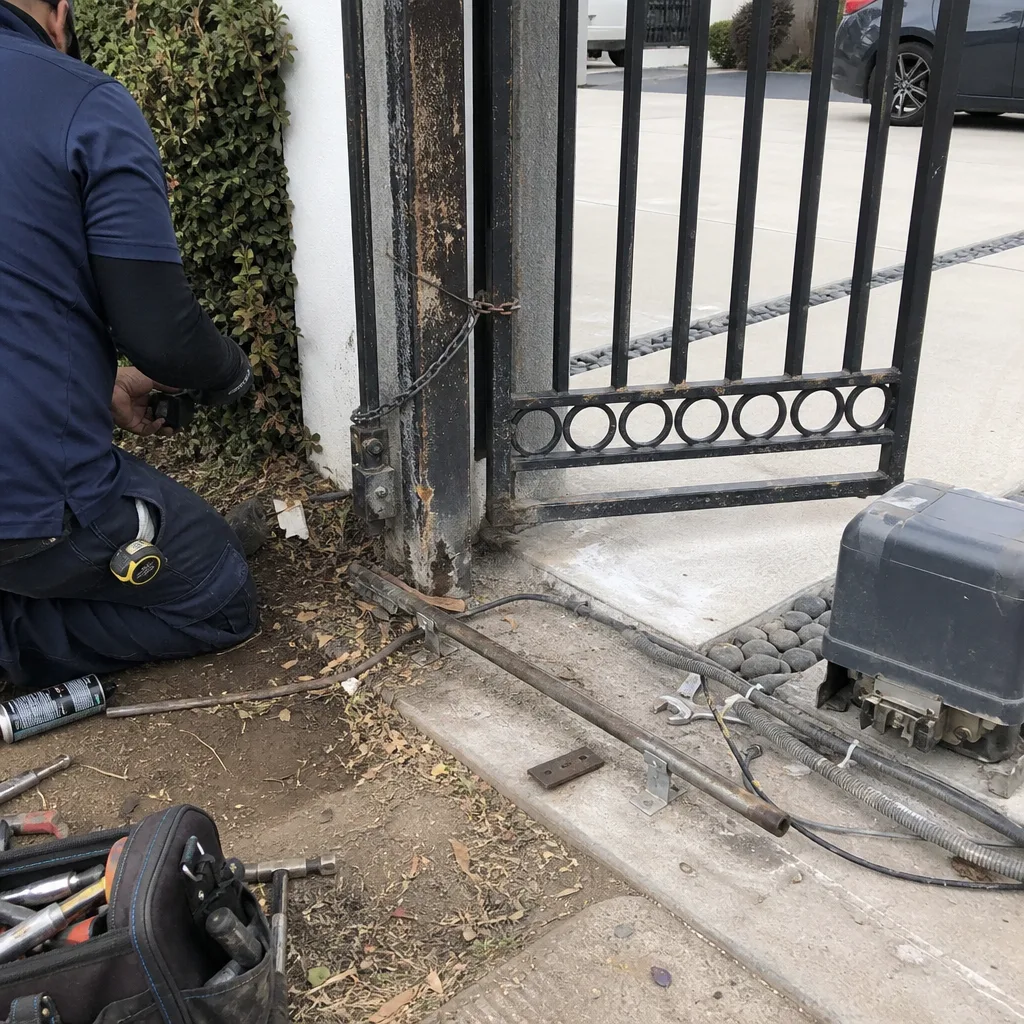 Before
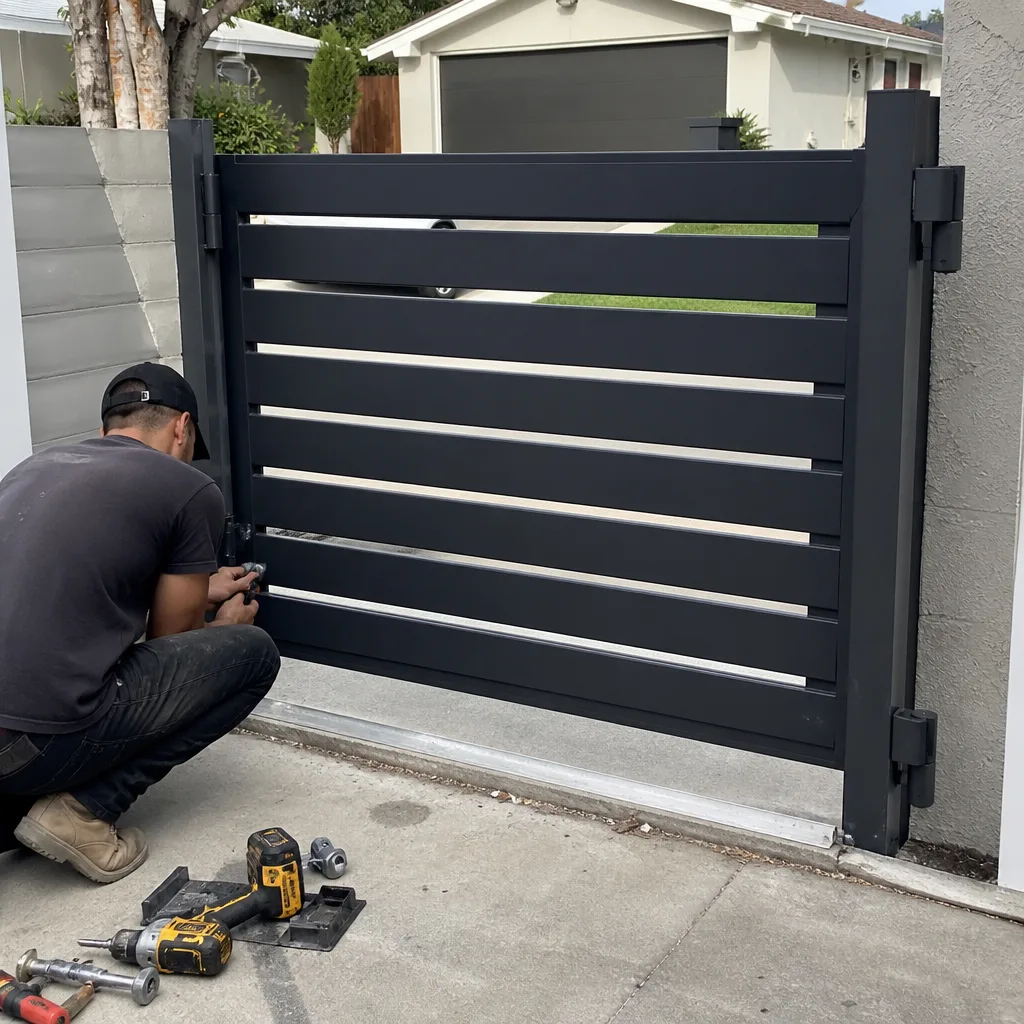 After
After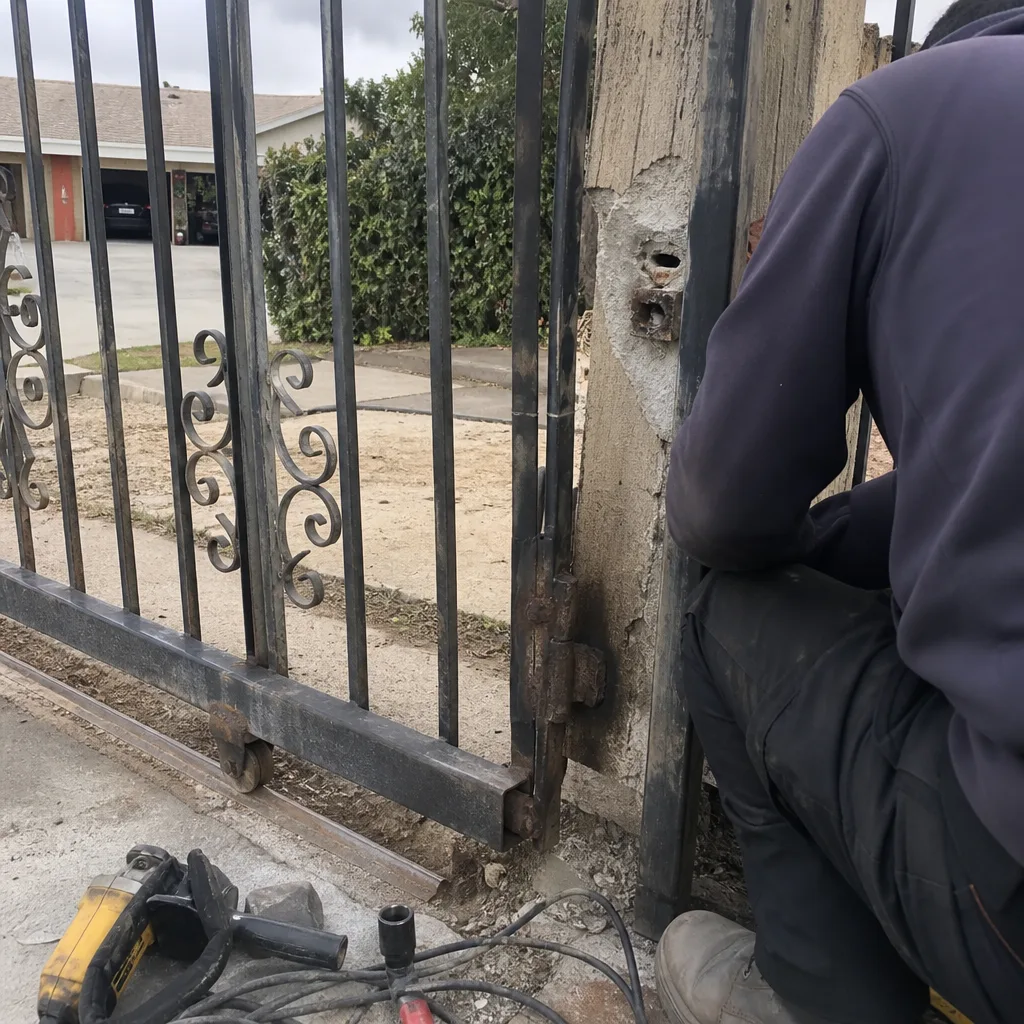 Before
 After
AfterThe Complete Guide to Gate Repair in Los Angeles
In Los Angeles, a driveway gate fails for a reason. Not a vague one. A specific, traceable reason: a capacitor that drifted out of tolerance, a limit switch set wrong from the day it was installed, a post that moved because clay soil expands and contracts with winter rain. The gate that “just stopped working” almost never just stopped working. There is a measurable upstream event. And in Los Angeles, three of the four most common failure origins are invisible until you read limit-switch data or pull a wiring diagram. This guide maps every common gate failure to its actual mechanical or electrical origin, not its symptom. You will learn how to describe the problem precisely before a technician arrives, how to verify the repair was done correctly, and how to avoid paying twice to rediscover the same fault.
Quick Answer
Gate repair in Los Angeles most often comes down to four root-cause categories: mechanical wear, electrical fault, operator failure, or structural shift. Most repairs fall between $180 and $480 when the cause is isolated correctly the first time. The fastest way to avoid repeat repairs is to demand a written diagnosis, not a verbal one.
Table of Contents
- The Four Root Causes of Gate Failure in Los Angeles
- Why Los Angeles Gates Fail Differently
- Symptoms vs. Causes: The Repair That Actually Lasts
- What a Repair Visit Should Produce
- How to Verify a Repair Before Signing Off
- Common Gate Types in Los Angeles and Their Failure Patterns
- What Gate Repair Costs in Los Angeles
- Common Mistakes to Avoid
- When to Call a Professional
- Frequently Asked Questions
Gate Repair in Los Angeles is a topic we approach the way a technician reads a wiring diagram: trace the circuit, find the break, fix the break, leave a record. That is the entire structure of this guide.
BeforeAfterThe Four Root Causes of Gate Failure in Los Angeles
Every gate problem we have documented since 2014 falls into one of four categories. Not twenty categories. Four. And if you can name which category your problem belongs to, you will describe it accurately on the phone, compare estimates intelligently, and spot a wrong diagnosis before it costs you money.
1. Mechanical Wear
Hinges, rollers, wheels, chain drives, bearings, brackets. Metal moving against metal for years. In Los Angeles, the temperature swings between hot days and cool nights cause metal to expand and contract daily. Over a decade, that means hinges sag, wheels flatten on one side, and chain drives stretch. Mechanical wear is the easiest category to identify because it makes physical noise: grinding, squealing, dragging, a gate that scrapes the driveway on one corner.
2. Electrical Fault
This is the category most often misdiagnosed. A gate that won’t open at all is frequently not a motor problem. It is a low-voltage wiring fault: a corroded splice, a photo-eye with a broken wire, a transformer that stopped outputting 24 volts. In coastal neighborhoods from Playa del Rey up to Pacific Palisades, marine-layer humidity accelerates corrosion on exposed wiring connections. The gate worked for years and then didn’t. That pattern is electrical more often than mechanical. We see it daily.
3. Operator Failure
The operator, or gate motor, is the black box that does the heavy lifting. Operator failure includes burned-out capacitors, failed limit switches, stripped gears inside the motor housing, and control boards that stop responding. A diagnostic key: if the gate hums but doesn’t move, the capacitor is often the culprit. If it moves in one direction but not the other, the limit switch or the board is suspect. If it slams at full speed, the operator is not receiving a stop signal. These are testable findings, not guesses.
4. Structural Shift
This is the Los Angeles-specific category that generic gate guides miss entirely. Hillside neighborhoods throughout the city sit on expansive clay soil. Winter rain causes the soil to swell; summer heat causes it to shrink. Gate posts embedded in that soil move. A post that shifts a quarter inch changes the gate’s travel geometry enough that the latch no longer lines up, the gate drags, or the operator strains harder and burns out a capacitor. Structural shift often masquerades as a motor problem. The motor is fine; the geometry is wrong.
Why Los Angeles Gates Fail Differently
Generic gate guides describe symptoms. They rarely describe geography. But geography is the variable that determines which of the four root causes is most likely on your specific property. In Los Angeles, two environmental factors dominate.
Marine-Layer Corrosion
Coastal ZIP codes from San Pedro through Long Beach, Redondo Beach, Manhattan Beach, and north into Malibu get a nightly marine layer for much of the year. That salt-laden moisture settles on everything, including the low-voltage wiring connections inside your gate operator. We routinely open operators in these neighborhoods and find green corrosion on terminal blocks, rusted limit-switch contacts, and photo-eye wiring that has oxidized inside what looked like a sealed conduit. The gate worked perfectly for five years. Then the corrosion reached a threshold. The failure looks sudden; the process was slow. Our recommendation for coastal properties: annual inspection of the low-voltage connections, every single year. In our experience, it prevents roughly half of the electrical failures we see along the coast.
Clay-Soil Post Movement
Hillside neighborhoods and canyon-adjacent areas throughout Los Angeles sit on expansive clay. Silver Lake, Echo Park, Mount Washington, Studio City hills, the Santa Monica Mountains communities. When the soil absorbs winter rain, it swells. When summer drought hits, it shrinks. The result is seasonal post movement. A gate that drags in February and swings freely in August is not a hinge problem. It is a soil problem. The fix is not always major: sometimes a hinge adjustment corrects the geometry. Sometimes the post needs re-setting in a concrete footing that extends below the active soil layer. The point is that the diagnosis must account for soil behavior, or the repair will not hold.
Symptoms vs. Causes: The Repair That Actually Lasts
Here is the single most expensive phrase in gate repair: “We got it working again.” That phrase describes a symptom repair. The gate opens. The invoice is paid. Six months later, the same gate fails again because the condition that caused the failure was never addressed. Here is the difference, with three examples from gates we see across Los Angeles.
Example 1: The Gate That Would Not Open in the Morning
Symptom repair: Replace the battery in the keypad. Gates works for a few days, then fails again. Cause repair: Trace the 24-volt supply line from the transformer to the control board. Find a corroded wire nut inside the operator housing. Replace the splice, solder and heat-shrink the connection, photograph the repair. The symptom was intermittent power. The cause was a corroded connection. The symptom repair cost less on the day. The cause repair is the one that actually fixes it.
Example 2: The Sliding Gate That Started Grinding
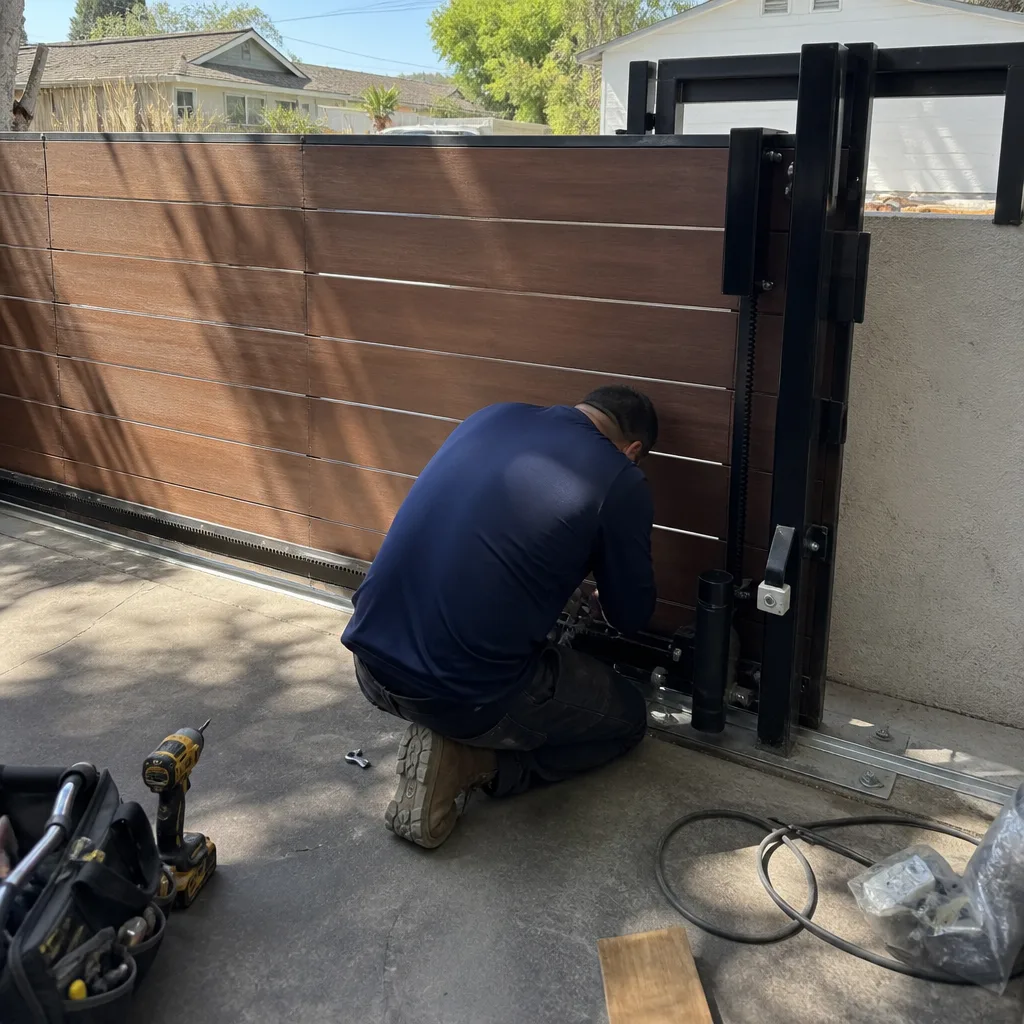
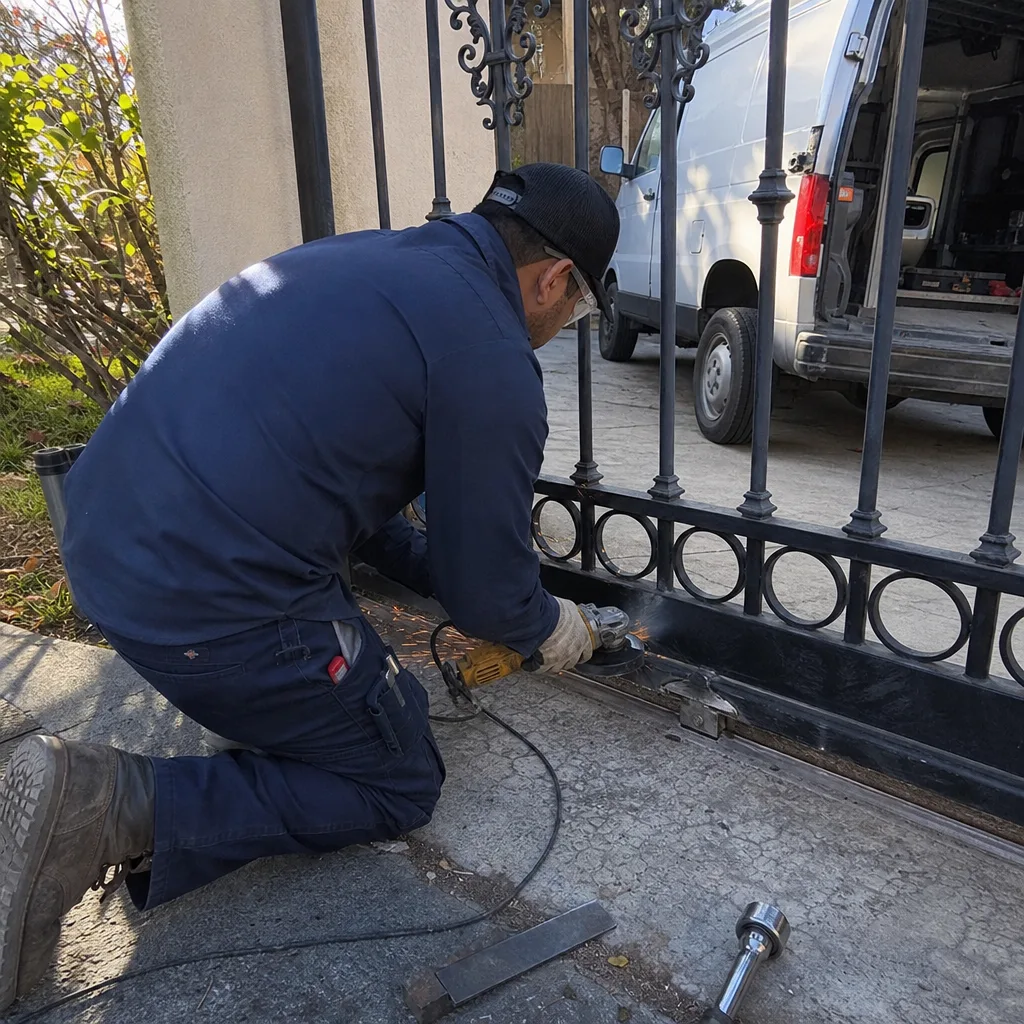
Symptom repair: Spray lubricant on the wheels. The noise quiets for two weeks. Then it comes back. Cause repair: Inspect the steel track and the wheels. Find that several wheels are worn flat on one side, so the gate rides on the wheel edge rather than the rolling surface. Replace the wheel set. The cause was worn wheels, not friction. We attempt to quote lubricant as a diagnostic step, never as a repair.
Example 3: The Swing Gate That Stopped Closing All the Way
Symptom repair: Adjust the close limit switch so the gate travels further. Works for a month. Then the post shifts again after rain and the gate drags again. Cause repair: Check the post plumb with a level. Find it moved 3 degrees out of vertical. Re-set or reinforce the post. The cause was structural. The limit-switch adjustment addressed the symptom and, frankly, made the problem worse over time by straining the operator harder against a worsening geometry.
Every one of these examples maps back to the failure-category framework: mechanical wear, electrical fault, operator failure, structural shift. When a homeowner can say “I think this is structural, the post looks tilted,” the entire diagnosis happens faster, and the repair is more likely to address the root cause on the first visit.
What a Repair Visit Should Produce
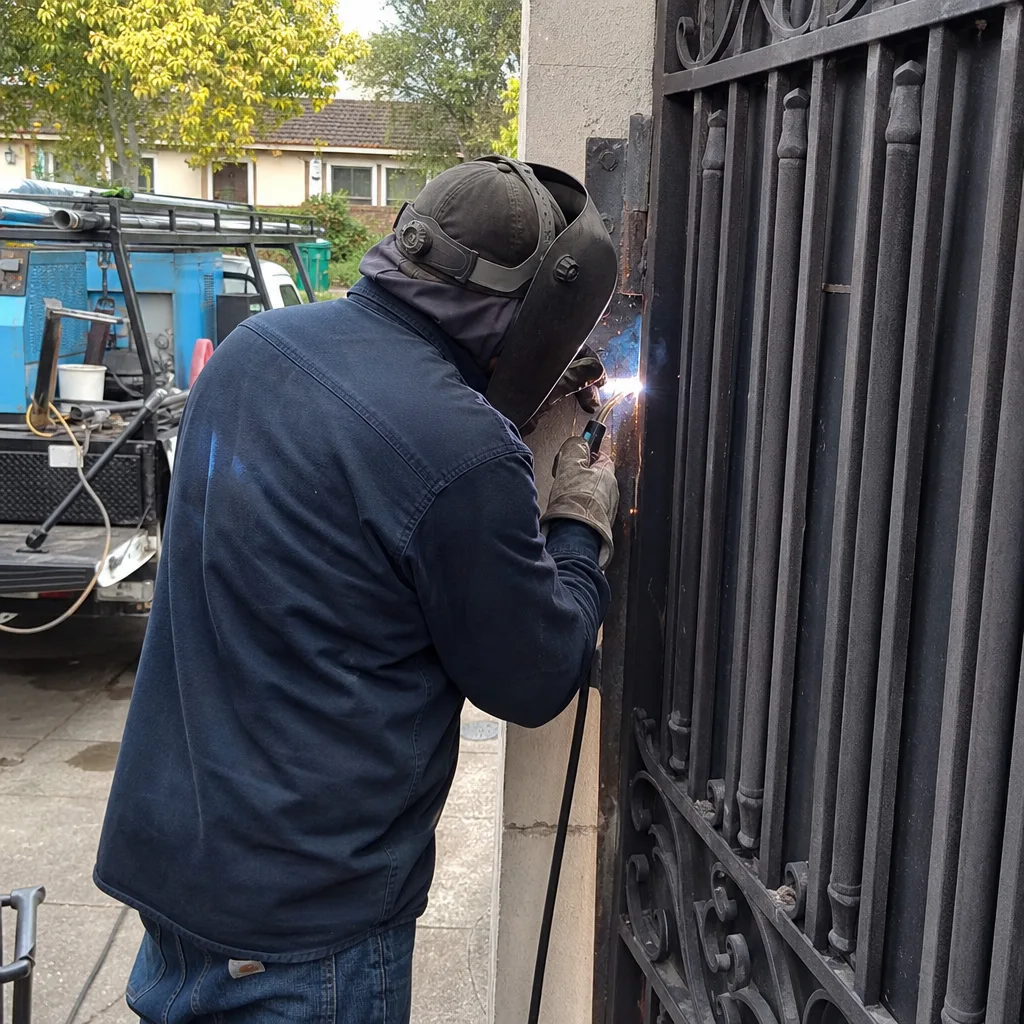
Most gate companies in Los Angeles leave you with a verbal summary and an invoice that says “Gate repair - $385.” That is not documentation. That is a receipt. And its absence costs you money on the next service call, because the next technician starts from zero. They have no record of what part was installed, what voltage the transformer currently outputs, where the limit switches are set, or what wiring was changed. That technician now has to reverse-engineer the previous repair, and you pay for their discovery time.
Here is what a repair visit should produce, and what we deliver on every single job under Vance Gate Repair Los Angeles home documentation standard.
- Written diagnosis: The root cause, named in writing, in trade language with lay translation. “Failed capacitor (the component that gives the motor its starting jolt): capacitance measured 9 microfarads against a 35 microfarad rating.”
- Written price before work starts: A flat price handed over before anyone picks up a tool. No verbal estimate. No range-with-asterisk. The written number is the number on the invoice.
- Photo log of what was found: The corroded terminal block. The worn wheel set. The moved post. If we say a part failed, we photograph that part on-site. The photos are left with you and filed in the job record.
- Photo log of what was set and installed: The new part in place. The final limit-switch positions. The motor bracket after adjustment. This is the evidence that the work was done as described.
- Written record of part numbers: If a Motor 24V DC capacitor was installed, the part number is on the record. Future service calls no longer require 45 minutes of investigation to answer the question “what is in this gate?”
This is not an upsell. It is a diagnostic standard that originated in commercial access-control work and carried into residential gates. When every visit leaves a legible record, the next technician works from evidence, not guesswork. That is the difference between paying once and paying twice.
How to Verify a Repair Before Signing Off
“It opens and closes” is not a test. It is a first impression. Here are the specific checks to run before you sign the completion form, in the order a technician should demonstrate them.
- Cycle the gate five times, not twice. Two cycles will not reveal an intermittent fault. Five cycles from each control point (remote, keypad, push-button) exposes wiring or board failures that only appear after warm-up. If the gate hesitates on cycle four, the repair is not complete.
- Test the safety reversal in both directions. Block the gate with your hand at mid-travel on closing. It must reverse immediately. Then check the photo-eye: pass your hand through the beam while the gate is closing. The gate must stop and reverse. If either test fails, the repair is not complete. This is a non-negotiable safety function.
- Watch the gate travel in slow, deliberate passes. Walk alongside the gate as it opens and as it closes. Listen for strain, scraping, rattling. Watch the clearance. If a swing gate drags on the driveway at the latch end, the geometry is still wrong. If a slide gate shudders, a wheel is binding.
- Check the operator housing temperature. After ten cycles, place your hand on the motor housing. Warm is normal. Hot to the touch is not. A hot motor indicates continued mechanical strain or an underlying electrical issue that the repair did not resolve.
- Ask for the documentation. The written diagnosis. The photo log. The part numbers. If the technician cannot provide them at the end of the visit, request them by email before payment. A repair without a record is a repair you will have to pay to diagnose again next time.
These are the same checks we run at the end of every Gate Motor & Opener in Los Angeles service call, because the repair is not complete until the homeowner has verified it themselves.
Common Gate Types in Los Angeles and Their Failure Patterns
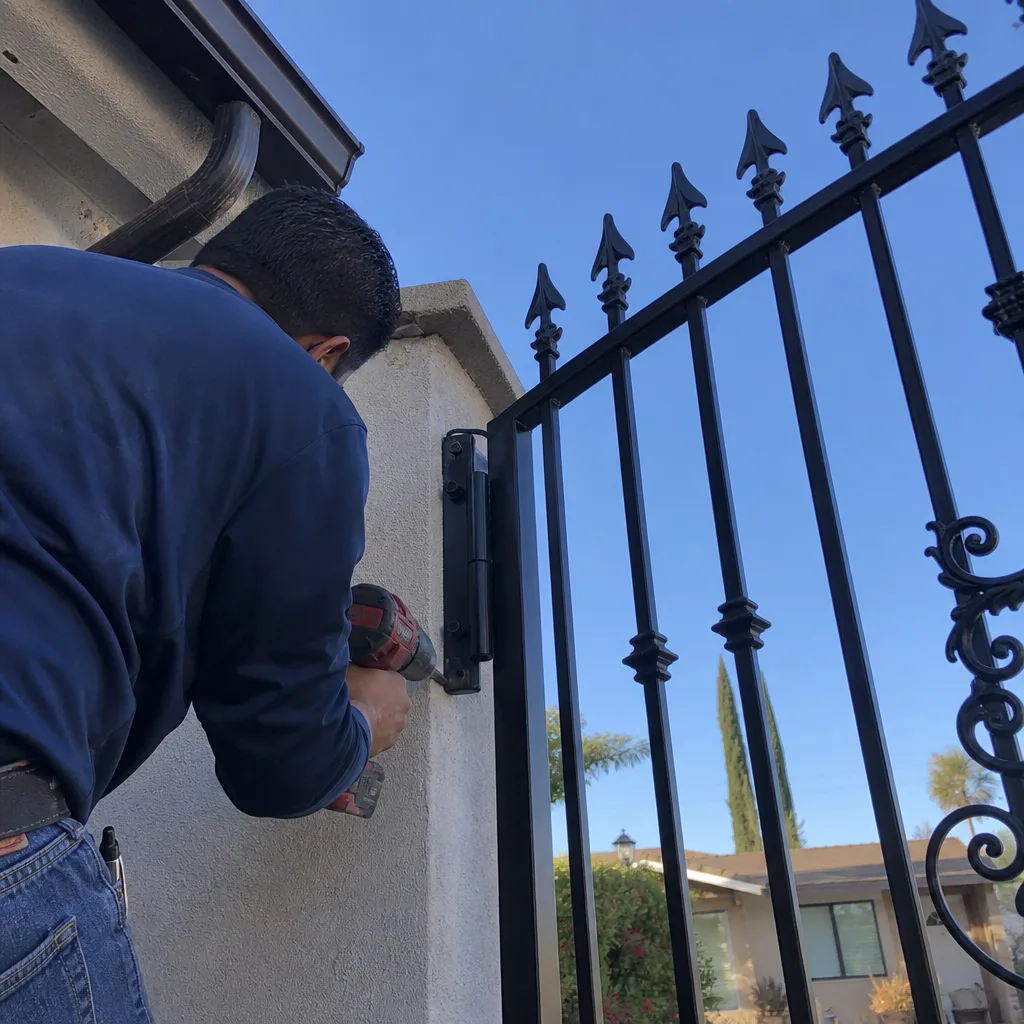
Los Angeles has a distinctive gate inventory. Understanding which type you have, and what that type is prone to, puts you ahead before the first call.
Swing Gates
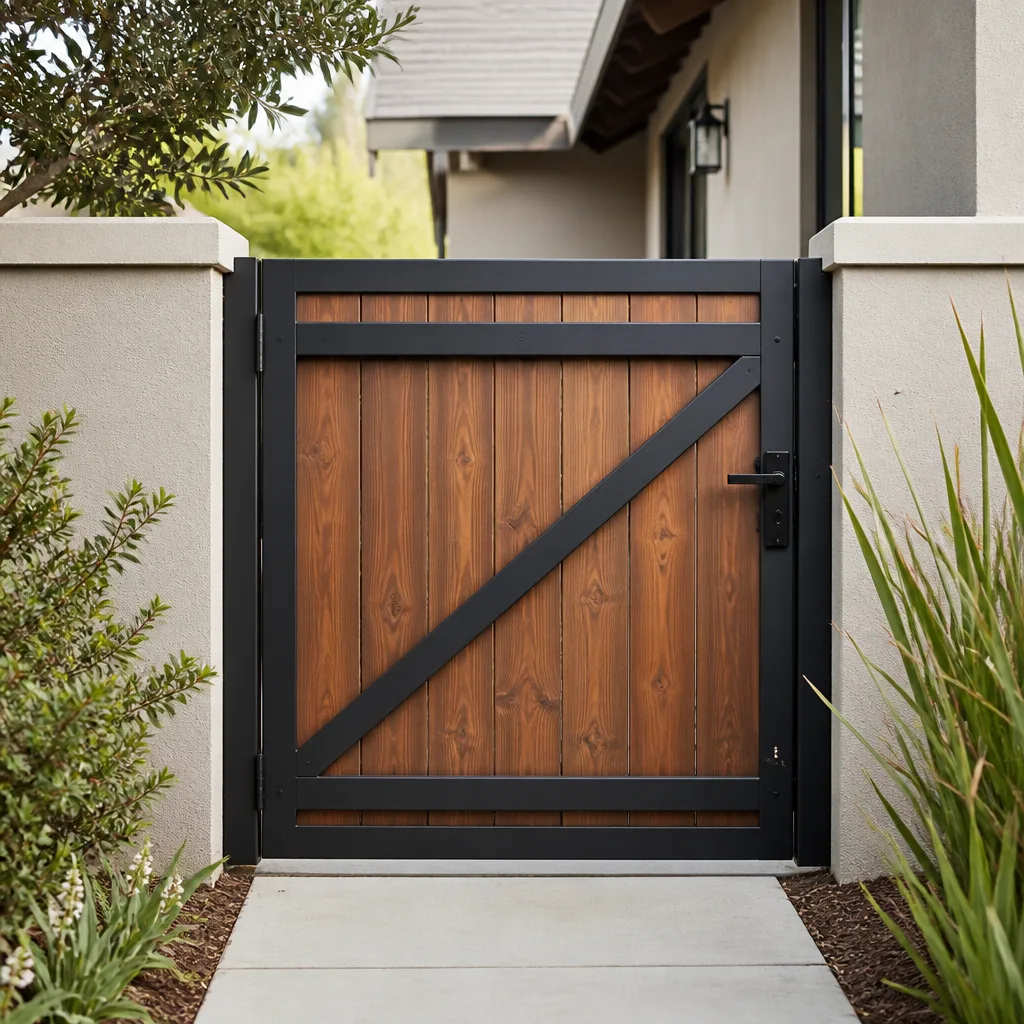
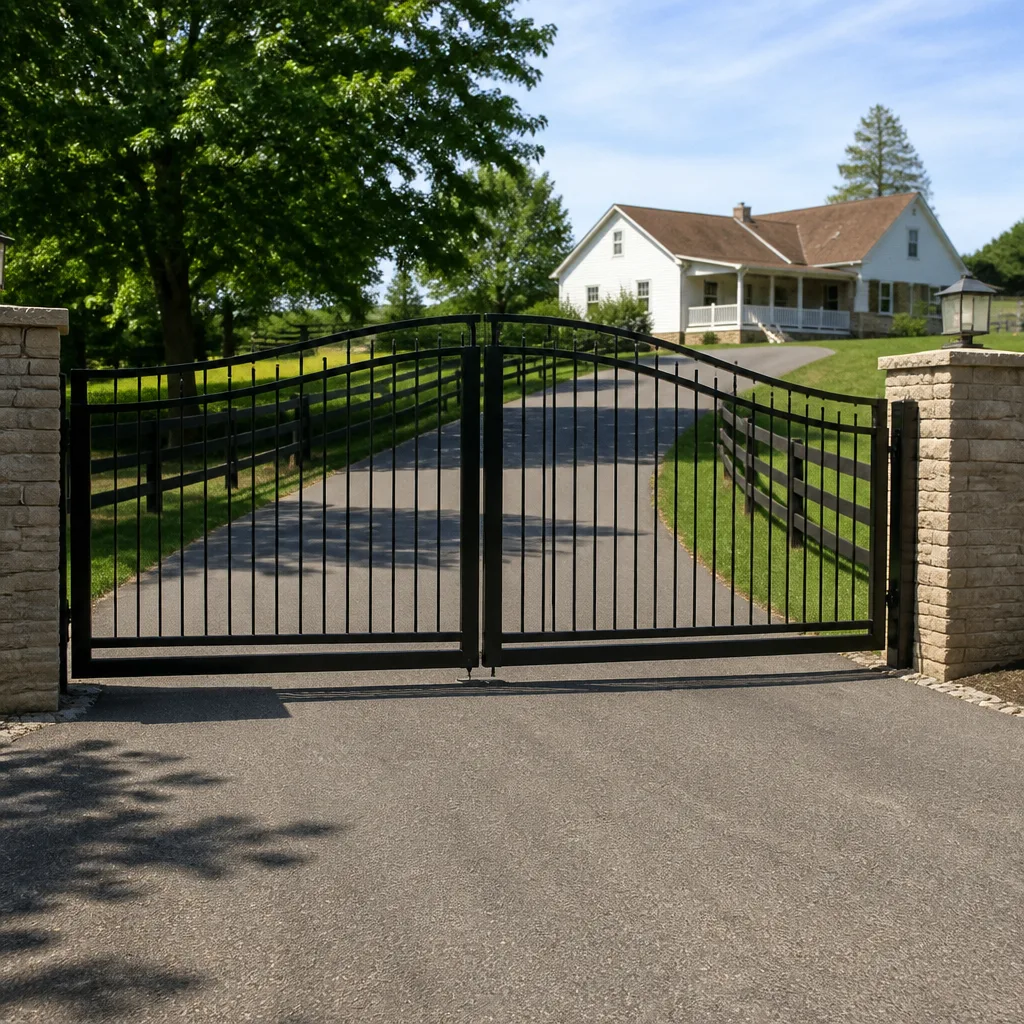
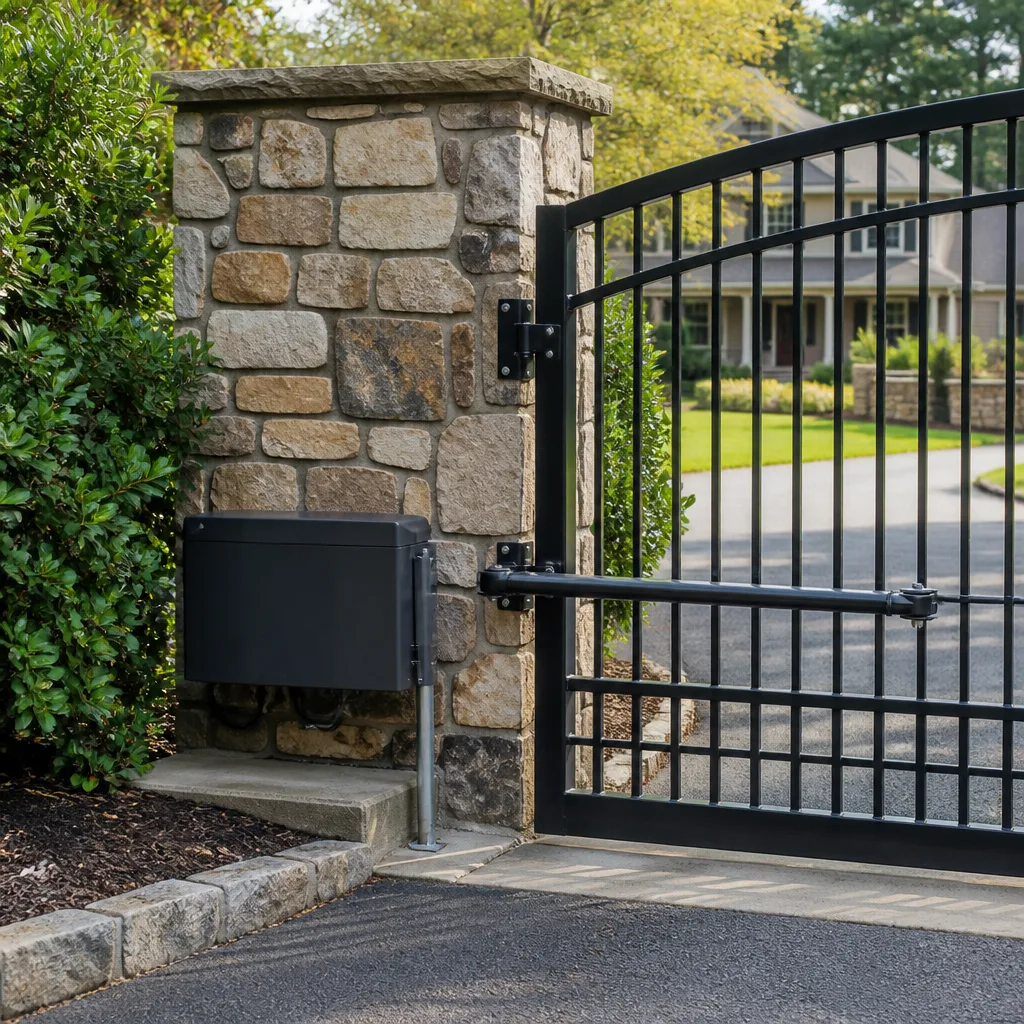
Single- and double-swing gates dominate the hillside neighborhoods and older estates. They are mounted on hinges attached to posts, driven by an arm or buried operator. The dominant failure patterns on Los Angeles swing gates are post movement, hinge wear, and operator-arm bracket failure. When the post moves, the gate’s entire geometry changes, and the operator strains harder. We regularly see LiftMaster and FAAC swing-gate operators with burned-out capacitors that trace back to a post that tilted after two winters of clay-soil expansion. The operator did not fail; it was overloaded by a structural problem that went unaddressed.
Sliding Gates
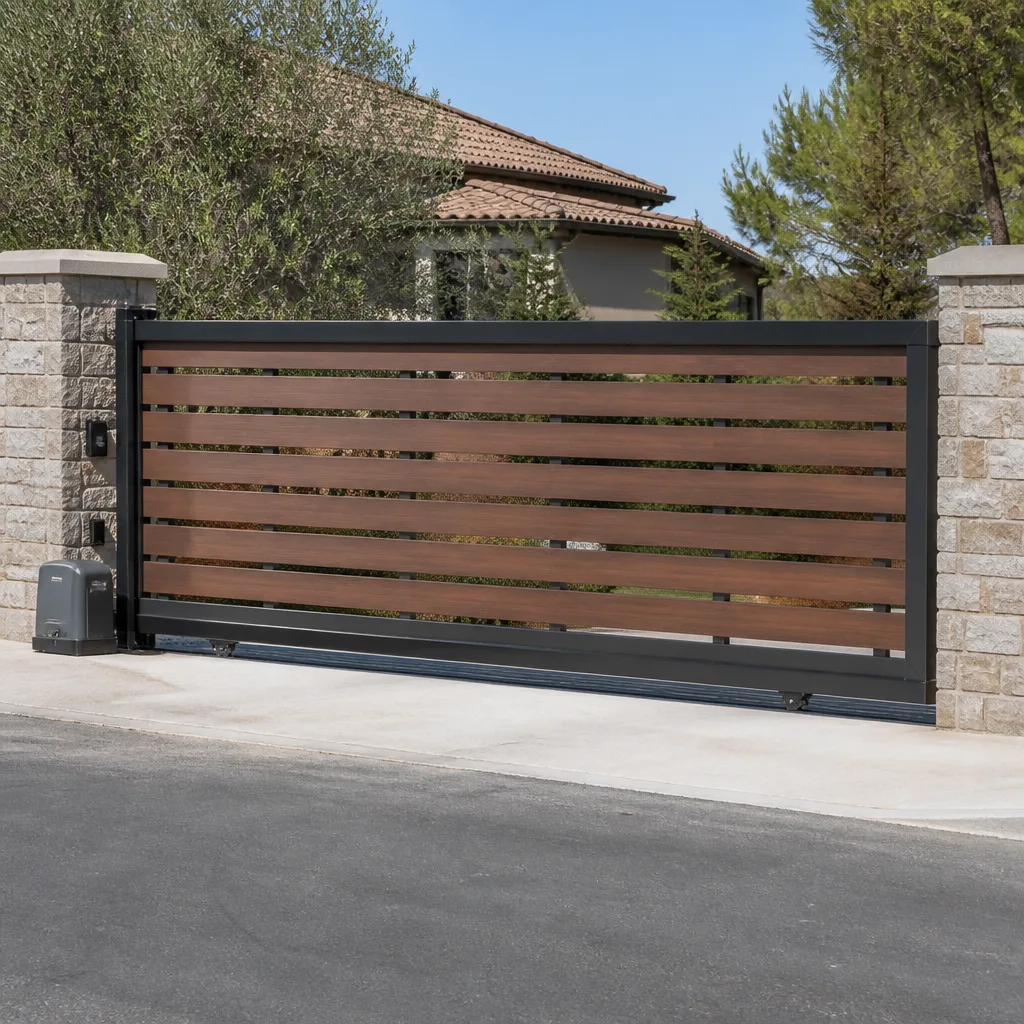
Sliding gates span the width of a driveway on a steel track, moving sideways on wheels or a cantilever system. These are common on flat-lot properties throughout the San Fernando Valley and on newer builds. The dominant failure on slide gates is wheels wearing flat and the track collecting debris. A slide gate that starts slowing down is not losing motor power. It is losing rolling efficiency. In our experience, slide-gate motor failures happen after the wheel set has degraded to the point where the motor pulls double its rated load on every cycle.
Pedestrian Gates with Automation
Pedestrian gates get the same automation equipment as the big gates: the keypad, the electric strike, the intercom, the exit sensor. The failures here trend toward low-voltage wiring and card-reader or keypad failures rather than motor failures. A gate that opens from the inside button but not from the keypad is a keypad or wiring problem, not a gate problem. In many cases, the gate itself is untouched; the service is confined to the electrified hardware.
Security Gates on Rear Alleys
Los Angeles has thousands of rear-alley gates securing parking and yards behind older homes. These are frequently Mighty Mule or Elite opener installations, often homeowner-installed initially, with wiring run through plastic conduit that degrades in UV exposure. The most common failure here is the low-voltage wire rotting inside the conduit and causing intermittent power loss. The gate works, then it doesn’t, then it works. That pattern is nearly always wiring, and it is frequently found within six feet of the operator.
What Gate Repair Costs in Los Angeles
We publish price ranges because your time is not free, and a range on a page is more useful than a callback. For a full breakdown, see our Gate Repair Cost Breakdown: The Los Angeles Homeowner’s Reference for 2026. These are the ranges we quote most frequently across Los Angeles, assuming the diagnosis is correct and the root cause is addressed. Every one of these prices is written down and handed over before work starts, not quoted verbally and revised later.
Representative Repair Pricing in Los Angeles
- Photo-eye replacement or realignment: $120-$220. Includes new unit if needed, alignment verification, and testing of the safety reversal.
- Capacitor replacement: $140-$240. Includes diagnosis of why the capacitor failed and a check of the operator’s load. A capacitor that fails repeatedly is a symptom of a deeper problem.
- Limit switch adjustment or replacement: $150-$260. Includes setting both open and close positions, photographing the final positions, and testing the gate’s full travel.
- Wiring repair (corroded splice, broken low-voltage wire): $180-$380 depending on the length of the run and accessibility. Includes weatherproofing the repair at every connection.
- Hinge and wheel replacement on a slide gate: $220-$450 depending on wheel count and track condition. Includes a check of track level and motor load after replacement.
- Swing gate operator motor replacement (most brands, including LiftMaster and FAAC): $650-$1,200 depending on the model and whether the arm bracket is intact.
These are prices for the repair work itself. The written quote includes everything: parts, labor, the photo record, and the one-year 365-Day Done Right Promise. If the repair is not right within that year, we make it right at no charge. No argument, no fee, no expiration date within that window.
For new installs, see Gate Installation in Los Angeles. For access control and intercom hardware, please call (213) 674-2473 and ask for a written estimate. We will provide the number on the page before we set foot on your property.
Common Mistakes to Avoid
- Paying for a symptom repair without asking the root cause. The question to ask is simple: “What caused this, and what did you do to address it?” If the technician cannot answer the first question with a specific, named cause, you are buying a temporary fix.
- Accepting a verbal estimate. A verbal number is not a contract. Get the price in writing before any work begins. The written price protects you from surprise invoices and protects the technician from scope creep.
- Skipping the safety reversal test after a repair. A gate that opens and closes but fails to reverse on obstruction is a serious hazard. Do not sign off until the reversal is demonstrated in front of you.
- Spraying lubricant on the track and calling it fixed. Lubricant quiets the symptom and accelerates the underlying failure. If the gate is grinding, the wheels or hinges are the problem. Lubricant hides it temporarily and then makes the wear worse.
- Not checking the gate operator for a documented record from the last service. If the last technician left no record of what was changed, you are paying the next technician to rediscover it. Ask for the documentation. It should exist.
- Ignoring post movement because “it works fine now.” A tilted post is a progressive problem. The gate works until the strain reaches a threshold, and then it fails, often in a way that damages the operator. Address structural shift when it is first measured, not when it breaks.
- Treating coastal corrosion as a one-time fix. If you live in a marine-layer ZIP code, the corrosion will return. An annual low-voltage inspection is cheaper than replacing an operator every five years.
When to Call a Professional
Call a professional when the gate is visibly sagging or dragging, when the operator runs but the gate doesn’t move, when the gate opens from one control but not another, when you hear grinding that wasn’t there last month, or when the safety reversal no longer works. These are not tune-up situations. They are diagnostic situations, and guessing wrong costs more than the service call. Vance Gate Repair Los Angeles offers free estimates in Los Angeles, and every estimate includes a written diagnosis with a flat price. Call (213) 674-2473. A live person answers, any hour, any day.
Frequently Asked Questions
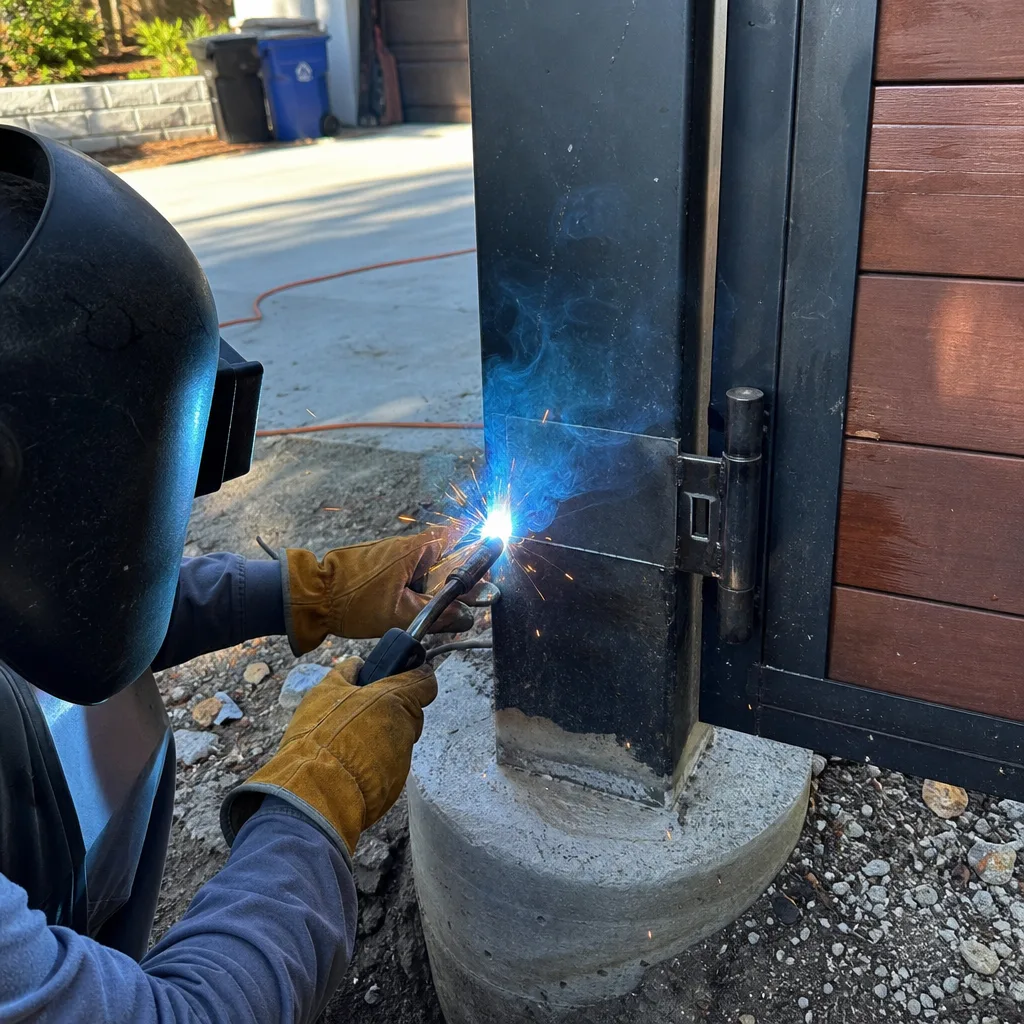
Most gate repairs in Los Angeles cost between $180 and $480 when the root cause is addressed on the first visit. Simple fixes like photo-eye realignment start around $120. Operator motor replacements run from $650 to $1,200 depending on brand and bracket condition. We will hand you a written price before any work begins. Call (213) 674-2473 for a precise quote on your gate.
Most repairs are completed in one visit of two to four hours. The majority of that time is diagnosis and verification: tracing the wiring, checking the limit switches, testing the load on the motor, then testing the gate five times in each direction before we sign off. Emergency callouts in Los Angeles are handled the same day wherever possible, with a live person answering the phone 24/7.
Yes. We service nine major automation brands, including LiftMaster, FAAC, Elite, and Mighty Mule, plus BFT, Linear, Viking, Ghost Controls, and DoorKing. We will not steer you toward replacing an operator when a repair is the right call, and we will not tell you a motor is obsolete when we can source the part. The decision between repair and replacement should be an engineering decision, not a sales pitch.
Intermittent operation usually means an electrical fault: a corroded splice, a low-voltage wire breaking down inside its conduit, or a connection that opens when the operator heats up. These faults are common in coastal Los Angeles ZIP codes where the marine layer accelerates corrosion. The only way to resolve an intermittent fault is to trace the circuit and find the failing connection. Replacing the keypad or the remote will not fix a wire that is rotting.
That is structural shift, and it is common in hillside neighborhoods throughout Los Angeles where expansive clay soil swells with winter moisture and shrinks in summer. The gate post has moved. The fix may involve adjusting the hinges or re-setting the post in a deeper footing, but the important thing is to diagnose it as structural early. Operating a gate with a shifted post strains the motor harder and shortens its life. Call (213) 674-2473 for a written diagnosis.
Every repair we complete is covered by our 365-Day Done Right Promise. If the repair is not right within one full year, we make it right at no charge. No argument, no fee, no expiration date within that window. This promise applies to every residential gate repair we perform in Los Angeles, on every brand we service.
The Bottom Line
Gate repair in Los Angeles is a diagnostic discipline, not a parts-replacement business. The gate that fails usually has a traceable root cause in one of four categories: mechanical wear, electrical fault, operator failure, or structural shift. Los Angeles geography, meaning marine-layer corrosion and clay-soil post movement, creates failure patterns that generic gate guides miss. A repair that addresses the symptom will cost you again in six months. A repair that addresses the cause, documented with a written diagnosis and a photo record, costs you once. When you call, ask for the written price before work begins. Ask what caused the failure. Ask for the evidence when the job is done. Those three questions separate a real gate company from a parts swapper. For more guides & resources, visit our blog. Call (213) 674-2473 for a free estimate, answered by a live person, any hour of any day.
Written by Adrian Vance, Owner at Vance Gate Repair Los Angeles, serving Los Angeles since 2014.